All News
Book Review: “Great Health Care Value: Chronic Diseases, Practice Teams and Population Management”
The US healthcare market has evolved into an incredibly expensive system that often does not deliver good medical outcomes. While most of us know these problems exist, we rarely have up-to-date data or can offer alternatives to the way we manage care, especially to the chronically ill who consume much of our health care dollars. In their book, authors Tim Harrington, MD and Andrew Johnson, MS, MBA offer insights, evidence and experience on how we may do our part to improve the management of chronic rheumatic/orthopedic issues.
NSAIDs May Impair Healing if Taken Nightly
A new study in Scientific Reports suggest that circadian rhythms play an important role in wound healing, and that nonsteroidal anti-inflammatory drugs (NSAIDs) may be disruptive if taken at night given primary healing that occurs in a body at night.
Read Article2019 EULAR Recommendations for the Management of Rheumatoid Arthritis
The 2019 update to the EULAR recommendations on the use of synthetic and biological disease-modifying antirheumatic drugs in rheumatoid arthritis (RA) have been published in Annals of Rheumatic Disease - highlighting the efforts of an international consensus committee effort.
In the end, the task force put forth 5 overarching principles and 12 recommendations concerning use of conventional synthetic DMARDs, glucocorticoids, biological DMARDs, biosimilar DMARDs, and targeted synthetic DMARDs (the Janus kinase (JAK) inhibitors tofacitinib, baricitinib, filgotinib, upadacitinib).
RheumNow Podcast- A Good First Impression (1.24.20)
Dr Jack Cush comments on this week's journal articles, reviews and studies.
Read ArticleQD Clinic - "Doc, When Can I Stop?"
QD Clinic - Lessons from the clinic. In this video: Patients stable on a biologic need guidance on when, and if, they can stop their biologic.
Read ArticleLow Risk of Inflammatory Arthritis in Hidradenitis Suppurativa Patients
JAMA Dermatology reports that after the onset and diagnosis of hidradenitis suppurativa (HS), such patients have a higher risk of certain forms inflammatory arthritis.
Read ArticleQD Clinic - Hepatitis B and Biologics
QD Clinic - Lessons from the clinic
Active HBV infection (HGsAg+) on anti-viral therapy but needs a biologic - what should you use?
QD Clinic - "I Don't Know Why I'm Here" Consult
QD Clinic - Lessons from the clinic
The Consult that shows up without a cause - and what to do?
Biosimilars for Rheum Disease: Failure to Launch
The availability of biologic biosimilars has thus far had negligible impact on prescribing practices in the United States, in stark contrast to what has been observed in some European countries, researchers reported.
Read ArticleQD Clinic - Dealing with Non-adherence
QD Clinic - Lessons from the clinic. Today’s clinic topic: Dealing with Non-Adherence in the Clinic.
Steroid-Sparing Effect of Tocilizumab in Refractory Takayasu Arteritis
A controlled clinical trial has shown that giving the IL-6 receptor antibody, tocilizumab (TCZ), to patients with Takayasu arteritis (TAK) results in clinical efficacy and has a steroid sparing efffect.
Read ArticleCDC: 15% of US Adults are Physically Inactive
All states and territories had more than 15% of adults who were physically inactive and this estimate ranged from 17.3 to 47.7%, according to new state maps of adult physical inactivity prevalence released today by the Centers for Disease Control and Prevention (CDC).
Read ArticleRheumNow Podcast- The Down Side of Steroids (1.17.20)
Dr. Jack Cush reviews the journal reports and news from RheumNow.com.
Be sure to register for RheumNow Live 3/13/2020 in Fort Worth
Rheumnow.live.
NSAID Safety Guidelines
Non-steroidal anti-inflammatory drugs (NSAIDs) are widely used for acute or chronic arthritis, headache, visceral pain, postoperative pain, etc but come with a small but significant risk of serious adverse effects, including hypertension, cardiovascular disease, kidney injury and GI complica
Read ArticleTULIP2 - Anifrolumab Succeeds in Lupus
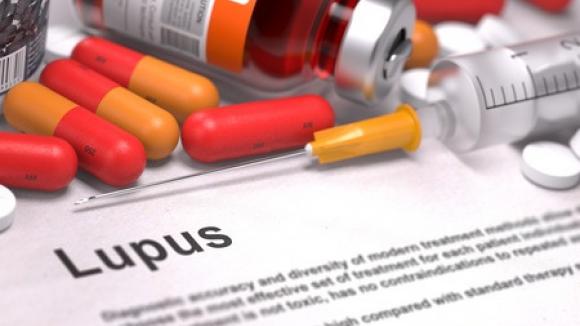
NEJM has published the results of the TULIP2 trial with anifrolumab, an alpha interferon blocker, in the treatment of systemic lupus erythematosus, showing significant improvement (over placebo) in multiple lupus outcome measures, including BICLA, SRI-4, CLASI and others.
Poor Sleep Increases Risk of Cognitive Decline
The Journal of Neurology, Neurosurgery & Psychiatry reports there is moderate evidence that six sleep disorders (insomnia, fragmentation, daytime dysfunction, prolonged latency, rapid eye movement sleep behaviour disorder and excessive time in bed) significantly increases the ri
Read ArticleShould We Screen Younger Postmenopausal Women for Osteoporosis?
Do postmenopausal women, under age 65 years, need a baseline BMD testing? A JAMA Insights review suggests that the absolute risk of fracture is low in this group and that USPSTF guidelines should be considered - that we should be screening women younger than 65 years who are at increased risk of osteoporosis and we should be using a formal risk assessment tool to identify candidates for bone density testing.
Read ArticleDiabetics using SGLT2 Inhibitors have a lower Gout Risk
Researchers from the Brigham and Women's Hospital have reported that adults with type 2 diabetes who were treated with SGLT2 inhibitors had a lower risk of gout compared to GLP1 agonist, suggesting that sodium–glucose cotransporter-2 inhibitors may reduce the risk for gout with type 2 diabetes mellitus (T2DM).
Read ArticleRheumatologists Ranked #1 in Happiness (Again)
Medscape has reported the results of its 2020 annual physician survey, This year rheumatologists (60%), general surgeons (60%), public health and preventive medicine physicians, and allergists/immunologists are the "happiest" outside of work compared to other specialists, according to Medscap
Read ArticleSteroids Up the Risk of Organ Damage in SLE
Lancet Rheumatology has reported the results of a multicenter follow-up study of systemic lupus erythematosus (SLE) patients showing that organ damange is linked to glucocorticoid use, independent of clinical or serological disease activity.
Read Article