
Article
As they say, necessity is the mother of invention. After years of bemoaning the challenges of telemedicine, our rheumatology clinic transition entirely to a remote clinic in the space of a week.

Search for Terms or Answers
As they say, necessity is the mother of invention. After years of bemoaning the challenges of telemedicine, our rheumatology clinic transition entirely to a remote clinic in the space of a week.
With the COVID-19 pandemic dynamically changing, we have provided several news items germane to the Rheumatologist.

As the highly virulent SARS-CoV-2 spreads over the world, uncertainty and fear for our patients with rheumatic diseases mount.

We are in the early stages of trying to limit the morbid and mortal consequences of the corona virus pandemic of 2020. Not surprisingly, the recommendations designed to limit exposure and damage continually highlight the fact that the elderly and immunosuppressed may be amongst the most severely affected should they become infected with this virus.
This has led to a great deal of uncertainty by patients and providers about how rheumatic diseases and their treatments need to be specifically addressed.

Dr. Jack Cush reviews the news and journal articles from the past week on RheumNow.com.

An Italian study examined the outcomes in adult onset Still's disease (AOSD) based on whether they received early or delayed treatment with anakinra (ANK).
A total of 141 AOSD patients were retrospectively studied.

While there are numerous agents approved for use in juvenile idiopathic arthritis, little is know about actual use biological disease-modifying antirheumatic drug (DMARD) use or switching in the biologic era. A cohort comparison study has shown that after an unsuccessful trial of a first biologic, changing to a second TNFi is as effective as switching to a non-TNFi biologic.

On 14 November 2019 the European Medicines Agency (EMA) concluded that Xeljanz (tofacitinib) could increase the risk of blood clots in the lungs and in deep veins in patients who are already at high risk. These recommendations have been formally published and are intended for EU nation
A full-read, novel Viewpoint article published in the Annals of Rheumatic Disease (Huizinga TWJ, et al) spotlights a recent international meeting of big thinkers, scientific collaborators and industry dedicated to innovation in rheumatology.

Dr Jack Cush Reviews the news and journal articles from the past week on RheumNow.com
RheumNow Live kicks off its second annual meeting - a little, big meeting in Fort Worth - in just 2 weeks and I think you should be there.
Today, the American College of Rheumatology (ACR) published the 2020 Guideline for the Management of Reproductive Health in Rheumatic and Musculoskeletal Diseases.

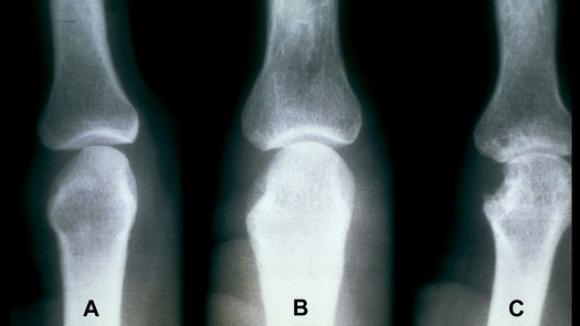
Science Translational Medicine has a report on how the use of Janus kinase (JAK) inhibitors may boost osteoblasts to battle bone erosions in conditions like rheumatoid arthritis (RA).
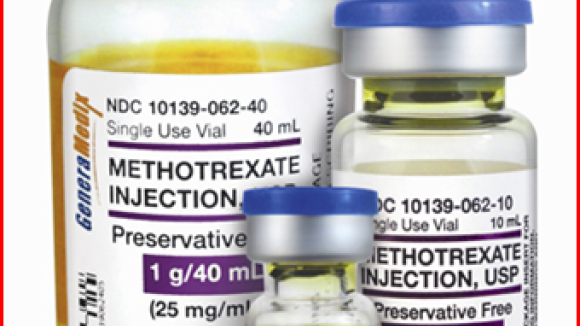
Low-dose methotrexate (LD-MTX) was studied in high risk cardiac patients in the cardiac intervention trial (CIRT), but was prematurely ended for not showing a change in cardiovascular event rates. Nonetheless this trial studied the safety and adverse event rates of LD-MTX and those results are reported in the current issue of Annals of Internal Medicine.
NICE has commissioned an update to the 2010 British Society for Rheumatology guideline for the management of giant cell arteritis, and proposed a total of 19 recommendations for the diagnosis and treatment of GCA.

Interleukin 17 IIL-17) is important in the pathogenesis of psoriatic disease, with most current approaches targeting IL-17A. Now there is a noveal approach showing that dual neutralisation of IL-17A and IL-17F in psoriatic arthritis arthritis patients results in clinically significant improvement.
A registry study of metric use (primarily RAPID3 and CDAI) in the treatment of rheumatoid arthritis (RA) patients shows that, even in the face of moderate or high disease activity, treatment changes by rheumatologists were relatively low (35.6–54.6%).
Dr Jack Cush reviews the news and journal articles from the past week on RheumNow.com
The suggestion to hit rheumatoid arthritis (RA) early and hard with biologic therapies itself took a hit in a new study.

The 2019 update to the EULAR recommendations on the use of synthetic and biological disease-modifying antirheumatic drugs in rheumatoid arthritis (RA) have been published in Annals of Rheumatic Disease - highlighting the efforts of an international consensus committee effort.
In the end, the task force put forth 5 overarching principles and 12 recommendations concerning use of conventional synthetic DMARDs, glucocorticoids, biological DMARDs, biosimilar DMARDs, and targeted synthetic DMARDs (the Janus kinase (JAK) inhibitors tofacitinib, baricitinib, filgotinib, upadacitinib).

By downloading this material, I acknowledge that it may be used only for personal use and personal education and that I will accredit RheumNow.com as the source and owner of this material. Commercial use or mass reproduction of this material without permission from RheumNow (info@rheumnow.com) is prohibited.