

All News

RheumNow Podcast- Methotrexate Mechanisms (2.28.20)
Dr Jack Cush Reviews the news and journal articles from the past week on RheumNow.com
Read Article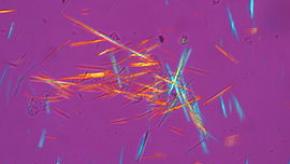
Hyperuricemia Predisposes to Coronary Artery Disease in Men
There are numerous associations between hyperuricemia and cardiovascular disease (CVD). An analysis of the Swedish SCAPIS Pilot study shows that higher levels of serum urate (SU) are associated with an increase in coronary artery calcification score in men but not in women. SU is not associated with common carotid intima-media thickness and carotid plaque scores in either men or women.
Read Article
RheumNow Podcast- 2019 EULAR RA Guidelines (1.31.20)
Dr. Jack Cush reviews the news and journal articles from the past week on RheumNow.com.
Read Article
Rheumatoid Arthritis Antibodies Linked With COPD
Women who were seropositive for anti-citrullinated protein antibodies (ACPA) and ultimately went on to develop rheumatoid arthritis (RA) were also at increased risk for being diagnosed with chronic obstructive pulmonary disease (COPD), analysis of data from the Nurses' Health Study showed.
Read Article
Steroids Up the Risk of Organ Damage in SLE
Lancet Rheumatology has reported the results of a multicenter follow-up study of systemic lupus erythematosus (SLE) patients showing that organ damange is linked to glucocorticoid use, independent of clinical or serological disease activity.
Read Article
Best of 2019 - Biologic Safety Guidelines from the British Society for Rheumatology
In the United Kingdom, NICE has looked to the British Society of Rheumatology (BSR) to develop evidence based guidance on the safe use of biologic DMARDs in patients with inflammatory arthritis.
Read Article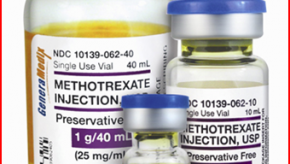
Best of 2019 - Methotrexate and the Risk of Lung Disease
Rheumatology has a comprehensive overview of methotrexate (MTX) and the risk of lung injury, MTX-related pneumonitis and interstitial lung disease (RA-ILD) with rheumatoid arthritis (RA). Past reports suggest the frequence of MTX-pneumonitis to be between 0.3 and 11.6%; recent studies suggest it may be much lower.
Read Article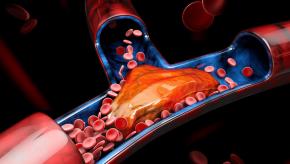
Best of 2019 - New EMA Warnings for Tofacitinib in Patients at Risk for Clots
The European Medicines Agency safety committee (PRAC) has concluded that Xeljanz (tofacitinib - TOFA) could increase the risk of blood clots in the lungs and in deep veins in patients who are already at high risk for venous thromboembolic events. The PRAC is recommending that TOFA should be used with caution in patients at high risk of blood clots (VTE), regardless of dose used.
Read Article
RheumNow Podcast - The Elusive Hand OA Problem (12.13.19)
Dr. Jack Cush recaps the news and journal reports from the past week on RheumNow.com.
Read Article
Link Between Obstructive Lung Disease and Developing RA?
We all know that the microbiome in the gut may be very important for multiple immune diseases. However, new findings from the ACR, 2019 in Atlanta reinforce how important the interface is between the lungs and developing rheumatoid arthritis.
Read Article
Steroids Use in Lupus Linked to Damage Accural
A report from Lancet Rheumatology shows that glucocorticoid use contributes to damage accrual in systemic lupus erythematosus (SLE) independent of disease activity.
Read Article
Biologic Safety Guidelines from the British Society for Rheumatology
In the United Kingdom, NICE has looked to the British Society of Rheumatology (BSR) to develop evidence based guidance on the safe use of biologic DMARDs in patients with inflammatory arthritis.
Read Article
Smoking Cessation Lowers RA Disease Activity and CV Risks
A multinational cross-sectional cohort study suggests that smoking cessation in rheumatoid arthritis (RA) patients is associated with lower disease activity measures, improved lipid profiles and lower rates of cardiovascular (CV) events.
Read Article
Systemic JIA-Associated Lung Disease
A disease you’ve never heard of is becoming increasingly common and carries a very poor prognosis.
Read Article
ACR 2019 – Best of the Plenary Sessions
The ACR Plenary Sessions featured some of the best research presented on Sunday, Monday, and Tuesday in Atlanta. Here are my seven notable highlights from the Plenaries.
Read Article
RheumNow Podcast – ACR 2019 Round Up (11.15.19)
Dr. Jack Cush presents his favorite abstracts and presentations from Rheumatology Round Up and ACR 2019.
Read Article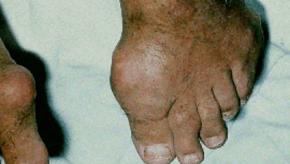
T2T Lowers Mortality in Gout
A Spanish prospective cohort of active, uncontrolled gout patients were followed and showed that failure to reach a target serum uric acid (sUA) level of 6 mg/dl (0.36 mmol/L) or less was associated with a 2-3 fold increase in mortality.
Read Article
New EMA Warnings for Tofacitinib in Patients at Risk for Clots
The European Medicines Agency safety committee (PRAC) has concluded that Xeljanz (tofacitinib - TOFA) could increase the risk of blood clots in the lungs and in deep veins in patients who are already at high risk for venous thromboembolic events. The PRAC is recommending that TOFA should be used with caution in patients at high risk of blood clots (VTE), regardless of dose used.
Read Article
Rinvoq (upadacitinib) Effective in Psoriatic Arthritis
Yesterday, AbbVie reported the top-line study results showing the efficacy of Rinvoq (upadacitinib - UPAD) adult patients with active psoriatic arthritis who previously had an inadequate response to a biologic DMARD.
Read Article
ENTRACTE trial studied the risk of major adverse CV events (MACE) in 3080 RA pts Rx with tocilizumab (TCZ) vs etanercept (ETN), and found no increased risk of MACE in TCZ patients compared to ETN (HR 1.05 (95% condence interval 0.77–1.43). https://t.co/QxOlzfDcZD
Links:
Dr. John Cush RheumNow ( View Tweet)

