Blogs

More Than a Conference: Life’s Lessons

Conferences are held for the purposes of sharing ideas, developing new relationships, and collaborating on future research. The American College of Rheumatology (ACR) Convergence 2022 meeting embodies all these ideals by offering both in-person and virtual attendance options.
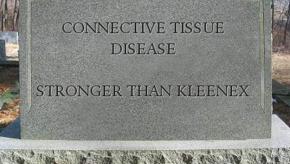

From the Archives: Rheumatology Dead Word Cemetery

I recently heard of a secondary school assignment wherein students were challenged to “bury” a word that was no longer useful or appropriate. Their exercise has now evolved into an unofficial RheumNow task force to retire diagnostic terms that have grown into misuse in rheumatology and medicine. How did we decide which words should perish? And by what criteria? Who has the final say?

Still's disease: paediatrics to adults, a continuum or not?

Dr. Ilenia Di Cola and Dr. Piero Ruscitti
Still’s disease is a rare inflammatory disorder, affecting less than 1 person per 2000 people. This disease may occur in both children and adults, namely as systemic juvenile idiopathic arthritis (sJIA) and adult-onset Still’s disease (AOSD). The paediatric form was described by George Still in 1896, whereas the adult variant later by Eric Bywaters in 1971. However only the adult disease is identified by the name of Still.

The Sacred Bond

Patients and their family for years have been inviting me to their dinners, picnics, baptisms, anniversaries, and funerals. I always felt somewhat awkward when asked to participate in a patient’s life outside of my office or the hospital setting and usually will decline politely. I tell myself I should not blur the lines between patient care and friendship. I broke this rule recently.

The Still’s Continua

The concept of a “Still’s disease continuum” that encompasses both sJIA and AOSD is based on the many common clinical, genetic and laboratory features shared by both sJIA and AOSD.

2021 GRAPPA Recommendations - Looking Back, Looking Forward

With the recent publication of the third iteration of the GRAPPA Psoriatic Arthritis (PsA) treatment recommendations, it seems to be an auspicious time to reflect on some key considerations that arose during the development of the recommendations, as well as to look towards what the future may hold.

ICYMI: Who is Your Glue?

I’ve often talked about the nurses in my clinic as being the glue, the clinic glue, my personal glue. Without them, the day and task would never go as well and just might crash and burn, if not for their steadying influence.

A Domain-Based Approach to the GRAPPA Psoriatic Arthritis Treatment Recommendations

With their publication in June 2022 (1), the 3rd iteration of the Group for Assessment of Psoriasis and Psoriatic Arthritis (GRAPPA) Treatment recommendations for Psoriatic Arthritis (PsA) may have set a record or sorts.

I Need a Nemesis

A nemesis is so much more than the "enemy". Your nemesis defines what matters most to you and how you will overcome. Seth Godin once said, “Pick your enemies, pick your future”.

Complementary and Alternative Therapies in Psoriasis and Psoriatic Arthritis

It’s been reported that approximately one-third to one-half of patients with psoriatic arthritis will try supplements and other complementary and alternative medicinal (CAM) practices without discussing with their rheumatologists.  Of those, nearly 90% of PsA patients using CAM report benefits!  Here is your updated review on common supplement data in psoriasis and PsA. 

MDA: Aiming for Perfection in PsA

When it comes to psoriatic arthritis clinical trials such as TICOPA (tight control in PsA)  have consistently shown that treating to target correlates with improved disease domain and patient reported outcomes.  Minimal disease activity (MDA) has become an oft used target and outcome in PsA trials. While many of us measure and record a variety of measures in our patient charts, we may be on our way to demonstrating MDA in practice. Here is a quick review of MDA components and how to capture them for your patients. 

A Rare Disease Doctor

Yesterday was national “Rare Disease Day” in the USA, with many tributes to the patients, doctors and researchers dedicated to these disorders.  Moreover, it was a great opportunity to shout about the many rare conditions that don’t often get enough press, praise or funding.

Rheumatology Valentine

My uncle is going through medical hell.  As a committed iatrophobic (fear of doctors), any mention of phlebotomy, tests, needles or a clinic visit evokes flop-sweat.  Since being slapped with a cancer diagnosis, he has overcome a lot, and much to my surprise has bravely done so. When I asked how he has adapted so well to the medical onslaught he now leans into, his answer was quick and poignant.

A Guide to Self Care of (Mild) COVID19

There is guidance published on how to manage moderate to severe cases, but very few blueprints detail what to do with “mild” infection.  The first day, I developed congestion and cough, with a sore throat.  As the day progressed, I started to have chills, low grade fevers, and myalgias.  The postnasal drainage was overwhelming, and when I tried to swallow, it felt like swallowing broken glass.  Isolating in my room, I was left to deal with my symptoms.

Freeze Tag

A beloved childhood game I enjoyed was Freeze Tag. Players would run to avoid being tagged by the person who was “It”.  If you were tagged, you had to “freeze” in your spot until someone was brave enough to come un-tag you.  The game ends when everyone is frozen or if people quit. For over 2 years, I have been living in a real-life “Freeze Tag” game and able to dodge COVID19, until now. Sitting in my room symptomatic and frozen in isolation, I ruminated about my patients who had COVID19 and their experiences. I wanted to share with you three stories of three variants.
×