


The Marriage between Gout and the Kidney Save

While the link between uric acid and gout was first described by Alfred Baring Garrod in the 1800s, the proof that uric acid might actually be the cause had to await the self-experimentation of two rheumatologists (James Faires and Daniel McCarty) from the University of Pennsylvania. Given some comments that the presence of urate crystals in synovial fluid might just be a bystander phenomenon, they decided to inject monosodium urate crystals in one knee and water in the other, and both suffered severe attacks of gout in the urate crystal injected knee.[1]
While gout is clearly a severe type of arthritis that can lead to chronic joint destruction and impaired mobility, for many patients it is viewed more as an intermittent arthritis that can be successfully treated with nonsteroidal agents or corticosteroids. However, for physicians there is the common awareness that gout is more of a chronic disease, for the crystals do not generally resolve with the treatment of an acute attack, and low grade inflammation can persist even when the gout is clinically silent.
Studies further show that gout is commonly associated with metabolic disease. In fact hyperuricemia was one of the primary characteristics observed with metabolic syndrome, even as the syndrome was first being recognized [2]. Kidney disease was also commonly associated with gout, and kidney failure was a common ending for subjects with gout before treatments of gout became available[3]. However, a debate again arose as to whether the gout was simply another consequence of the obese/insulin resistant state (in other words, a bystander effect), or whether it might have a causal role.
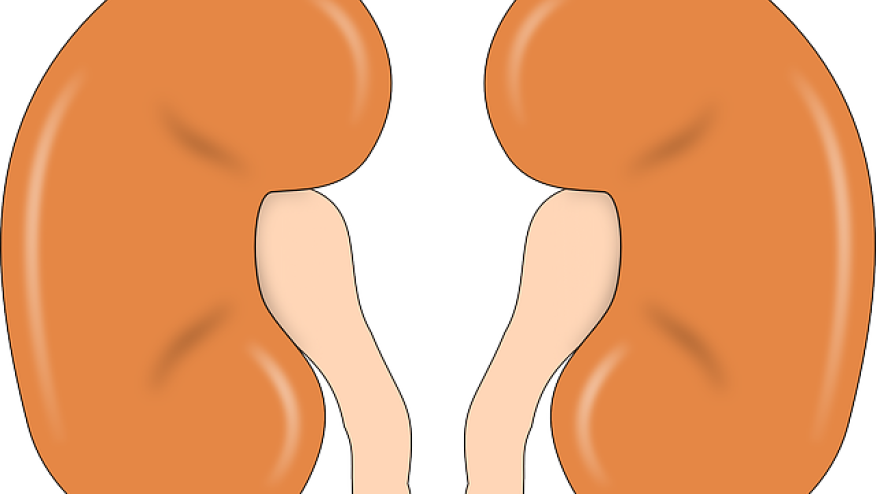
The association of elevated uric acid with the kidney was especially strong. Studies found that approximately half of gouty subjects had impaired kidney function, and that nearly 90 percent had some kidney disease at autopsy[4]. Other studies reported that the higher the serum uric acid level, the more likely the presence of CKD (even in the absence of gout), with rates of >50 percent when uric acid levels reached 10 mg/dl in the serum.[5] Conversely, studies of subjects with and without CKD found that whereas 1 in 34 subjects with normal kidney function have gout, in subjects with CKD it is 1 in 4 [6].
For the skeptics, the explanation is simply--- since uric acid is primarily excreted by the kidney, the gout must be secondary and results from retention of uric acid with falling kidney function. Supporting this evidence was Mendelian studies suggesting that genetically elevated uric acid levels do not predict the development of CKD[7], and some clinical trial evidence that lowering uric acid did not slow kidney progression in subjects with CKD[8]. However, the observation that hyperuricemia could predict CKD even in subjects with normal kidney function created an uneasiness that something might be missing [9]. Furthermore, the large clinical trial did not include subjects with gout, included subjects with normal uric acid levels, did not treat to target levels of < 6 mg/dl, and had an excessive dropout rates. Indeed, clinical studies have shown that for benefits to be observed, subjects with gout need to have uric acid levels targeted to < 6 mg/dl, need prolonged treatment (ideally 2 years or more), and have high compliance (70% or higher)[10].
Furthermore, experimental studies have suggested three major mechanisms by which uric acid might be able to cause kidney damage. One is from the effects of soluble uric acid to cause renal vasoconstriction, which has been shown to be mediated primarily by stimulation of plasma renin activity [11]. However, most individuals with chronic kidney disease are on inhibitors of the renin angiotensin system, so it may be difficult to observe benefit with the addition of a urate-lowering therapy. Second, urate crystals are now recognized as commonly present in the renal medulla of subjects with longstanding gout, and some studies suggest as many as one-third of subjects with gout may have urate crystal deposition in the kidneys[12]. The dissolution of urate crystals, however, is very slow, and so treatment of these patients likely requires long-term treatment and lower target levels than classically achieved.
The most common mechanism by which uric acid might cause CKD, however, is via formation of urate crystals in the urine with activation of inflammasomes in the surrounding tubular cells. Increasing evidence suggests urate crystalluria may be a cause of CKD, and measures that lead to urinary alkalinization coupled with urate lowering therapy shows great promise[13].
In conclusion, there are three take-away messages.
- When a person develops gout, kidney function should be measured. Gout is not just driven by diet and genetics, but kidney disease is a major player.
- If there is CKD, one should investigate whether there is urate crystalluria and an acidic urine. If so, urinary alkalinization with citrate or bicarbonate should be considered in addition to urate lowering therapy.
- Finally, recognize that gout is a systemic disease, with chronic inflammation. Urate crystals can form in many places. Targeting serum uric acid to <6 mg/dl is critical for gout, and I recommend reducing urate levels to < 5 mg/dl if urate crystals are documented outside the joints.
Editor's note: For more content like this, visit our "Gout: More than Flares" page.
References
1. Faires, J.S.; McCarty, D.J. Acute arthritis in man and dog after intrasynovial injection of sodium urate crystals. Lancet 1962, 280, 682-685.
2. Kylin, E. [Studies of the hypertension-hyperglycemia-hyperuricemia syndrome] Studien uber das Hypertonie-Hyperglykamie-hyperurikamiesyndrome. Zentralblatt fur innere Medizin 1923, 44, 105-127.
3. Coombs, F.S.; Pecora, L.J.; Thorogood, E.; Consolazio, W.V.; Talbott, J.H. Renal Function in Patients with Gout. J Clin Invest 1940, 19, 525-535.
4. Talbott, J.H.; Terplan, K.L. The kidney in gout. Medicine (Baltimore) 1960, 39, 405-467.
5. Zhu, Y.; Pandya, B.J.; Choi, H.K. Comorbidities of gout and hyperuricemia in the US general population: NHANES 2007-2008. Am J Med 2012, 125, 679-687 e671, doi:S0002-9343(12)00189-1 [pii]10.1016/j.amjmed.2011.09.033.
6. Krishnan, E. Reduced glomerular function and prevalence of gout: NHANES 2009-10. PLoS One 2012, 7, e50046, doi:10.1371/journal.pone.0050046.
7. Jordan, D.M.; Choi, H.K.; Verbanck, M.; Topless, R.; Won, H.H.; Nadkarni, G.; Merriman, T.R.; Do, R. No causal effects of serum urate levels on the risk of chronic kidney disease: A Mendelian randomization study. PLoS Med 2019, 16, e1002725, doi:10.1371/journal.pmed.1002725.
8. Badve, S.V.; Pascoe, E.M.; Tiku, A.; Boudville, N.; Brown, F.G.; Cass, A.; Clarke, P.; Dalbeth, N.; Day, R.O.; de Zoysa, J.R., et al. Effects of Allopurinol on the Progression of Chronic Kidney Disease. N Engl J Med 2020, 382, 2504-2513, doi:10.1056/NEJMoa1915833.
9. Kuwabara, M.; Niwa, K.; Hisatome, I.; Nakagawa, T.; Roncal-Jimenez, C.A.; Andres-Hernando, A.; Bjornstad, P.; Jensen, T.; Sato, Y.; Milagres, T., et al. Asymptomatic Hyperuricemia Without Comorbidities Predicts Cardiometabolic Diseases: Five-Year Japanese Cohort Study. Hypertension 2017, 10.1161/HYPERTENSIONAHA.116.08998, doi:10.1161/HYPERTENSIONAHA.116.08998.
10. Perez Ruiz, F.; Richette, P.; Stack, A.G.; Karra Gurunath, R.; Garcia de Yebenes, M.J.; Carmona, L. Failure to reach uric acid target of <0.36 mmol/L in hyperuricaemia of gout is associated with elevated total and cardiovascular mortality. RMD Open 2019, 5, e001015, doi:10.1136/rmdopen-2019-001015.
11. Feig, D.I.; Soletsky, B.; Johnson, R.J. Effect of allopurinol on blood pressure of adolescents with newly diagnosed essential hypertension: a randomized trial. JAMA 2008, 300, 924-932, doi:300/8/924 [pii]10.1001/jama.300.8.924.
12. Bardin, T.; Nguyen, Q.D.; Tran, K.M.; Le, N.H.; Do, M.D.; Richette, P.; Letavernier, E.; Correas, J.M.; Resche-Rigon, M. A cross-sectional study of 502 patients found a diffuse hyperechoic kidney medulla pattern in patients with severe gout. Kidney Int 2021, 99, 218-226, doi:10.1016/j.kint.2020.08.024.
13. Johnson, R.J.; Bjornstad, P.; Weimbs, T. Citrate in the management of gout, urate nephrolithiasis and kidney disease: an old therapy rediscovered? Rheumatology (Oxford) 2025, 64, 5206-5207, doi:10.1093/rheumatology/keaf352.
Related Content



Join The Discussion
High uric acid has been shown to increased vascular rigidity; but not sure that does the same on renovascular system; hyperuricemia however seems to increased medullary uric acid deposits. The question is which is chicken which is egg?
Gout-ologists seem to feel 1/3 hyperuricemia would never end up with gout attack; but do we know high uric acid alone might not have renal consequence? Up to this time I still believe in treat to target, but then do we only "treat to the target" in "clinical" gout?
We still need more evidences or works to do!
Thanks for your astute comments. For sure we need more research and clinical trials. However, the best data that hyperuricemia may have a direct effect on vascular tone comes from the study by Dan Feig (Feig DI, Soletsky B, Johnson RJ. Effect of allopurinol on blood pressure of adolescents with newly diagnosed essential hypertension: a randomized trial. JAMA. 2008 Aug 27;300(8):924-32. doi: 10.1001/jama.300.8.924. PMID: 18728266; PMCID: PMC2684336) that showed allopurinol corrects BP and lowers systemic vascular resistance and plasma renin activity in adolescents with new onset hypertension. So there is human evidence that hyperuricemia may activate the renin angiotensin system in addition to animal studies. A second mechanism that's really emerging as important is the formation of crystals in acidic urine that can lead to tubular inflammation and kidney disease. This suggests hyperuricemia may be more likely to cause CKD when urine is acidic or urinary uric acid levels are high. Hyperuricemic subjects are known to have high urinary uric acid excretion following purine and sugar rich meals. While the fractional excretion is low, overall urinary uric acid excretion tends to be high.




If you are a health practitioner, you may Login/Register to comment.
Due to the nature of these comment forums, only health practitioners are allowed to comment at this time.