

Management of Glucocorticoid Toxicity Save

Know-it-now
- GC toxicity accrues even at the lowest doses (<5 mg/day) and starts within the first 30–90 days (there is no fully "safe" threshold).
- Adverse events (AE) patterns differ meaningfully by disease, warranting tailored monitoring rather than a generic protocol.
- PCP referral delays (115–181 days median) and PCP over-prescribing of high-dose GCs are modifiable contributors to cumulative steroid burden.
- Steroid-sparing agents (IL-6Ri, JAK inhibitors, etc) exist but are often underutilized as maintenance therapy.
A current review article addresses the recognition, prevention and management of glucocorticoid (GC) toxicity in rheumatic patients. Despite guidelines and recommendations that GC be tapered, lowered or discontinued, they continue to be widely used (RA, PMR, SLE, myositis, etc) with serious unintended consequences - osteoporosis, fracture, infection, weight gain, cardiovascular, ophthalmic, and psychiatric-related AEs.
Glucocorticoids are the best and worst drug we have - often as the cornerstone to rheumatic disease management. This includes induction therapy, bridging therapy, flare management and serious disorder intervention (eg, ANCA vasculitis and lupus nephritis). This review underscores how limited the "safe" dosing margin is.
In a large cohort, incidence rate ratios for sepsis, VTE, and fracture were significantly elevated within 30 days versus 31–90 days of oral GC use (median dose 20 mg/day). In PMR/GCA patients, cumulative infection risk rose from 18.0% at <5 mg/day to 35.8% at ≥25 mg/day over roughly five years. In RA cohorts on stable DMARD therapy, hospitalized infection rates climbed stepwise from 8.6% (non-GC users) to 17.7% (>10 mg/day).
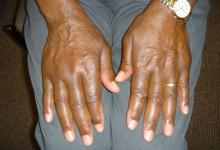
RA patients on low-to-moderate doses over 12–24 months predominantly develop cushingoid features, ecchymoses, and weight/blood pressure changes; ANCA vasculitis patients accumulate skin atrophy, myopathy, and osteoporosis; SLE patients on ~10 mg/day report infections, hypertension, and cataracts alongside GI ulcers and dyslipidemia. This argues against a one-size-fits-all monitoring protocol.
The review reiterates ACR/EULAR-aligned recommendations: baseline CBC, glucose, lipid panel, BMD (DXA at initiation and every 2 years if ≥5 mg/day for ≥3 months), ophthalmologic exam, and psychiatric/infection history — with lipid re-check at 1 month and then every 6–12 months. Fracture risk estimates should be inflated by ~15% (major osteoporotic) and ~20% (hip) for GC exposure per FRAX-based guidance.
Median time from PCP visit to rheumatology referral ran 115–181 days across RA, PMR, and other autoimmune disease, with PCPs prescribing higher GC doses (>25 mg) more often than rheumatologists. Only 58% of PCP-referred "PMR" patients met EULAR/ACR classification criteria, and over a third of true PMR patients had not seen a rheumatologist within three years of symptom onset.
Steroid-sparing agents. IL-6 receptor inhibition (sarilumab, tocilizumab) now anchors GC-sparing strategies in PMR and GCA; JAK inhibitors, anti-CD20 therapy, and avacopan are expanding options in ANCA vasculitis; belimumab, anifrolumab, and voclosporin extend the toolkit in lupus nephritis. The authors frame GCs increasingly as bridging therapy rather than a durable disease-modifying strategy.
There is no truly "safe" GC dose — only lower-risk ones. The Glucocorticoid Toxicity Index offers a standardized outcome measure but remains underused clinically; earlier specialist referral and systematic tapering protocols are the most actionable levers currently available.
Related Content



ADD THE FIRST COMMENT
Disclosures
Disclosures
The author has no conflicts of interest to disclose related to this subject
The author used AI to research and organize this content, and maintains responsibility for its accuracy






If you are a health practitioner, you may Login/Register to comment.
Due to the nature of these comment forums, only health practitioners are allowed to comment at this time.