


Predictors of Response in Lupus Save


A systematic review suggests that traditional measures (serologies and disease activity) are superior to biomarkers in predicting response to biologics in systemic lupus erythematosus (SLE) patients.
A systematic review identified 31 randomised controlled trials (RCTs) evaluating biologics (anti-BAFF, JAK inhibitors, anti-interferon, anti-IL-12/23, BTK inhibitors and T-cell modulators) in adult SLE patients. Primary outcomes included SLE Responder Index-4 response and time-to-flare. They compared the potential biomarker, interferon gene signature (IGS), to serologic activity (anti-double-stranded DNA positivity and/or low complement) and high disease activity (Systemic Lupus Erythematosus Disease Activity Index (SLEDAI) ≥10).
The analysis included 17 374 participants. Biologics improved SLE Responder Index-4 response (RR 1.26, 95% CI 1.19 to 1.33, p <0.0001). Clinical response correlations were best for:
Serologically active disease (RR 1.45, 95% CI 1.28 to 1.63, p<0.0001,NNT=6.5).
High baseline SLEDAI ≥10 (RR 1.22, 95% CI 1.13 to 1.32)
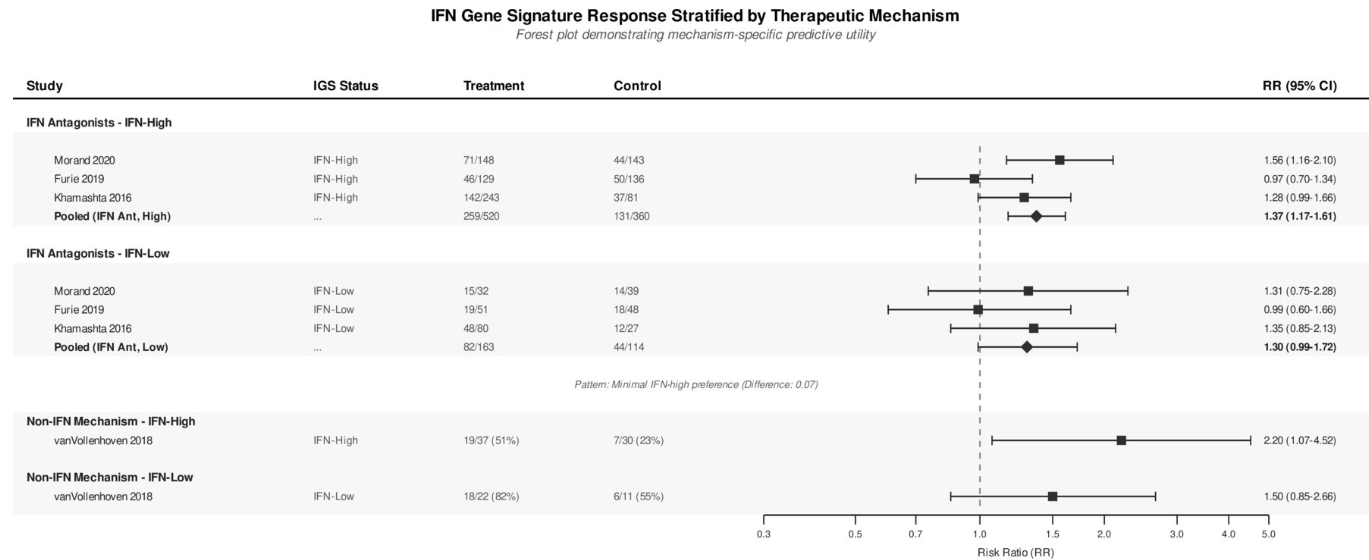
IGS was not a ignificant predictor (RR 1.39, 95% CI 0.97 to 2.00, p=0.074).
Serologically active disease and high baseline disease activity significantly predict biologic therapy response with zero heterogeneity. By contrast IGS showed inconsistent predictive value.
ADD THE FIRST COMMENT
Disclosures
Disclosures
The author has no conflicts of interest to disclose related to this subject





If you are a health practitioner, you may Login/Register to comment.
Due to the nature of these comment forums, only health practitioners are allowed to comment at this time.