


Retractions in Rheumatology Save


Retraction of rheumatology studies is not uncommon; a recent analysis shows retractions have risen substantially.
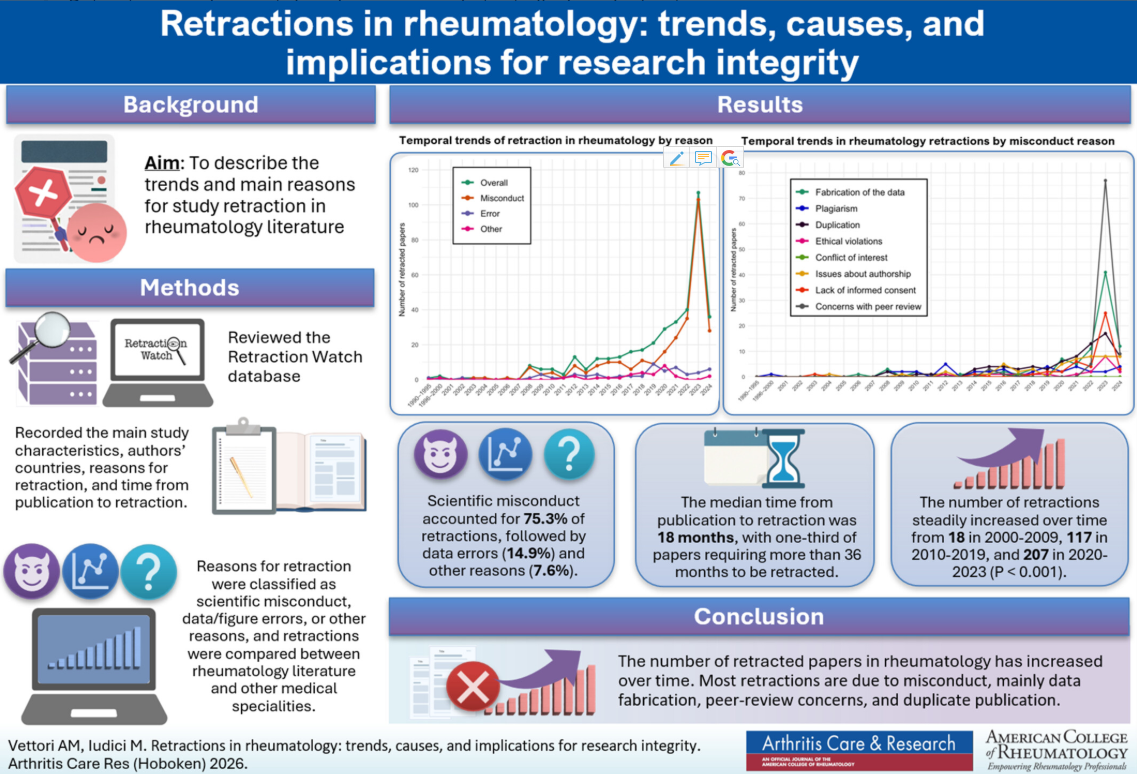
Datafrom the Retraction Watch database identified retracted articles in rheumatology. Retractions were classified as scientific misconduct, data/figure errors, or other reasons.
Between 1989 and 2024, a total of 381 rheumatology articles were retracted . Most originated from Asia (68.5%), particularly China (50.7%).
Primary reasons for retraction were:
- Scientific misconduct 75.3%
- This included data fabrication, fake peer review, duplication, and authorship issues
- Data errors (14.9%)
- Other reasons (7.6%).
It takes a while - as the median time from publication to retraction was 18 months, with one-third requiring more than 36 months to be retracted.
Retractions have increased over time:
- 2000 - 2009 = 18
- 2010 - 2019 = 117
- 2020 - 2023 = 207 (P < 0.001)
Rheumatology exhibited similar retraction rates and patterns, compared to other medical specialties.
Does this trend reflect an increase in questionable research practices or improved detection?
The authors suggest that strengthening early-career education, institutional oversight, and ethical research culture is essential to enhance transparency and integrity in the field.
ADD THE FIRST COMMENT
Disclosures
Disclosures
The author has no conflicts of interest to disclose related to this subject





If you are a health practitioner, you may Login/Register to comment.
Due to the nature of these comment forums, only health practitioners are allowed to comment at this time.