

A Case of Sweet Syndrome Save

This overview appeared in JAMA Dermatology.
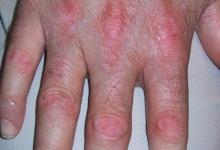
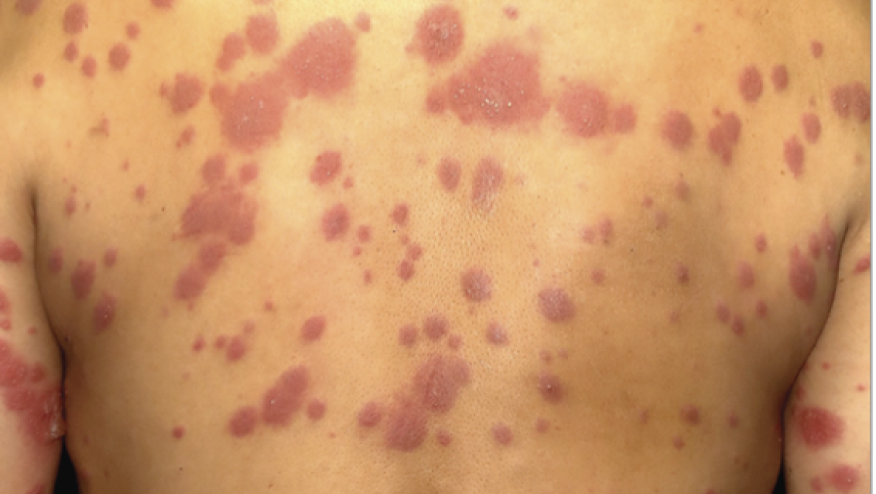
Case. A man in his 50s developed abrupt-onset painful erythematous-to-violaceous plaques on the trunk and extremities, many pustule-studded, with fever — two weeks after resolved influenza A infection. Infectious and malignancy workups (blood/pustule cultures, hepatitis, HIV, RPR, SPEP, tumor markers) were negative. Labs showed neutrophilic leukocytosis with elevated CRP/ESR. Biopsy revealed dense superficial neutrophilic infiltrate with papillary dermal edema, no leukocytoclastic vasculitis, and negative stains. Sweet syndrome was diagnosed via Su and Liu criteria. Systemic corticosteroids produced rapid defervescence and clearance; no recurrence or malignancy emerged over 2 years.
Diagnostic criteria for Sweets Syndrome. Require both major criteria - abrupt-onset painful erythematous plaques/nodules, and neutrophilic dermal infiltrate without vasculitis; plus ≥2 minor criteria: fever; an identifiable trigger (infection, inflammatory disease, pregnancy, malignancy, vaccination); abnormal labs (ESR >20 mm/h, elevated CRP, WBC >8000/μL, neutrophils >70%); and excellent corticosteroid/potassium iodide response.
3 Subtypes of Sweets
- Classic — infection, inflammatory disease (notably IBD, RA), pregnancy, or vaccine-triggered
- Malignancy-associated — chiefly hematologic (AML most common); may precede, coincide with, or follow diagnosis, warranting surveillance
- Drug-induced — classically G-CSF; also reported with azathioprine, TMP-SMX, and checkpoint inhibitors; resolves with withdrawal
Differential diagnosis of Sweets Syndrome. Cellulitis, pyoderma gangrenosum, panniculitis, cutaneous vasculitis, leukemia cutis, and VEXAS syndrome — the last a critical consideration in older men with neutrophilic dermatosis, cytopenias, and inflammatory markers, given overlapping histology and clinical picture. With prominent pustulation, AGEP and generalized pustular psoriasis enter the differential. Pathergy can occur but is nonspecific across neutrophilic dermatoses.
Sweet syndrome sits within the neutrophilic dermatoses spectrum alongside pyoderma gangrenosum and is recognized in RA, IBD-associated spondyloarthritis, and Behçet disease. VEXAS overlap makes UBA1 genetic testing worth considering in refractory or atypical presentations, particularly with macrocytic anemia or unexplained inflammation in older men.
Treatment. Systemic corticosteroids remain first-line, with rapid response supporting the diagnosis. Steroid-sparing/refractory options include colchicine, dapsone, indomethacin, potassium iodide, cyclosporine, and biologics (anti-TNF, IL-1 inhibitors, IL-17/IL-23 blockade in select cases).
Caution. Because occult hematologic malignancy may emerge within a year of diagnosis, sustained follow-up is warranted even when an infectious trigger — as in this postinfluenza case — appears to fully explain the presentation.
Continue Reading
Related Content

ADD THE FIRST COMMENT
Disclosures
Disclosures
The author has no conflicts of interest to disclose related to this subject
The author used AI to research and organize this content, and maintains responsibility for its accuracy



If you are a health practitioner, you may Login/Register to comment.
Due to the nature of these comment forums, only health practitioners are allowed to comment at this time.