




Autologous HCT in Severe Systemic Sclerosis Save

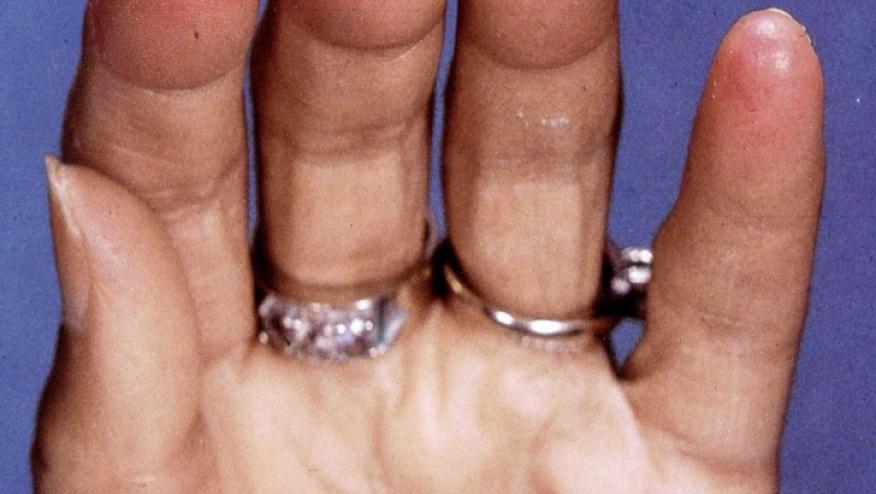
An international study reports 60% progression-free survival at 10 years after autologous bone marrow transplantation, adding important evidence on sustained positive clinical outcomes and long-term safety in patients treated for early severe systemic sclerosis.
Systemic sclerosis is a rare chronic and heterogenous autoimmune disease hampered by severe morbid and mortal outcomes and few well designed clinical trials with long-term outcomes.
The NISSC1-LTE study conducted by the Autoimmune Diseases Working Party of EBMT is the first international prospective providing long-term results on autologous haematopoietic stem-cell transplantation (HSCT) in patients with early severe systemic sclerosis. Published in The Lancet Rheumatology, the study followed 80 patients for a median of 9.2 years after transplantation.
NISSC1-LTE extends the original prospective EBMT NISSC1 study, drawing on follow-up data from 13 participating centres in France, Germany, the Netherlands, Italy, Spain, Switzerland and Brazil.
The NISSC1 cohort comprised patients who underwent their first autologous HCT for severe progressive systemic sclerosis between 2012 and 2016. The findings provide evidence on sustained disease control and the long-term risks of treatment.
Progression-free survival was 81% (95% CI 71–88) at 2 years abd at 10 years progression-free survival was 60% - overall survival was 71%. In addition, 34 of 80 patients (43%) were alive and had not required further immunosuppressive treatment at their last follow-up.
The median modified Rodnan skin score, a measure of skin involvement, decreased from 24 at baseline to 6 at five years and 5 at 10 years. Median forced vital capacity was 72% of predicted at baseline and 71% at 10 years, while median diffusing capacity of the lungs for carbon monoxide (DLCO) was 59% and 61% of predicted, respectively.
18 patients died during the study; causes of death were autologous HSCT-related in five (6%) of 80 patients, disease progression in nine (11%) patients, post-autologous HSCT malignancy in two (3%) patients, and late serious infection in two (3%) patients.
As an observational study without a control group, NISSC1-LTE does not directly compare HCT with alternative treatments. Some longitudinal data were incomplete, and 12 patients were lost to follow-up.
Results from NISSC1-LTE were previously presented at the 2026 Annual Meeting of EBMT. The findings support consideration of autologous HCT in carefully selected patients with severe systemic sclerosis, in line with existing EBMT, EULAR and CIBMTR recommendations, and offer a long-term reference for evaluating emerging cellular therapies. The study illustrates the contribution of EBMT Working Party research and shared clinical data to evidence-informed care.
Related Content
Systemic sclerosis, or scleroderma, is one the most challenging rheumatic diseases to manage due to its heterogenous, multisystem manifestations and the limited treatment options for some of its progressive and debilitating complications. Intravenous immunoglobulin (IVIG) is often utilized as an off-label therapy for refractory manifestations. However, evidence guiding usage in SSc remains limited. A recent systemic review and meta-analysis by Jozelio Freire de Carvalho and colleagues analyzed the available literature on this therapy.
In an oral abstract presentation on Wednesday 3rd June, Fredrik Albach presented results for mivocabtagene autoleucel – an autologous, fully human CD19-directed CAR-T cell therapy – from Phase 1 of the prospective, open-label COMPARE trial in six patients with anti-citrullinated protein antibody …
Systemic sclerosis (SSc) may have overlap features such as myositis. When present, myositis in SSc is associated with an increased risk of cardiac involvement and a shift in mortality away from ILD towards a greater cardiac risk.
ADD THE FIRST COMMENT
Disclosures
Disclosures
The author has no conflicts of interest to disclose related to this subject




If you are a health practitioner, you may Login/Register to comment.
Due to the nature of these comment forums, only health practitioners are allowed to comment at this time.