


Articles By Jack Cush, MD
Faith and Miracle Larry
This week on the podcast, Dr. Jack Cush recalls what life was like early on during COVID, from March to June of 2020. During this time, his close friend, Larry, contracted COVID-19 and was hospitalized, intubated and put on mechanical ventilation for nearly 2 months.
Read Article
2022 EULAR Recommendations for ANCA-associated Vasculitis
EULAR has published the 2022 update on recommendations for the management of antineutrophil cytoplasmic antibody (ANCA)-associated vasculitis (AAV).
Read Article
Polypharmacy Increased in Psoriatic Arthritis
Psoriatic arthritis (PsA) is plagued by obesity, depression and increased comorbidities; now it appears that polypharmacy adds to the burden of managing PsA.
Read Article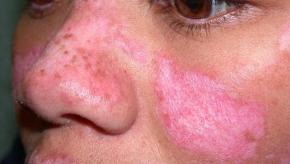
A Pilot Trial of Anifrolumab in Discoid Lupus
A research report in JAMA Dermatology describes the use of the type 1 interferon receptor inhibitor anifrolumab in patients with chronic discoid lupus erythematosus (DLE).
Read Article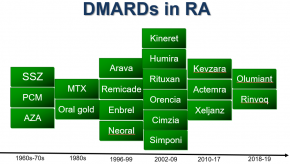
Cost-Effective Use of Biological and Targeted Synthetic DMARDs
An international task force of 13 European experts have developed evidence-based points to consider regarding the cost-effective use of biological and targeted synthetic disease-modifying antirheumatic drugs (b/tsDMARDs) in the treatment of inflammatory rheumatic diseases (including rheumatoid arthritis, psoriatic arthritis and axial spondyloarthritis).
Read Article
Carpal Tunnel - Steroid injection vs. Night Splinting
A prospective, pragmatic, open-label, randomized trial conducted by the UK National Health Service, studied interventions in patients with carpal tunnel syndrome (CTS) and found no advantage to either CTS corticosteroid injection (CSI) or night splinting (NS) as the initial treatment of CTS.
Read Article
Big Time Vasculitis (3.10.2023)
Dr. Jack Cush Reviews the News and Journal articles from the past week on RheumNow. This weeks highlights includes insights on scleroderma, myositis, vasculitis and answers the question - does aggressive biologic treatment of psoriasis prevent future psoriatic arthritis?
Read Article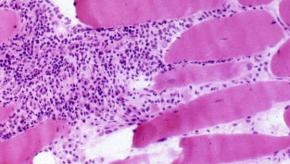
Long-Term Survival of Idiopathic Inflammatory Myopathies
A single center cohort study analyzed the outcome and survival of idiopathic inflammatory myositis (IIM) patients and showed good 5 and 10 year survival but showed significant declined 15-25 years post-diagnosis.
Read Article
Geo-epidemiology of Autoantibodies in Rheumatoid Arthritis
A multinational study of rheumatoid arthritis (RA) patients shows a variety of post-translationally modified anti-modified protein antibodies (AMPA). While AMPA differed in different ethnic populations, their levels correlated with total serum IgG.
Read Article
Higher Rehospitalization Rates in Younger SLE Patients
A Medicare study shows that young adults with systemic lupus erythematosus (SLE) exhibit very high 30-day rehospitalization rates (36%) that are significantly higher than older SLE patients and age matched non-SLE patients.
Read Article