


Articles By Jack Cush, MD
The Burden of Gout
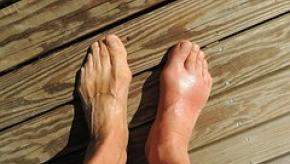
Danve and Neogi have an editorial in the current Arthritis & Rheumatology about the burden of gout that affects 41 million adults worldwide, according to the Global Burden of Disease Study 2017 (GBD 2017) also published in the same issue. This makes gout twice as prevalent as rheumatoid arthritis (19 million). This prevalence of this most common inflammatory arthritis is undermined by numerous challenges in the diagnosis and examples of insufficient disease management. The editorial points out the magnitude of the disease and the many challenges facing rheumatologists.
Read Article
Serial DEXA May Not Be Advisable
Does repeat bone mineral density (BMD) measurement predict subsequent fracture risk in postmenopausal women?
Read Article
SEMIRA Study: Best to Continue Low Dose Steroids in RA
The SEMIRA trial studied the tapering vs continuing oral glucocorticoids in rheumatoid arthritis (RA) patients who achieved a low disease activity state (with tocilizumab) were more likely to show safety and better disease control with continuing steroids - even though two-thirds of patients were able to safely taper their glucocorticoid dose.
Read Article
GI Perforations with Tocilizumab Greater than Other Biologics
A study from a Swedish population shows the real-world risk of gastrointestinal (GI) perforations in rheumatoid arthritis (RA) patients taking biologics finds that the risk was greatest in RA patients taking tocilizumab (TCZ), compared with RA patient taking tumour necrosis factor inhibitors (TNFi) and other non-TNFi biologics.
Read Article
ACR Advice on Reopening Strategies
The American College of Rheumatology (ACR) has issued a guidance document for rheumatologists and rheumatology health professionals to consider as practices, business and patient care begins to reopen in this next phase of the COVID-19 pandemic.
Read Article
RheumNow Podcast – COVID-19 Responds to Steroids (7.24.20)
Dr. Jack Cush reviews the News and Journal Reports from the past week on RheumNow.com.
Read Article
Low Risk of COVID in Biologic Treated Rheum Patients
In an Annals of Rheumatic Disease report, Italian investigators performed consecutive testing for SARS-CoV-2 (IgM and IgG) between 25 March to 25 May 2020 and compared test results between rheumatic disease (RMD) patients and the general population.
Read Article
Higher Rates of SARS-CoV-2 Seropositivity in the USA
The number of reporting cases of COVID-19 infection tends to underestimate the true prevalence of infection as only the more severe cases (e.g.,acute respiratory syndrome) get tested or go to the hospital. JAMA Internal Medicine reports that a cross-sectional seroprevalence study from the U.S. shows that COVID-19 is underreported and that actual infection rates can be 6 to 24 times more prevalent than currently reported infections due to SARS-CoV-2.
Read Article
Steroids and Tocilizumab in Cytokine Storm Syndrome
A recent study from the Netherlands has shown that patients with severe COVID-19-associated cytokine storm syndrome (CSS) with high dose steroids and tocilizumab had a faster recovery, less need for invasive mechanical ventilation and fewer deaths when compared to CSS patients receiving supportive care only. They studed COVID-19 patients with CSS, defined as rapid respiratory deterioration plus at least two of the following biomarkers: a) C-reactive protein >100mg/L; b) ferritin >900 µg/L; or c) D-dimer >1500 µg/L.
Read Article
Risankizumab Outduels Secukinumab in Psoriasis
The IMMerge trial has demonstrated the superiority of interleukin (IL)‐23 over IL-17A inhibition adults with plaque psoriasis.
Read Article