


QD Clinic: Sjogren's Beyond the Dryness Save
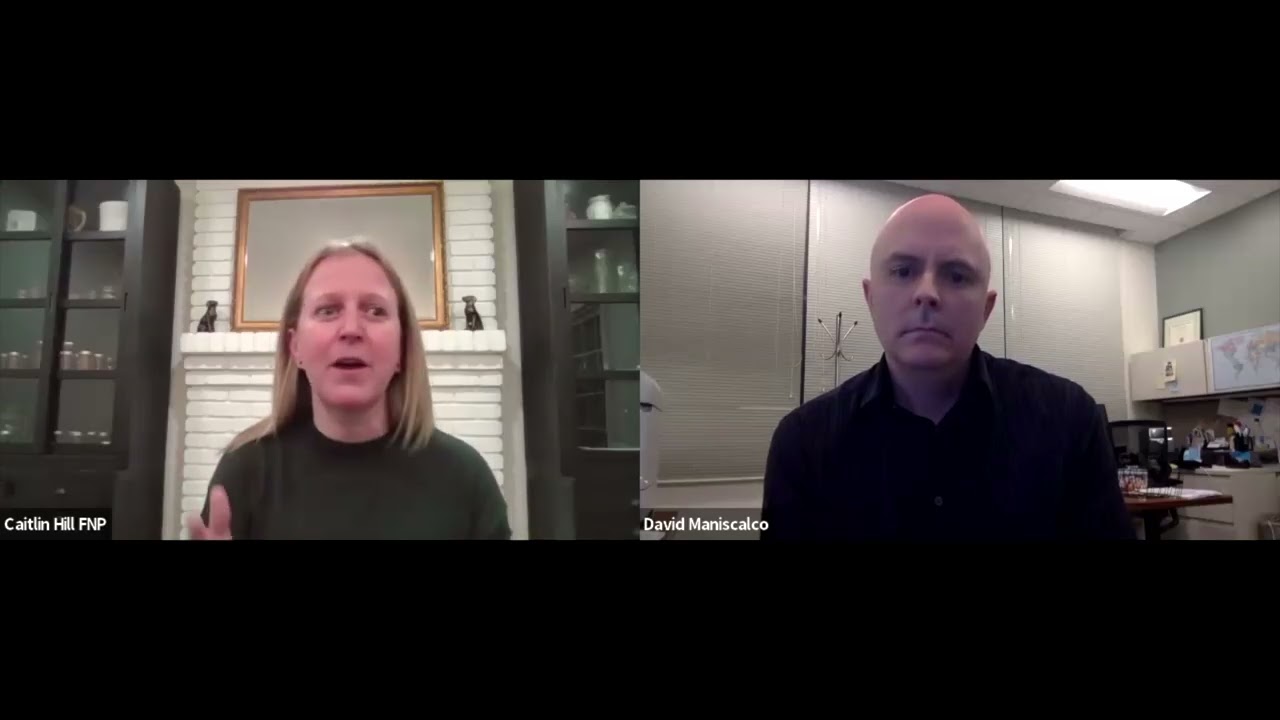
Caitlin Hill, FNP, and David Maniscalco, MD, Santa Rosa, CA present this QD Clinic: Sjogren's - Beyond the Dryness. Visit our Mission APP: Partners in Care site for more APP-focused articles and videos.
Transcription
Hello and welcome to AQD Clinic. My name is Caitlyn Hill. I'm a nurse practitioner working in a federally qualified health center in Sonoma County, which is in Northern California. I both practice primary care as well as provide some in-house rheumatology care for my health center's patients. And with me today is Dr. David Manaskcalo, rheumatologist at Sutter Santa Rosa. Over the past several years we've developed a collaborative relationship, albeit somewhat atypical, caring for many shared patients, and I really would feel that he's become an invaluable consultative resource for me. So today we're presenting a case titled Sjögren's Beyond the Dryness.
Our patient is a 39-year-old female with no significant medical history. She initially presented to me for evaluation of a lump on her face. So on exam she had non-tender enlargement of her right parotid. There was no signs of infection. She denied any previous episodes of swelling and there was no further enlargement or pain associated with eating. I ordered a CT scan of both parotid glands because the left felt like maybe it was a little bit enlarged as well, and that came back showing bilateral parotid gland enlargement with scattered nodules. And our differential from radiology included suppurative intraparotid lymph nodes, possibly secondary to some sort of infection or inflammation, lymphoepithelial cysts, or a Warthin tumor, and they recommended that we proceed with a fine needle aspiration with a biopsy.
So the patient comes back to me to review her CT results and at this time her parotids were just markedly enlarged, still the right more than the left, and on the right side there's a palpable if not visible nodule present. So given both her CT and the chronicity of the swelling I performed a focused review of systems and ordered labs. In terms of her review of systems, again pretty unremarkable — she denied any fever, chills, night sweats, no abnormal weight loss, no abnormal bleeding or bruising, no rash, photosensitivity, no muscle or joint concerns, chest pain, shortness of breath, cough, nothing. Denied any oral or nasal ulcers, denied dry eyes. She did note maybe some dry mouth.
And her labs came back remarkable for a positive ANA with a high titer of 1 to 1280 in a speckled pattern. And both her rheumatoid factor as well as her SSA antibody were strongly positive, and her complement — her C4 — returned low. So given these findings I was suspicious for Sjögren's syndrome, referred the patient to ophthalmology to assess for any dry eye disease, and I asked her to see her dentist to follow up to see if maybe there was some dry mouth. A biopsy through interventional radiology was ordered and from their results our differential included chronic parotitis, you know including an autoimmune parotitis, again intraparotid lymph nodes, or possibly a lymphoproliferative disorder. So at this point, given concern as to whether or not this could just be typical for Sjögren's, or how concerned should I be, how best to manage the parotid mass, I reached out to Dr. Manaskcalo.
Yeah, thanks for that, Caitlyn. So definitely it was an interesting case, and when Caitlyn reached out to me I definitely appreciated that she was having this case and escalated care for it, because it was a little bit unique. I think when I first saw what she was discussing about this particular case, what struck me was the parotid gland swelling and the low complement level, which at the time was a C4 level. And you know it would be pretty easy — with the patient having sicca symptoms, they had an SSA antibody that was positive — I think it would be easy to fall into sort of that trap of premature closure, where you could attribute this gland swelling just to Sjögren's syndrome. But I think it's important to acknowledge that with Sjögren's syndrome there definitely can be an association with malignancy, particularly lymphoma. And when you look at some of the statistics, some would suggest that a five- to 44-fold increased risk of developing lymphoma can happen in Sjögren's patients. Some statistics would state that about maybe 5 to 10% lifetime risk of developing lymphoma in association with Sjögren's syndrome.
I think also it's always important to take into account potential risk factors for our Sjögren's syndrome patients that might lead them to develop something like a lymphoma. A few of these are an enlarged parotid gland or salivary glands in general, and that's probably one of the highest risks that we see. Also for patients that have had the disease for greater than 10 years, so kind of chronic disease. Other suggestions have been associated lymphadenopathy, potentially associated Raynaud's phenomenon, hypergammaglobulinemia, and such. So those are some things that we like to
look out for as far as risk factors from a lab standpoint. The things that we look at are um you know do the patients have leukopenia, uh low complements like the patient did here, and then sometimes patients will have you know an elevated rheumatoid factor and actually the loss of that rheumatoid factor can sometimes be an increased risk for um a patient developing a lymphoma. And then finally we always think about also a monoclonal gammopathy will be something else to look at. Um and so that's part of the reason why we check uh you know things like complement levels and um the SPEP rheumatoid factor in our patients that we might feel are at a higher risk for lymphoma.
The lymphoma that you know we typically — that would be most commonly seen with Sjögren's syndrome is a non-Hodgkin's lymphoma, specifically MALT — mucosa-associated lymphoid tissue lymphoma, also known um as marginal zone lymphoma. The second most common that we see in Sjögren's syndrome would be diffuse large B-cell lymphoma.
Um I just wanted to note you know I did have a recent patient um who presented similarly to this case um — significant parotid gland swelling, lymphadenopathy, had some systemic symptoms um, had an MRI done where the report said that it looked consistent with Sjögren's syndrome, however SSA antibody was negative, and again on the top of the list that we need to think about is is there an associated lymphoma. And so we did pursue a biopsy and she was indeed diagnosed with a B-cell lymphoma, has undergone treatment, her sicca symptoms have resolved. So ultimately we felt like she probably never had Sjögren's syndrome. It was all lymphoma. So again really important to um think about this um in Sjögren's syndrome patients and also form a differential diagnosis.
Um you know anytime we see salivary gland swelling, you know in addition to malignancy, lymphoma, and Sjögren's syndrome, we want to think about other etiologies. Some of the rheumatic conditions that we would think about of course are um IgG4-related disease, which I think has become more prevalent and on uh physicians' and um healthcare practitioners' um radar. Um sarcoidosis would be another one, and even um in some cases vasculitis if if the you know supporting clinical findings were there as well. And then outside of sort of rheumatic diseases, you know, we would always want to think about certain chronic infections um and um you know getting into the more rare etiologies, infiltrative diseases potentially like amyloidosis um and histiocytic disorders.
Uh but in our particular case, you know, given the parotid gland enlargement, you know the low C4 uh complement level, there was definitely concern for an associated malignancy, and so we definitely you know in talking with Caitlyn I recommended that we we definitely pursue a core biopsy, um definitely get her referred to hematology oncology as soon as possible, and we were able to do that. And so further workup confirmed a diagnosis of marginal zone lymphoma for our patient, and we feel that this case really highlights that you know Sjögren's is more than just dryness. You know it is a systemic autoimmune disease and it can evolve. It can change over time and and complications may arise. So awareness and early recognition of these red flags that are associated with lymphoma — they can be life-saving.
Um our patient was treated by hematology with rituximab and and fortunately she's currently doing very well. She continues to follow with me for her primary care, has routine surveillance with hematology, and continues with Dr. Manoscalco for her rheumatologic care. Thank you for your time and for listening. Thank you.
Our patient is a 39-year-old female with no significant medical history. She initially presented to me for evaluation of a lump on her face. So on exam she had non-tender enlargement of her right parotid. There was no signs of infection. She denied any previous episodes of swelling and there was no further enlargement or pain associated with eating. I ordered a CT scan of both parotid glands because the left felt like maybe it was a little bit enlarged as well, and that came back showing bilateral parotid gland enlargement with scattered nodules. And our differential from radiology included suppurative intraparotid lymph nodes, possibly secondary to some sort of infection or inflammation, lymphoepithelial cysts, or a Warthin tumor, and they recommended that we proceed with a fine needle aspiration with a biopsy.
So the patient comes back to me to review her CT results and at this time her parotids were just markedly enlarged, still the right more than the left, and on the right side there's a palpable if not visible nodule present. So given both her CT and the chronicity of the swelling I performed a focused review of systems and ordered labs. In terms of her review of systems, again pretty unremarkable — she denied any fever, chills, night sweats, no abnormal weight loss, no abnormal bleeding or bruising, no rash, photosensitivity, no muscle or joint concerns, chest pain, shortness of breath, cough, nothing. Denied any oral or nasal ulcers, denied dry eyes. She did note maybe some dry mouth.
And her labs came back remarkable for a positive ANA with a high titer of 1 to 1280 in a speckled pattern. And both her rheumatoid factor as well as her SSA antibody were strongly positive, and her complement — her C4 — returned low. So given these findings I was suspicious for Sjögren's syndrome, referred the patient to ophthalmology to assess for any dry eye disease, and I asked her to see her dentist to follow up to see if maybe there was some dry mouth. A biopsy through interventional radiology was ordered and from their results our differential included chronic parotitis, you know including an autoimmune parotitis, again intraparotid lymph nodes, or possibly a lymphoproliferative disorder. So at this point, given concern as to whether or not this could just be typical for Sjögren's, or how concerned should I be, how best to manage the parotid mass, I reached out to Dr. Manaskcalo.
Yeah, thanks for that, Caitlyn. So definitely it was an interesting case, and when Caitlyn reached out to me I definitely appreciated that she was having this case and escalated care for it, because it was a little bit unique. I think when I first saw what she was discussing about this particular case, what struck me was the parotid gland swelling and the low complement level, which at the time was a C4 level. And you know it would be pretty easy — with the patient having sicca symptoms, they had an SSA antibody that was positive — I think it would be easy to fall into sort of that trap of premature closure, where you could attribute this gland swelling just to Sjögren's syndrome. But I think it's important to acknowledge that with Sjögren's syndrome there definitely can be an association with malignancy, particularly lymphoma. And when you look at some of the statistics, some would suggest that a five- to 44-fold increased risk of developing lymphoma can happen in Sjögren's patients. Some statistics would state that about maybe 5 to 10% lifetime risk of developing lymphoma in association with Sjögren's syndrome.
I think also it's always important to take into account potential risk factors for our Sjögren's syndrome patients that might lead them to develop something like a lymphoma. A few of these are an enlarged parotid gland or salivary glands in general, and that's probably one of the highest risks that we see. Also for patients that have had the disease for greater than 10 years, so kind of chronic disease. Other suggestions have been associated lymphadenopathy, potentially associated Raynaud's phenomenon, hypergammaglobulinemia, and such. So those are some things that we like to
look out for as far as risk factors from a lab standpoint. The things that we look at are um you know do the patients have leukopenia, uh low complements like the patient did here, and then sometimes patients will have you know an elevated rheumatoid factor and actually the loss of that rheumatoid factor can sometimes be an increased risk for um a patient developing a lymphoma. And then finally we always think about also a monoclonal gammopathy will be something else to look at. Um and so that's part of the reason why we check uh you know things like complement levels and um the SPEP rheumatoid factor in our patients that we might feel are at a higher risk for lymphoma.
The lymphoma that you know we typically — that would be most commonly seen with Sjögren's syndrome is a non-Hodgkin's lymphoma, specifically MALT — mucosa-associated lymphoid tissue lymphoma, also known um as marginal zone lymphoma. The second most common that we see in Sjögren's syndrome would be diffuse large B-cell lymphoma.
Um I just wanted to note you know I did have a recent patient um who presented similarly to this case um — significant parotid gland swelling, lymphadenopathy, had some systemic symptoms um, had an MRI done where the report said that it looked consistent with Sjögren's syndrome, however SSA antibody was negative, and again on the top of the list that we need to think about is is there an associated lymphoma. And so we did pursue a biopsy and she was indeed diagnosed with a B-cell lymphoma, has undergone treatment, her sicca symptoms have resolved. So ultimately we felt like she probably never had Sjögren's syndrome. It was all lymphoma. So again really important to um think about this um in Sjögren's syndrome patients and also form a differential diagnosis.
Um you know anytime we see salivary gland swelling, you know in addition to malignancy, lymphoma, and Sjögren's syndrome, we want to think about other etiologies. Some of the rheumatic conditions that we would think about of course are um IgG4-related disease, which I think has become more prevalent and on uh physicians' and um healthcare practitioners' um radar. Um sarcoidosis would be another one, and even um in some cases vasculitis if if the you know supporting clinical findings were there as well. And then outside of sort of rheumatic diseases, you know, we would always want to think about certain chronic infections um and um you know getting into the more rare etiologies, infiltrative diseases potentially like amyloidosis um and histiocytic disorders.
Uh but in our particular case, you know, given the parotid gland enlargement, you know the low C4 uh complement level, there was definitely concern for an associated malignancy, and so we definitely you know in talking with Caitlyn I recommended that we we definitely pursue a core biopsy, um definitely get her referred to hematology oncology as soon as possible, and we were able to do that. And so further workup confirmed a diagnosis of marginal zone lymphoma for our patient, and we feel that this case really highlights that you know Sjögren's is more than just dryness. You know it is a systemic autoimmune disease and it can evolve. It can change over time and and complications may arise. So awareness and early recognition of these red flags that are associated with lymphoma — they can be life-saving.
Um our patient was treated by hematology with rituximab and and fortunately she's currently doing very well. She continues to follow with me for her primary care, has routine surveillance with hematology, and continues with Dr. Manoscalco for her rheumatologic care. Thank you for your time and for listening. Thank you.




If you are a health practitioner, you may Login/Register to comment.
Due to the nature of these comment forums, only health practitioners are allowed to comment at this time.