Circadian rhythms may be disrupted or become exaggerated in a variety of inflammatory conditions. For instance, interleukin-6 (IL-6) and IL-1 have a known circadian cycle to their production, but the same can not be said for TNF.

All News
A EULAR task force of 24 individuals (including 15 rheumatologists) have updated their previous 2006 guidelines for gout. The current update, which includes 11 recommendations, is based on a systematic literature review and a Delphi consensus approach to recommendations.
Highlights from this week on RheumNow.com include:
1. Having #RA in addition to solid cancer (breast, lung, prostate, colon) increases mortality rates by 40-50% in elders https://t.co/aitjusmOai
2. The global market for rheumatoid arthritis therapies was $19.9 billion in 2015, expected to reach $21.3B by 2020 https://t.co/d2Sh5C8y9f
3. Half of doctors never heard of MACRA:Medicare Access & CHIP Reauthorization Act. Starts on Jan 1st! https://t.co/eYgWBWCw6y Blog:https://t.co/sRKZSOFyNV
And more!
Infections are a concern for many when using tumor necrosis factor-α inhibitor (TNFi) therapy to treat inflammatory disorders. Even moreso in those at higher risk.
Psoriasis and psoriatic arthritis are more prevalent, often more severe, and sometimes refractory to conventional treatments in HIV-positive patients, but clinicians are understandably concerned about moving on to immunosuppressive anti-tumor necrosis factor (TNF) agents when other treatments fai
The recent edition of Science has an interesting article on the cause of death in a dinosaur - septic arthritis.
Palentologists have unearthed a 70 million year old duck-billed dinosaur near New Jersey and found that the arm bones were not quite right.
Serial biomarker or clinical metric assessments are ubiquitous and commonly used to assess patients with rheumatoid arthritis (HAQ, CDAI, RAPID3), lupus (C3, C4, dsDNA) and gout (uric acid). But numerous disorders are either harder to assess or have tools or metrics that that are not commonly used.
Patient-reported outcomes in rheumatoid arthritis (RA) correlate independently with measures of inflammation and structural damage on MRI scans, according to data from a longitudinal study.
Nerve growth factor (NGF) is a key modulator of pain perception, Inhibitors of NGF are being studied in several chronic pain conditions, including osteoarthritis (OA).
There is considerable heterogeneity in "red flags" amongst numerous low back pain (LBP) guidelines worldwide. A "red flags" denotes a finding, which if present, imparts a significantly high risk of underlying serious spinal pathology with considerable subsequent morbidity or mortality.
Chingcuanco and coinvestigators have reported on their comparative analysis of biosimilars and their originator TNF inhibitors in the current issue of Annals of Internal Medicine. (Citation source: http://buff.ly/2arTd1q)
Tumor necrosis factor (TNF) receptor-associated periodic syndrome (TRAPS) is an autosomal-dominant autoinflammatory disease resulting from mutations of the TNF super family receptor 1A (TNFRSF1A) gene.
A study published in the British Medical Journal examines whether knee surgery or conservative medical management benefits those with degenerative meniscal tears. (Citation source http://buff.ly/2awVbKu)
Dr Jack Cush reviews this week's highlights from RheumNow.com.
Burmester and colleagues have published their review of the long-term outcomes and safety issues with the TNF inhibitor, adalimumab (ADA). The analysis included 15,132 patients exposed to adalimumab in global RA clinical trials.
Pregnancy complications of anti-phospholipid syndrome (APS) have included recurrent abortions, spontaneous fetal loss, preeclampsia, and premature birth. The etiopathogenesis of these events has been presumed to be placental thrombosis or infarction.
Rheumatology News has a novel online report about combined rheumatology-dermatology clinics. In the last several years, there have been a few of these in operation (Boston, Chicago, Rhode Island).
From tofacitinib developmental trials in RA and psoriasis and adherence to T2T in early RA to a rheumatology pearl about dapsone and much more, here are the highlights of what you may have missed on RheumNow.com this week.
Valeant Pharmaceuticals International's experimental drug to treat psoriasis should be approved as long as certain measures are put in place to mitigate the risk of suicide, an advisory committee to the U.S. Food and Drug Administration concluded on Tuesday.
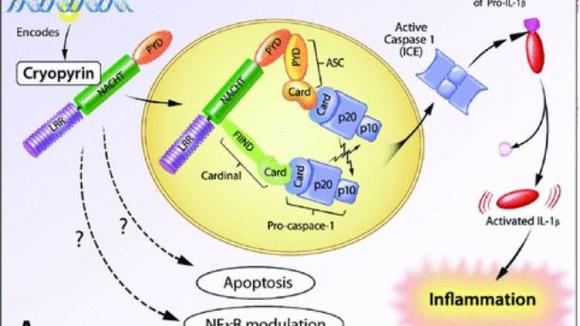
The gene mutations underlying inflammasome activity have been well described, but there appears to be variable penetrance among patients with the same gene mutation, suggesting additional mechanisms may influence disease expression.