Article
Abatacept (Orencia) may be a useful treatment option for patients with rheumatoid arthritis (RA) who develop interstitial lung disease (ILD), a Spanish study suggested.

Search for Terms or Answers
Abatacept (Orencia) may be a useful treatment option for patients with rheumatoid arthritis (RA) who develop interstitial lung disease (ILD), a Spanish study suggested.
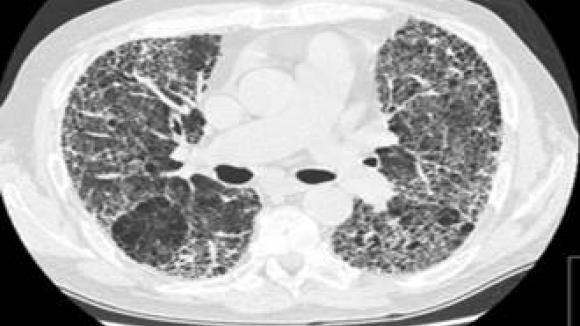
EUSTAR study results published in Arthritis Research & Therapy show the current state of immunosuppressive use in systemic sclerosis patients with interstitial lung disease (SSc-ILD) to be ill-defined, but that liberal use of glucocorticoids (GC) in SSc-ILD should be discouraged

In the past 2 decades, mortality from end-stage renal disease (ESRD) among U.S. patients with granulomatosis with polyangiitis (GPA) has declined significantly, a nationwide study found.
A claims data analysis shows that abatacept use in rheumatoid arthritis (RA) patients yielded a modestly reduced cardiovascular risk when compared to patients receiving TNF inhibitors (TNFi).

Arkema et al has published in Annals of Rheumatic Disease a study showing that ischaemic and haemorrhagic stroke (CVA) is elevated in systemic lupus erythematosus (SLE) compared with the general population, especially in the first year.

Dr. Jack Cush reviews highlights and news from the past week on RheumNow.com.

A prospective Swedish study between 2001–2009 found a higher risk of aortic regurgitation, pacemaker, AV block and atrial fibrillation in SpA, AS, uSpA and PsA patients.

The Cochrane Database has published its review of calcium channel blockers (CCB) in Raynaud's phenomenon, showing CCBs may be useful in reducing the frequency, duration, severity of attacks, pain and disability associated with Raynaud's phenomenon, especially with primary Raynaud's.

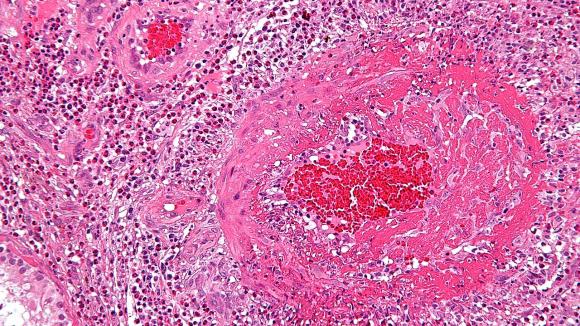
The Food and Drug Administration (FDA) approved use of Nucala (mepolizumab) for use in treating adults with eosinophilic granulomatosis with polyangiitis (EGPA), previously known as Churg-Strauss vasculitis. This is first FDA-approved therapy specifically to treat EGPA.
Dr. Jack Cush covers the news and journal articles published on RheumNow.comin the past week.
Drug Safety has published a systematic review of the FDA’s Adverse Event Reporting System (FAERS) and finds numerous reports of thromboembolic adverse events (AEs) associated with two currently marketed Janus kinase (JAK) inhibitors, tofacitinib (Xeljanz) and ruxolitinib (Jakafi).

The PRECISION trial reported last year that celecoxib appears to be safer than the NSAIDs naproxen or ibuprofen in treating osteoarthritis (OA) and rheumatoid arthritis patients who are at increased cardiovascular risk. New data suggests that adding aspirin may nullify this advantage, according to a study presented at the annual American Heart Association meeting and reported by Medscape.

Rheumatoid arthritis (RA) is a chronic, inflammatory disease with systemic effects beyond the joints. While RA patients are known to have signficantly higher risks for cardiovascular disease and venous thromboembolic events, an association with stroke (CVA) is unclear.

In the registration trials for febuxostat there were concerns about a cardiovascular (CV) safety signal. In studies of the effect of allopurinol on CV risk/events allopurinol has found to be protective so whether febuxostat is different is a point to clarify.

We know that cardiovascular disease (CVD) is the leading cause of death in RA and that traditional risk factors do not fully account for increased risk.
Gout coassociates with many of the disorders within the metabolic syndrome - diabetes, hypertension, hyperlipidemia and obesity. Not surprisingly, gout is a risk factor for cardiovascular disease, but the risk magnitude for myocardial infarction (MI), and stroke are unclear.

The RheumNow Week in Review discusses the past week's news, journal articles and highlights from RheumNow.com. This week's report discusses regulatory actions by NICE and FDA, higher death rates in RA and psoriasis, increased risk of RA with Asthma, rising numbers for OA, RA, and STDs.
A report in the Journal of the American Academy of Dermatology shows that psoriasis duration and inflammation may result in cardiovascular inflammation and an increased risk of major adverse CV events.
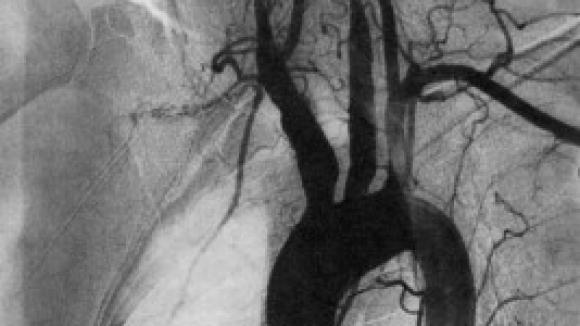
A French retrospective study of 318 Takayasu's arteritis (TA) patients shows that 50% of patients will relapse and experience a vascular complication ≤10 years from diagnosis.
By downloading this material, I acknowledge that it may be used only for personal use and personal education and that I will accredit RheumNow.com as the source and owner of this material. Commercial use or mass reproduction of this material without permission from RheumNow (info@rheumnow.com) is prohibited.