

All News

RheumNow Podcast – Combination Biologics
Dr. Jack Cush serves up this week's news and articles from RheumNow.com.
Read Article
Autoimmune Risk of Death Up during COVID
A population-based study in the UK shows that patients with rare autoimmune rheumatic diseases (RAIRD) were 44% more likely to die during the 2020 COVID-19 pandemic (March - April) compared to either the general population or their pre-COVID risk.
Read Article
NICE Guidelines on Chronic Pain Management
In the United Kingdom, where it is estimated that chronic pain affects one‑third to one‑half of the population, NICE (National Institute for Health and Care Excellence) has recently released an updated guideline on the management of chronic pain for people aged 16 years and over.
Read Article
IL-23 Targeting for Enthesitis in Psoriatic Arthritis
Treatment with guselkumab (Tremfya) was effective in resolving enthesitis among patients with psoriatic arthritis (PsA), a post-hoc analysis of two phase III trials found.
Read Article
Low Risk of Malignancy with Secukinumab
Analysis of ongoing safety from the secukinumab (SEC) drug development program shows a low risk for malignancy in SEC patients treated for up to five years for either psoriasis, psoriatic arthritis (PsA) or ankylosing spondylitis (AS).
Read Article
DMARD Dropouts During COVID-19
A full year from the onset of the SARS-COV-2 pandemic, rheumatologists are still seeing the consequences of COVID, with many patients avoiding usual care, follow-up visits, routine lab testing and with many self-stopping their antirheumatic meds, because it seemed like the right thing to do.
Read Article
Anti-inflammatory Diet Control of Rheumatoid Arthritis
The TOMORROW study assessed the relationship between diet and disease activity in rheumatoid arthritis (RA) patients and has shown that RA patients are more likely to have higher inflammatory diets, but that a change to an anti-inflammatory diet resulted in lower disease activity s
Read Article
RheumNow Podcast – Mistakes with Steroids
Dr Jack Cush gives his spin on this week's RheumNews and Rheum Research from RheumNow.com.
Read Article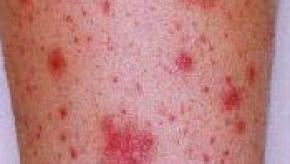
Overview of New VEXAS Syndrome
Medscape offers up an informative overview of the newly described syndrome called VEXAS discovered by researchers at the National Institutes of Health.
Read Article
GLP-1 Therapy in Knee Osteoarthritis
Knee osteoarthritis is best managed by weight loss, as the effects of most analgesic therapies have been marginal and debatable. The use of anti-diabetic glucagon-like peptide-1 therapies have demonstrated significant weight loss benefits; hence this trial evaluated the potential weight loss and pain relieving effects of liraglutide in obese patients with KOA.
Read Article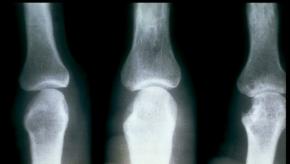
Can Targeting RANKL in RA Heal Erosions?
Treatment with denosumab (Prolia) helped heal bone erosions over 2 years among patients with rheumatoid arthritis whose disease activity was well controlled, researchers reported.
Read Article
Rheumatology Care Derailed by COVID-19
A survey study from the ArthritisPower PPRN or CreakyJoints database shows that during the COVID-19 pandemic patient care was substantially affected in unforeseen ways.
Read Article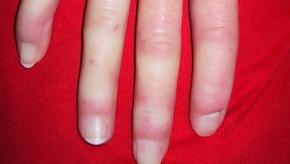
Rituximab in Systemic Sclerosis?
No drug is FDA approved to manage the skin or joint complaints of systemic sclerosis (SSc); a recent metanalysis suggests that rituximab may improve skin score and disease activity indices (DAS, mRSS) while stabilizing organ involvement in SSc patients.
Read Article
RheumNow Podcast – Upadacitinib Wins in PsA (4.2.2021)
Dr Jack Cush reviews the news and Journal reports and takes "Back Talk" questions from viewers.
Read Article
US Senate Introduces the Safe Step Act
The American College of Rheumatology (ACR) today commended leaders in the United States Senate for introducing the bipartisan Safe Step Act of 2021 (S. 464), new legislation that would place reasonable limits on insurer use of step therapy.
Read Article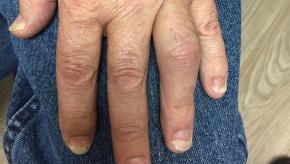
Upadacitinib Clinical Efficacy in Psoriatic Arthritis
McInnes and colleagues have published the results of the SELECT - PsA trial in NEJM showing updacitinib (UPA) to be superior to placebo in active psoriatic arthritis (PsA) patients, with 15 mg UPA equal to adalimumab (ADA) and 30 mg UPA qd being superior to ADA.
Read Article
Inflammatory Conditions Up the Risk of Premature Myocardial Infarction
The European Journal of Preventive Cardiology reports that younger patients with their first myocardial infarction before age 50 yrs have a higher risk of having a systemic inflammatory disease (SIDs) and higher rates all-cause mortality.
Read Article
RheumNow Podcast – Infection in ANCA-Associated Vasculitis (3.26.2021)
Dr. Jack Cush reviews the news, FDA Denials and journal articles from the past week on RheumNow.com.
Read Article
FDA Panel Rejects Tanezumab for Osteoarthritis
A two day FDA review by the Drug Safety and Risk Management and Arthritis Advisory Committees has yielded a 19-1 vote against the approval of tanezumab, a nerve growth factor inhibitor, for use in osteoarthritis (OA).
Read Article
Links:

