Dr. Jack Cush Reviews the News and Journal articles from the past week on RheumNow. This weeks highlights includes insights on scleroderma, myositis, vasculitis and answers the question - does aggressive biologic treatment of psoriasis prevent future psoriatic arthritis?
All News
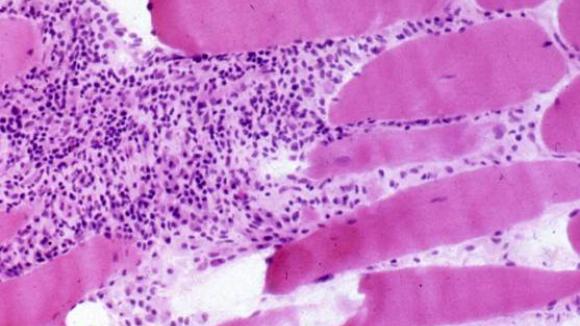
A single center cohort study analyzed the outcome and survival of idiopathic inflammatory myositis (IIM) patients and showed good 5 and 10 year survival but showed significant declined 15-25 years post-diagnosis.
A multinational study of rheumatoid arthritis (RA) patients shows a variety of post-translationally modified anti-modified protein antibodies (AMPA). While AMPA differed in different ethnic populations, their levels correlated with total serum IgG.
A Medicare study shows that young adults with systemic lupus erythematosus (SLE) exhibit very high 30-day rehospitalization rates (36%) that are significantly higher than older SLE patients and age matched non-SLE patients.
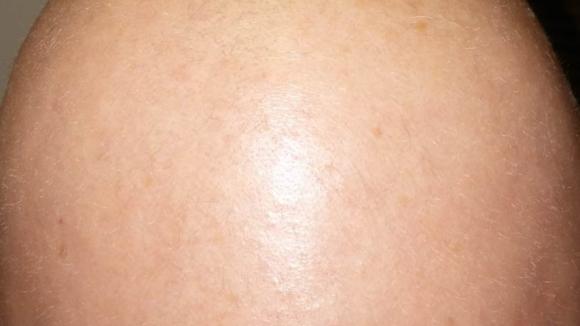
Alopecia areata totalis (AT) and universalis (AU) are the most severe and difficult to treat forms of alopecia areata (AA).
Retrospective claims analysis shows that psoriasis patients treated with either an IL-12/23 inhibitor or an IL-23 inhibitor had a lower risk of developing incident psoriatic arthritis, compared to TNF inhibitors or IL-17 inhibitors.
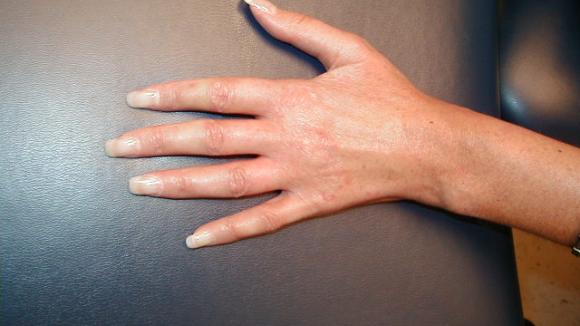
A small cohort trial of rituximab (RTX) in 29 systemic sclerosis patients showed significantly improved skin sclerosis and lung function after a follow-up of 96 weeks.
Bearing in mind that renal impairment is among the worst complications of ANCA-associated vasculitis (AAV), researchers have identified four different trajectories of kidney function over time in AAV patients, with implications for personalized treatment, as well as future research.
Dr. Jack Cush reviews the lastest journal articles, news, and FDA announcements from the past week on RheumNow. This week, the importance of IFNa, Subclinical PsA and NSAID safety during Pregnancy.
A novel trial has shown that combination biologic therapy (guselkumab plus golimumab) to be more effective in ulcerative colitis than either biologic alone.
Yesterday, the U.S. Food and Drug Administration (FDA) approved sarilumab (Kevzara) for the treatment of adults with active, refractory polymyalgia rheumatica (PMR), stipulating it is indicated in those patients who have had an inadequate response to corticosteroids or who cannot tolerate corticosteroid taper.
The Annals of Rheumatic Disease has published updated multinational, treat-to-target (T2T) recommendations for the treatment of giant cell arteritis (GCA) and polymyalgia rheumatica (PMR).
Despite the encouraging phase II trial results of baricitinib in systemic lupus erythematosus (SLE) patients, two parallel phase III trials have failed to redemonstrate the efficacy of baricitinib in active SLE, thereby halting development of baricitinib in SLE.
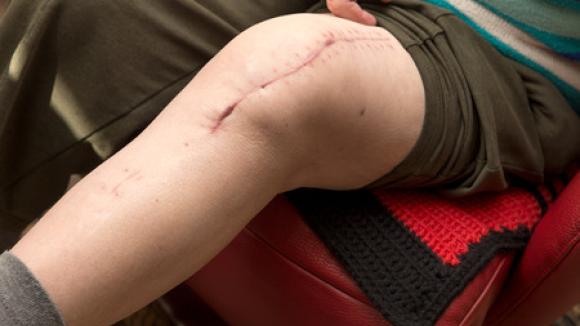
A study led by Vinod Dasa, MD, Professor of Orthopaedics at LSU Health New Orleans School of Medicine, reports that a novel surgical pain management strategy following total knee arthroplasty (TKA), or total knee replacement, provided pain relief without opioids.
Periodontal disease (PD) is more common in rheumatoid arthritis (RA), especially those with anti-citrullinated protein antibodies (ACPAs). RA activity has been linked to the severity of PD and mucosal inflammation.
Which Meds are Best for Acute Low Back Pain?
Acute low back pain (LBP) is a common cause of disability. An analysis in the Journal of Orthopaedic Research examined which non-opioid drugs are best for treating this condition.
Wang et al., in a JAMA Network Research Letter, recently reviewed Medicaid expenditures on adalimumab (ADA), sold under the brand name HUMIRA®. They noted that the introduction of the citrate-free formulation cost an extra $4.4B to Medicaid between 2014 and 2021.
The etiology of arthritis was studied using US National Health and Nutrition Examination Survey (NHANES) data and suggested that elevated concentrations of trace elements (TE: Pb, Cd, and Cu) were associated with increased risk of arthritis.
A BRASS registry study shows that specific isotypes of anti-citrullinated protein antibodies (ACPAs) can be associated with incident rheumatoid arthritis-associated ILD (RA-ILD).