


B Cells at the Brink in Sjögren Disease Save

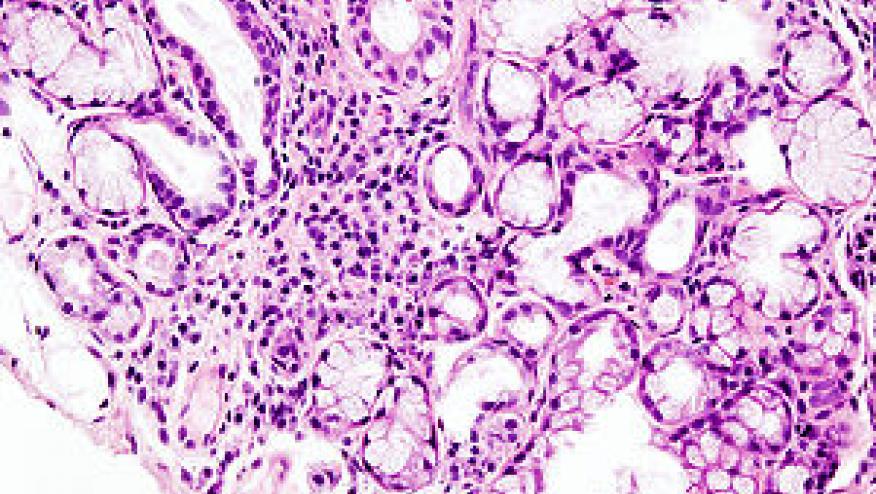
The current issue of Arthritis & Rheumatology reviews current understanding of the immunopathogenesis of Sjögren disease (SjD) and how that has influenced the quest for drug development for this most systemic autoimmune disorder.
Although several new agents have shown very encouraging results in phase 2 and 3 clinical trials, there are no US Food and Drug Administration (FDA)-approved disease-modifying therapies for SjD.
This review by Gordon and McCoy outlines SjD endotyping as a tool to enhance patient stratification, prognostication, and clinical decision-making.
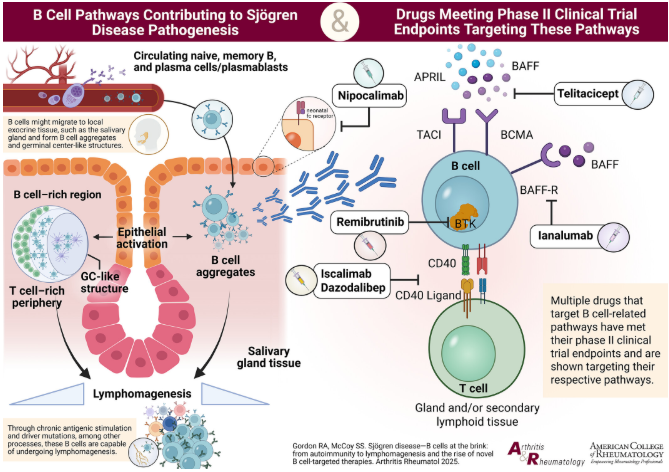
B cells play a central role in SjD pathogenesis by producing autoantibodies, presenting antigens, and releasing proinflammatory cytokines. B cell activity drives autoimmunity but also increase the risk of lymphoma in SjD.
This full read review examines the pathobiology of B cells in SjD that drive autoreactivity and lymphomagenesis. Moreover, they review emerging B cell–targeted therapies that may change the SjD treatment landscape in the future.
Snippet quotes from this review:
- Despite the mechanistic promise of B cell–targeted therapies, past randomized placebo-controlled trials with the anti-CD20 therapy, rituximab, did not achieve their primary endpoints
- ...recent trial successes may be partly explained by the significant evolution of inclusion criteria and endpoints of SjD clinical trials... (including).. trials now require moderate to high systemic disease activity, as measured by the EULAR Sjögren's Syndrome Disease Activity Index (ESSDAI) and positive anti-SSA antibody for entry.
- ..ianalumab, an anti-BAFF receptor antibody that can deplete B cells, in patients with anti-SSA positivity and SjD ...achieved its primary outcome... appears to improve salivary flow but did not show clear benefit on (all) SjD symptoms.... (and at) 52 weeks, ianalumab seemed to maintain efficacy.
- anti-neonatal Fc receptor (FcRN) antibody nipocalimab reported promising phase II clinical trial results at the 2024 ACT annual conference... with improved disease activity.
- (The) case (of lymphoma risk in SjD) underscores the critical need for vigilant surveillance in patients with SjD with known risk factors because early detection of lymphomas can be crucial for timely intervention and optimal outcomes.
ADD THE FIRST COMMENT
Disclosures
Disclosures
The author has received compensation as an advisor or consultant on this subject





If you are a health practitioner, you may Login/Register to comment.
Due to the nature of these comment forums, only health practitioners are allowed to comment at this time.