


Hydralazine and the Rare Risk of Vasculitis Save

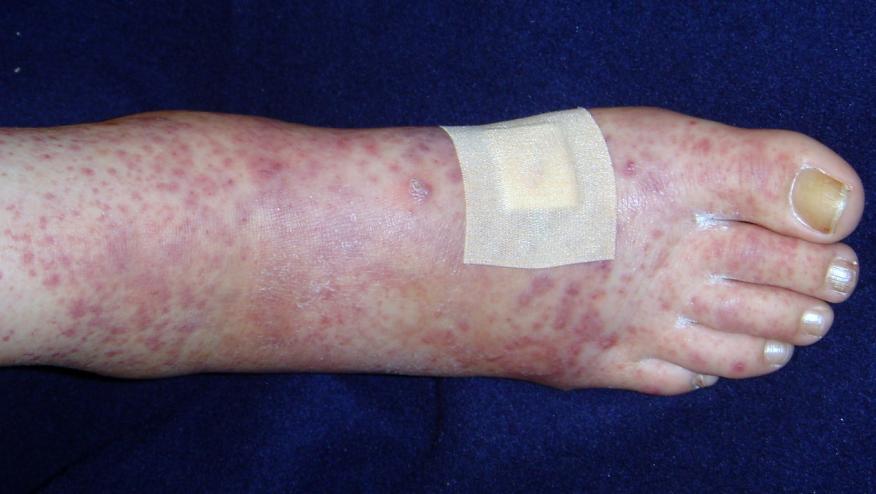
Since the 1980s, hydralazine has been a notable cause of drug-induced lupus, and inferred to cause vasculitis as well. A retrospective cohort study from Canada has shown that vasculitis resulting from hydralazine is possible, but rare.
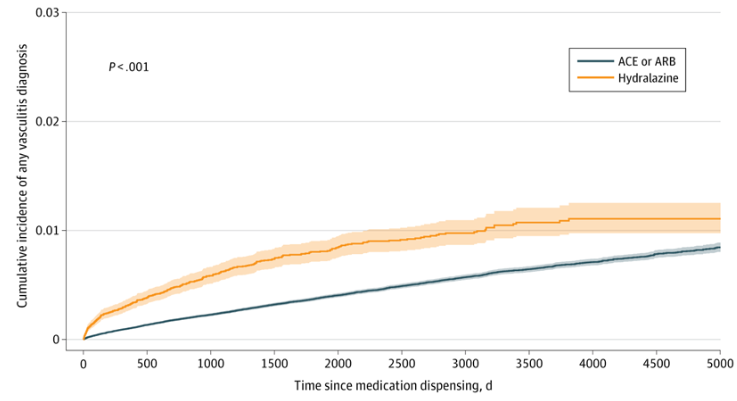
This cohort study included 583,136 adults in Ontario, Canada, who were newly prescribed hydralazine and were compared to those starting angiotensin-converting enzyme inhibitor (ACE) or angiotensin receptor blocker (ARB) between 2008 and 2021. This study assessed the frequency of subsequent new onset vasculitis (cutaneous leukocytoclastic vasculitis, and antineutrophil cytoplasmic antibody (ANCA)–associated vasculitis (AAV).
Compared with ACE or ARB use, hydralazine was associated with a higher risk of vasculitis during follow-up:
- hydralazine: 328 events [0.8%]
- ACE or ARB: 2712 events [0.5%];
- Jazard ratio, 1.19; 95% CI, 1.04-1.37).
In this cohort study of adults who were newly prescribed hydralazine, vasculitis associated with hydralazine was rare, and unlikely to be associated with a clinically meaningful increased risk of vasculitis.
Continue Reading
ADD THE FIRST COMMENT
Disclosures
Disclosures
The author has no conflicts of interest to disclose related to this subject





If you are a health practitioner, you may Login/Register to comment.
Due to the nature of these comment forums, only health practitioners are allowed to comment at this time.