


ICYMI: Glucocorticoid Injections in Knee Osteoarthritis Save

Editor's note: This article originally appeared January 6, 2026, and is being shared this week as part of our In Case You Missed It (ICYMI) series. Enjoy!
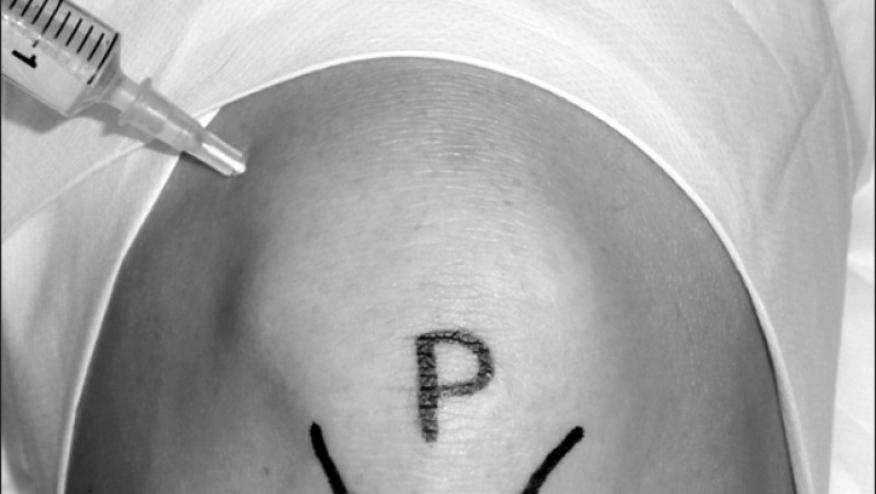
A randomized clinical trial of 60 patients found that glucocorticoid injections into the infrapatellar fat pad (IPFP) did not significantly reduce pain scores in patients with inflammatory knee osteoarthritis (compared to placebo).
Intra-articular glucocorticoid injections are widely used to alleviate knee OA pain, but studies show only short term symptomatic benefits while others suggests these injections may cause cartilage loss.
This study evaluated the effect and safety of glucocorticoid injections into the IPFP in individuals with inflammatory knee OA (established by ultrasound [US] findings).
A total of 60 adult (>45 yrs) inflammatory OA patients were randomized, into a double-blind, placebo-controlled trial at 4 centers in China (between April 2022 and June 2023). Patients (30 each group) were treated with either glucocorticoid or saline injections into the IPFP with hyaluronic acid as background treatment under US guidance. The primary outcomes were assessed at 12 weeks as changes in visual analog scale (VAS) knee pain and effusion synovitis volume measured by magnetic resonance imaging (MRI). Secondary outcomes included changes in the total score of the Western Ontario and McMaster Universities Osteoarthritis Index (WOMAC), MRI-detected Hoffa synovitis score, quality of life assessed using the 4-dimensional Assessment of Quality of Life, pain medication use, IPFP volume, and adverse reactions.
Among the 60 participants, 63% were women and the mean age was 65 years. Pain reduction at week 12 was not significant:
- IA GC: −39.3 mm
- Placebo: −31.4 mm; between-group difference, −7.9 mm; 95% CI, −19.7 to 4.0 mm).
- Also no significant difference in effusion volume reduction (−4.9 mL vs −5.4 mL)
The treatment group had significantly greater reduction in the WOMAC pain score (−113 vs −66.8 points; between group difference, −46.2 points; 95% CI, −90.0 to −2.4 points; P = .04) and cartilage defect (−0.1 vs 0.4; between-group difference, −0.5; 95% CI, −1.0 to −0.1; P = .03).
In this RCT, IA glucocorticoid injections into the knee did not alleviate knee pain by VAS (0-100mm) or reduce effusion synovitis volume in inflammatory knee OA. These data question the utility of such intervention.

ADD THE FIRST COMMENT
Disclosures
Disclosures
The author has no conflicts of interest to disclose related to this subject



If you are a health practitioner, you may Login/Register to comment.
Due to the nature of these comment forums, only health practitioners are allowed to comment at this time.