

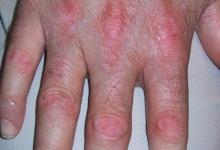
The Wider Implications of Dactylitis Save

Know-it-now
- Dactylitis is a sign, not a diagnosis — PsA is the most common cause, but sarcoidosis, gout, infections, hemoglobinopathy, and neoplasia can look identical.
- Modern imaging can localize the dominant inflamed compartment (tenosynovium vs. synovium vs. subcutaneous edema vs. crystal deposition), turning a nonspecific sign into a specific diagnosis.
- Diagnosis and mechanism must drive treatment and timing — immunosuppression helps cytokine-driven PsA dactylitis but is wrong (or dangerous) for infectious, ischemic, or purely mechanical causes, and in granulomatous disease, early treatment is what prevents irreversible contracture.
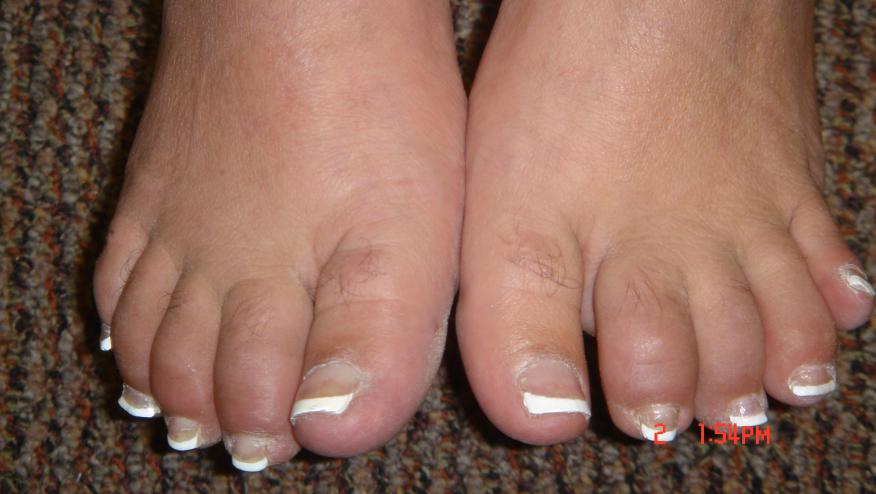
Dactylitis, AKA the "sausage digit", is a hallmark of psoriatic arthritis (PsA), but as Possemato and colleagues point out, it is fundamentally a clinical sign, and not a diagnosis. This phenotypic manifestation has numerous association and distinct mechanisms, each requiring different management. This review article discusses the wider implications of dactylitis in rheumatology and medicine underscores the diagnostic and prognostic significance of this manifestation.
The digit is a small compartment that contains the extensor apparatus and flexor tendons/pulleys (functional entheses), collateral ligaments, nail-enthesis complex, joint synovium, and subcutaneous tissue. Thus different diseases targeting different structures can still yield the same sausage swelling of the digit.
In PsA, a biomechanical insult in genetically predisposed individuals triggers innate immune activation (neutrophils, macrophages, γδ T-cells) with cytokine release, driving TNF- and IL-23/IL-17-mediated inflammation across tenosynovium, entheses, and synovium — the "digital polyenthesitis" model.
Non-PsA conditions (TB, leishmaniasis, blistering distal dactylitis) differ mechanistically: 1) microbial invasion with secondary inflammation; 2) sickle cell dactylitis reflects vaso-occlusive marrow infarction, not synovitis; 3) pachydermodactyly involves mechanical stress driving fibroblast proliferation without immune activation; and in Blau syndrome/early-onset sarcoidosis (NOD2-driven), granulomatous inflammation that causes reversible dactylitis in adults instead produces irreversible fibrotic camptodactyly in children.
Dactylitis Associations:
- Psoriatic arthritis (33–55% prevalence) — hot/cold subtypes, foot/right-sided/fourth-toe predominance, marker of radiographic progression
- Other spondyloarthritis — reactive arthritis; enteropathic SpA (~15%, more with Crohn's)
- Sarcoidosis (<1%) — granulomatous, honeycomb bone lesions, worse prognosis with lupus pernio; distinct nail pattern
- Gout (5–9.6%) — marker of severity (longer duration, higher urate, more tophi); MRI distinguishes true inflammation from non-inflammatory "dactylopathy" (MSU deposition)
- CPPD and calcium hydroxyapatite deposition — rare, self-limited crystal-related forms
- Infections — tuberculous, non-tuberculous mycobacterial (M. marinum), syphilitic, blistering distal dactylitis, leishmaniasis, leprosy, Lyme borreliosis
- Non-inflammatory/structural — sickle cell disease, pachydermodactyly, osteoid osteoma, giant cell tumor of tendon sheath, paraneoplastic dactylitis, celiac-associated osteomalacia
Diagnosis. High-frequency ultrasound efficiently identifies tenosynovitis, enthesitis, synovitis, and subcutaneous edema; MRI (including the PsAMRIS-H) adds bone marrow edema detection and helps separate true inflammation from crystal deposition or trauma-related (Koebner-like) tenosynovitis. Additionally, nail findings may also differentiate psoriatic arthritsi (pitting, onycholysis) from sarcoid nail dystrophy (brittleness, ridging, brown discoloration).
Importantly, finding dactylitis in these conditions almost always imparts a worse prognosis, with more disease activity, more radiographic damage and more multisystem associations.
Treatment. While NSAIDs are first-line for isolated PsA dactylitis; ultrasound-guided corticosteroid injection may also be effective (~90% response). Refractory cases warrant the addition of DMARDS - first methotrexate, then TNF/IL-17/IL-23 inhibitors or JAK inhibitors — but there is not sufficient head-to-head or comparative data to show a standout treatment option from the b/ts-DMARD group. Such therapies may not be effective or appropriate with other (non-PsA) etiologies: infections need antimicrobials, sickle cell dactylitis needs analgesia, and established camptodactyly is largely treatment-refractory, making early anti-granulomatous therapy essential before fibrosis sets in.
Continue Reading
ADD THE FIRST COMMENT
Disclosures
Disclosures
The author has no conflicts of interest to disclose related to this subject
The author used AI to research and organize this content, and maintains responsibility for its accuracy




If you are a health practitioner, you may Login/Register to comment.
Due to the nature of these comment forums, only health practitioners are allowed to comment at this time.