


Treating Obesity is Disease-Modifying (9.4.2026) Save
Transcription
It's September 4th, 2026. This is the RheumNow podcast. Hi, I'm Dr. Jack Cush, executive editor of RheumNow.com. This week on the podcast, drugs being approved, new drugs put on hold, and drug use out of control this week and more.
Let's begin with an FDA approval. It came about one week ago today. The FDA approved the indication for dermatomyositis with the new novel TYK2/JAK1 inhibitor brepocitinib. This drug has been in development for a while. The approval is based on a large phase three VALOR study, 241 patients with dermatomyositis treated for 52 weeks, showing against placebo significant benefits for both skin, motor, and functional outcomes. The drug gets approved as a single once-a-day oral TYK2/JAK1 inhibitor.
Brepocitinib has a mean terminal half-life of 5 to 12 hours. The drug dose is 30 milligrams once a day with or without food. It does come with the same boxed warning that you see with the other JAK inhibitors, right? Worries about MACE, malignancy, serious infection. As you'd expect with new drugs of this type, not surprising, patients should be screened per the package insert, screened for latent TB and viral hepatitis, have a CBC, LFTs, and renal function tests. There are warnings for GI perforations, presumably because of the IL-6 inhibiting potential of the drug. I don't think they had problems with GI perforations. Similarly, hypoglycemia, abnormalities of lymphocytes, neutrophils, hemoglobin, LFTs, and they recommend this drug not be used with other immunosuppressives, and patients should not receive live vaccines. Patients who have either severe renal impairment, liver impairment, or pregnancy or planned pregnancy should not go on this drug. There have been reports of viral reactivation including herpes zoster virus cases in patients taking this in clinical trials.
So it's a welcome addition to an autoimmune disease that has very few FDA-approved options. You know, IVIG I guess would be the only one that truly is FDA approved. And we do know there are other drugs that are being developed in this area. So this is a welcome change.
The other big news this week was the announcement that both Novartis and BMS stopped their CD19 CAR-T cell therapy trials temporarily. The Novartis trial was put on hold because of concerns about three deaths with their CAR-T cell called reb-cel. They had three deaths related to basically a hemophagocytic syndrome-related phenomenon. This led to them halting their trials, looking at their data. They have eight clinical trials in autoimmune disease and in neurologic disorders — two neurologic disorders, six autoimmune trials — that are on hold pending an analysis of their data and discussions with the FDA and other regulatory agencies.
BMS is a different story. They had no deaths. They had actually suspended their trials a little while ago, but it just got announced at the same time as these folks, because they had noted the occurrence of what they call transient and reversible inflammatory events with their CD19 CAR-T cell therapy called zolola, BMS-986353. Through an abundance of caution they're doing analysis. They said that their observed side effects are in line with what is expected for CAR-T cells and they expect to resume their trials soon. Novartis provided no information about when their trials would be resumed.
A lot of CAR-T cell studies are in development. I guess this is putting everyone on notice to take a doubly good look at your safety.
Another drug that's getting a lot of buzz are the obesity drugs. You may have noticed this month, September, is an obesity month. We have a big obesity campaign going on. We're going to have a lot of good education about obesity and how it affects rheumatic disease and autoimmune patients.
The New York Times reported recently the results of a Gallup poll that shows a significant increase in the number of Americans who are taking weight loss drugs. In that poll, 15% of those surveyed said they had taken a weight loss drug and 11% of them were currently taking — and that's up, in I guess a year and a half, from 3% to 11%, or to 15%. That's a lot of people taking weight loss drugs.
These drugs, as you know, the GLP-1 related drugs or combination drugs, have been approved for not only type 2 diabetes but also for weight loss, obesity, liver disease — NASH or MASLD — those who need a significant reduction in cardiovascular risk, and also for sleep apnea. You know, I've counseled a number of patients recently who had significant problems with fatigue and headaches and numbness and basically fibromyalgia because they had bad bad sleep apnea and they're still on CPAP, but their sleep is still not controlled. Well, other than fixing their CPAP and getting on other meds to improve their sleep, this is another consideration that should be talked about with
their doctors. Uh, another diabetes related drug is the class of SGLT2 inhibitors which was shown to be as we mentioned last month very effective in gout. A retrospective study looked at uh type 2 diabetics um over a half million of them treated with an SGLT2 inhibitor versus 1.5 million treated with a sulfonylurea and they showed that the SGLT2 inhibitors had an 11% lower risk of developing autoimmune rheumatic disease including inflammatory arthritis hazard ratio 0.89 and that was significant. So, um, when you look this issue up, um, it's a little bit of a mixed bag, but in general, it's quite positive that SGLT2 inhibitors are both good for the diabetes, may have cardiovascular benefits like GLP-1s, but also may reduce the risk of developing disease, may not necessarily control the disease. That's where things get a little dicey. But I think this is great new evidence, especially in our patients who have a significant amount of comorbidity. Do they not?
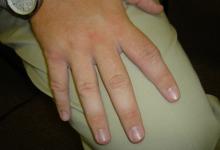
Let's talk about lupus. New England Journal published an image and case this week of a lupus patient with what looked like severe deforming arthritis, but it was Jaccoud's arthropathy and I think it was a 40-year-old woman. Uh, and I put it up because it's a reminder, a good one, and it'll show you a good video of a horribly deformed hand that when the patient makes a fist, the deformity all goes away. Patient had I think swan necks and what look like subluxations. Uh, Jaccoud's arthropathy is a chronic deforming arthropathy that results from laxity of ligaments and tendons, not damage. So, you know, when you do X-rays, the X-rays are normal. There's no erosions. Um and their function is actually quite preserved. Uh Jaccoud's can look like and mimic RA, but it's more likely to be seen and associated with lupus.
A study of a fairly large 4,000 patient cohort with lupus looked at the neutrophil to lymphocyte ratio, the NLR, was actually a meta-analysis of 431 studies uh and showing that NLRs were higher with active uh versus inactive lupus. Um and showed a moderate correlation with SLEDAI. The great thing about an NLR is it's free, it's cheap, you're already collecting CBC data. It's the neutrophil divided by the lymphocyte and it's that ratio. You know, if it's less than three, it's probably okay. If it's higher than three, there's an inflammatory state that's in play. If it's greater than six, uh-oh, you know, call the mounted police if you're in Canada. Uh, it's a really good — and I don't know why when your CBC reports, we should be lobbying to get the CBC to automatically give us an NLR. You know there's a platelet to lymphocyte ratio and a few other you know uh cellular comparison ratios that have predictive value but the NLR is consistently predictive in almost every disease that's been looked at. It's a very good, very cheap inflammatory tool.
Uh, a VA study looked at um their VA patients who had RA uh and how many of them got cancer and they found a significant association between um frailty. So they measured frailty in 2,700 RA patients and looked at the future risk of cancer. Uh and the cancer rates per 1,000 patient years were 12 for people without frailty, the robust group, 15.5 in patients who are prefrail and the frail's 20. So it's almost um an 80% increase with frailty in cancer risk in RA patients. Now, did they factor in all the other things that go along with frailty as far as disease activity that could also go with um uh risk of cancer and bad outcomes? Uh I don't think that was conclusively examined. But um I do think it underscores the idea that we should be — as we have talked about here and I've given, I had lectures at RheumNow Live about um sarcopenia and frailty in our patients — and that it needs to be noted, documented and dealt with because it's kind of a bad prognostic sign, is it not?
So uh I think last week we — last month we published a nice review about IgA vasculitis. Um that was interesting. Um this week we had a report about the subset of IgA vasculitis that is necrotizing arteritis and that's actually rare. Um in a literature search they found 30 cases of IgA uh vasculitis of the necrotizing arteritis type. Compared that to 257 uh simple IgA vasculitis and 196 PAN patients and guess what — having um necrotizing arteritis with IgA vasculitis is a very bad prognostic feature. They get life-threatening complications. Um these people need to have vascular imaging. They need to have aggressive immunosuppressive therapy because the outcomes are ugly when necrotizing arteritis is seen. And again that can be found both on biopsy or suspected maybe even by imaging. Right? Um there is no biomarker that we know for this.
Uh an interesting study on gout from the Korean National Health uh service looking at claim data on 4,100 patients showed that gout patients have a significantly higher risk of fractures compared to non-gout patients. Um five-fold higher risks. What? But that risk went down significantly um with allopurinol use. Um and it was higher in
those that were non-compliant with allopurinol. This risk of fracture was seen with vertebral fractures hazard ratio 5.7 and hip fractures 4.2. The question is why is gout and elevated uric acid or low use of allopurinol associated with a risk? It's not because of uric acid's antioxidant effect. It's not really panning out in any consideration of that. It looks like it's purely related to the induction of inflammation by uric acid and total body urate and that control of that leads to an inverse effect. So again being compliant with allopurinol lowers the fracture risk substantially in patients with gout. Something you generally don't consider when thinking about managing gout.
Another thing I don't consider in managing idiopathic inflammatory myopathy is testing for Ro-52 antibodies. A lot in the literature about Ro-52 and where it stands. I think we talked about that during the interstitial lung disease campaign month as being a potential modifier. This is in China and Japan a cohort of 2100 IIM patients and Ro-52 positivity was seen at 46%. It seemed to be even higher in patients who had dermatomyositis that was classified as either being MDA5 positive or being anti-synthetase syndrome myositis where again it was a bad prognostic sign having Ro-52 associated with a) interstitial lung disease b) rapidly progressive interstitial lung disease and c) a poor outcome. So, is it like MDA5 as a marker for rapidly progressive lung disease? Does it contribute to that MDA5 marker? I think it does based on this data.
Another recent report this week on the SELECT-PsA 2. We've been talking about it for a while. This is a sub-analysis of the SELECT-PsA 2. This is a study that was published this year, although it's been talked about for two years. It looked at the subset of people in the study who had to get in because they had failed therapy. These were bio-experienced. This is the 195 who had active disease who had failed a prior TNF inhibitor and then went either on upadacitinib 15 milligrams a day or placebo. And at week 24, it proves a point that when you're not responding to one drug, a TNF inhibitor, you should be switching MOAs because when you did, you got a 60-40-20 ACR 20/50/70 response respectively. So at week 24, the ACR20 response was 58 versus 22 drug versus placebo. That's a 38% delta. That's very healthy, very strong, looks good. ACR50 38 versus 9.5, another 20-point difference at ACR50. MDA was also different 24 versus 3%. And these findings in SELECT-PsA 2 that went on to the JAK inhibitor were maintained through week 52. Switching MOAs when you're failing an MOA makes sense. Again, the rule really is if you're a primary non-responder to any MOA, you automatically have to change to another MOA. If you're a secondary non-responder, meaning they responded and then after 6 months or more they're starting to lose response, you could try another drug in that same class, but still you're going to do just as well. Again, this is after they fail the TNF inhibitor when usually the next biological drug you choose, you're not going to get a 60-40-20, you're going to get a 10-point drop. In this study they got a 60-40-20. That's why I think this is strong data.
I have talked in the past about what to do in patients who have resolved hepatitis B virus infections. These are patients who have no signs or symptoms, have normal LFTs, and they are hepatitis B surface antigen negative. Hepatitis B surface antigen positive would be active infection, would it not? So these are resolved patients who are hepatitis B surface antigen negative but they are core antibody positive, meaning that they saw the infection a long time ago and they have antibodies against core antigen. So this study looked at whether there is a possibility of losing core antibody positivity and is that a good thing — they call that sero-clearance of hepatitis B core antibody. This study of 230 patients, some of whom were treated with an anti-CD20 monoclonal antibody rituximab, showed that sero-clearance — converting to core antibody negative status — was only seen in 16.5%. Who was more likely to have sero-clearance? Younger patients. It was less with those who were treated with rituximab and less in those who received mycophenolate. Overall there were cases of hepatitis B reactivation and in this study it was 2.2%. Of the five out of the 230 that did reactivate, half of them had had evidence of sero-clearance. The point is that sero-clearance converting to negative doesn't mean that you're protected. I've talked about this in the past. Can you use a TNF inhibitor? Can you use a biologic in someone who has this resolved profile — surface antigen negative, core antibody positive? Yes, you can. What's the risk of reactivation of hepatitis B? It's low. It's 1–2%.
Which means it's not zero. You got to watch them and you watch them closely. If you're not sure how to manage these people, manage them in conjunction with a hepatologist. But they do not need to be on automatic antiviral prophylaxis unless they have other risk factors for reactivation. I'm comfortable giving biologics to patients with this profile knowing it's only going to be a one, two, you know, in a few studies maybe 3% risk.
EUSTAR, which is a nice database that looks at systemic sclerosis and outcomes, they looked at the risk of cancer with 454 SSc patients and they looked at the development of cancer either contemporaneously — they call that synchronous with the diagnosis — or if, and that was in 29%, or 51% who developed it subsequently. They had matched controls. These were over age 55, or at 55, mostly female, 28% had diffuse disease, 31% had ILD, 32% had anti-topoisomerase antibodies, and 10% had anti-RNA polymerase 3 antibodies. You know, the RNA polymerase 3 antibodies are seen associated with diffuse disease, more aggressive disease, and you again usually diffuse patients.
So synchronous cancers were significantly associated with RNA polymerase 3 antibodies, twofold higher, with U1 RNP antibodies 3.5-fold higher, and smoking an odds ratio of 1.57, but negatively associated with digital ulcers. Those who had digital ulcers in this registry seem to have less cancer. In fact, 45% less occurrence of cancers.
Developing cancer after the diagnosis also was associated with a few things. It was again inversely associated with calcinosis. So this skin calcinosis and digital ulcers — while those are ugly and hard to manage — the good news is they might get less cancers. There was a 58% reduction in cancer risk. Breast cancer and lung cancers were the more common cancers that were observed. Breast cancer was also associated with RNA polymerase 3 but also anti-PM-Scl antibodies, and lung cancer was associated with ILD, smoking, and anti-topoisomerase antibodies. You know, the aggressive markers of scleroderma give you the aggressive risk of cancer — that's the bottom line. But this study likes to look at it from the serologic standpoint, and you can use these, you know, RNA polymerase 3, you can order anti-topoisomerase antibodies, and that gives you prognostic information about this disease, and this study would then also infer the potential for cancer risk. Why is this important? Cancer is one of the leading causes of death in scleroderma patients.
My last report is a launch to our obesity campaign. I think you're going to like a lot of the content and the videos and the panels. Next week, we're doing a great panel discussion on Tuesday. I think it's the 9th of September, 7:00 p.m. Eastern time. It's TNR. We're going to do a journal club with leaders in the field, the people who wrote the articles. We're going to talk about the STEP 9 studies showing that GLP-1 drugs work in osteoarthritis. And we're going to have Philip Mease online to talk about the TOGETHER PsA study.
This last report is about BMI affecting JAK inhibitor responses in RA. In this analysis, the authors looked at JAK trials with all — four different JAK inhibitors, I think. It looks like — yeah, it doesn't really matter — that were registered in ClinicalTrials.gov. They found six trials, almost 12,000 patients. 7,700 of them had received a JAK inhibitor: tofacitinib, upadacitinib, or baricitinib. The mean BMI was overweight, 26.8; 31% were obese class 1, 2, or 3. Overall, increases in BMI reduced the efficacy of JAK inhibitors in all ways that you looked at it, and it wasn't good. Compared to those who were of normal weight, overweight patients, when they got a JAK inhibitor, their ACR20 response dropped 6%. That was significant. Class 1 obesity, 30 to 35 kilograms per meter squared or BMI of 30 to 35, it dropped 8%. BMI 35 to 40 it drops 12%. And the most obese, over 40, it drops 22%. That's a 22% drop in ACR20 responses when you're morbidly obese and taking a JAK inhibitor in the clinical trials. That's significant.
They showed parallel data about increases in DAS-28. If you were overweight, the DAS-28 increased significantly by 0.14. Class 1: 0.21, class 2: 0.30, class 3: 0.54. Meaning that your DAS only got to — instead of getting to 3 with effective therapy, it only got to 3.5 if you're morbidly obese.
Treating obesity is disease-modifying therapy. Think about it. Tune in next week. Take care of yourselves.
Let's begin with an FDA approval. It came about one week ago today. The FDA approved the indication for dermatomyositis with the new novel TYK2/JAK1 inhibitor brepocitinib. This drug has been in development for a while. The approval is based on a large phase three VALOR study, 241 patients with dermatomyositis treated for 52 weeks, showing against placebo significant benefits for both skin, motor, and functional outcomes. The drug gets approved as a single once-a-day oral TYK2/JAK1 inhibitor.
Brepocitinib has a mean terminal half-life of 5 to 12 hours. The drug dose is 30 milligrams once a day with or without food. It does come with the same boxed warning that you see with the other JAK inhibitors, right? Worries about MACE, malignancy, serious infection. As you'd expect with new drugs of this type, not surprising, patients should be screened per the package insert, screened for latent TB and viral hepatitis, have a CBC, LFTs, and renal function tests. There are warnings for GI perforations, presumably because of the IL-6 inhibiting potential of the drug. I don't think they had problems with GI perforations. Similarly, hypoglycemia, abnormalities of lymphocytes, neutrophils, hemoglobin, LFTs, and they recommend this drug not be used with other immunosuppressives, and patients should not receive live vaccines. Patients who have either severe renal impairment, liver impairment, or pregnancy or planned pregnancy should not go on this drug. There have been reports of viral reactivation including herpes zoster virus cases in patients taking this in clinical trials.
So it's a welcome addition to an autoimmune disease that has very few FDA-approved options. You know, IVIG I guess would be the only one that truly is FDA approved. And we do know there are other drugs that are being developed in this area. So this is a welcome change.
The other big news this week was the announcement that both Novartis and BMS stopped their CD19 CAR-T cell therapy trials temporarily. The Novartis trial was put on hold because of concerns about three deaths with their CAR-T cell called reb-cel. They had three deaths related to basically a hemophagocytic syndrome-related phenomenon. This led to them halting their trials, looking at their data. They have eight clinical trials in autoimmune disease and in neurologic disorders — two neurologic disorders, six autoimmune trials — that are on hold pending an analysis of their data and discussions with the FDA and other regulatory agencies.
BMS is a different story. They had no deaths. They had actually suspended their trials a little while ago, but it just got announced at the same time as these folks, because they had noted the occurrence of what they call transient and reversible inflammatory events with their CD19 CAR-T cell therapy called zolola, BMS-986353. Through an abundance of caution they're doing analysis. They said that their observed side effects are in line with what is expected for CAR-T cells and they expect to resume their trials soon. Novartis provided no information about when their trials would be resumed.
A lot of CAR-T cell studies are in development. I guess this is putting everyone on notice to take a doubly good look at your safety.
Another drug that's getting a lot of buzz are the obesity drugs. You may have noticed this month, September, is an obesity month. We have a big obesity campaign going on. We're going to have a lot of good education about obesity and how it affects rheumatic disease and autoimmune patients.
The New York Times reported recently the results of a Gallup poll that shows a significant increase in the number of Americans who are taking weight loss drugs. In that poll, 15% of those surveyed said they had taken a weight loss drug and 11% of them were currently taking — and that's up, in I guess a year and a half, from 3% to 11%, or to 15%. That's a lot of people taking weight loss drugs.
These drugs, as you know, the GLP-1 related drugs or combination drugs, have been approved for not only type 2 diabetes but also for weight loss, obesity, liver disease — NASH or MASLD — those who need a significant reduction in cardiovascular risk, and also for sleep apnea. You know, I've counseled a number of patients recently who had significant problems with fatigue and headaches and numbness and basically fibromyalgia because they had bad bad sleep apnea and they're still on CPAP, but their sleep is still not controlled. Well, other than fixing their CPAP and getting on other meds to improve their sleep, this is another consideration that should be talked about with
their doctors. Uh, another diabetes related drug is the class of SGLT2 inhibitors which was shown to be as we mentioned last month very effective in gout. A retrospective study looked at uh type 2 diabetics um over a half million of them treated with an SGLT2 inhibitor versus 1.5 million treated with a sulfonylurea and they showed that the SGLT2 inhibitors had an 11% lower risk of developing autoimmune rheumatic disease including inflammatory arthritis hazard ratio 0.89 and that was significant. So, um, when you look this issue up, um, it's a little bit of a mixed bag, but in general, it's quite positive that SGLT2 inhibitors are both good for the diabetes, may have cardiovascular benefits like GLP-1s, but also may reduce the risk of developing disease, may not necessarily control the disease. That's where things get a little dicey. But I think this is great new evidence, especially in our patients who have a significant amount of comorbidity. Do they not?
Let's talk about lupus. New England Journal published an image and case this week of a lupus patient with what looked like severe deforming arthritis, but it was Jaccoud's arthropathy and I think it was a 40-year-old woman. Uh, and I put it up because it's a reminder, a good one, and it'll show you a good video of a horribly deformed hand that when the patient makes a fist, the deformity all goes away. Patient had I think swan necks and what look like subluxations. Uh, Jaccoud's arthropathy is a chronic deforming arthropathy that results from laxity of ligaments and tendons, not damage. So, you know, when you do X-rays, the X-rays are normal. There's no erosions. Um and their function is actually quite preserved. Uh Jaccoud's can look like and mimic RA, but it's more likely to be seen and associated with lupus.
A study of a fairly large 4,000 patient cohort with lupus looked at the neutrophil to lymphocyte ratio, the NLR, was actually a meta-analysis of 431 studies uh and showing that NLRs were higher with active uh versus inactive lupus. Um and showed a moderate correlation with SLEDAI. The great thing about an NLR is it's free, it's cheap, you're already collecting CBC data. It's the neutrophil divided by the lymphocyte and it's that ratio. You know, if it's less than three, it's probably okay. If it's higher than three, there's an inflammatory state that's in play. If it's greater than six, uh-oh, you know, call the mounted police if you're in Canada. Uh, it's a really good — and I don't know why when your CBC reports, we should be lobbying to get the CBC to automatically give us an NLR. You know there's a platelet to lymphocyte ratio and a few other you know uh cellular comparison ratios that have predictive value but the NLR is consistently predictive in almost every disease that's been looked at. It's a very good, very cheap inflammatory tool.
Uh, a VA study looked at um their VA patients who had RA uh and how many of them got cancer and they found a significant association between um frailty. So they measured frailty in 2,700 RA patients and looked at the future risk of cancer. Uh and the cancer rates per 1,000 patient years were 12 for people without frailty, the robust group, 15.5 in patients who are prefrail and the frail's 20. So it's almost um an 80% increase with frailty in cancer risk in RA patients. Now, did they factor in all the other things that go along with frailty as far as disease activity that could also go with um uh risk of cancer and bad outcomes? Uh I don't think that was conclusively examined. But um I do think it underscores the idea that we should be — as we have talked about here and I've given, I had lectures at RheumNow Live about um sarcopenia and frailty in our patients — and that it needs to be noted, documented and dealt with because it's kind of a bad prognostic sign, is it not?
So uh I think last week we — last month we published a nice review about IgA vasculitis. Um that was interesting. Um this week we had a report about the subset of IgA vasculitis that is necrotizing arteritis and that's actually rare. Um in a literature search they found 30 cases of IgA uh vasculitis of the necrotizing arteritis type. Compared that to 257 uh simple IgA vasculitis and 196 PAN patients and guess what — having um necrotizing arteritis with IgA vasculitis is a very bad prognostic feature. They get life-threatening complications. Um these people need to have vascular imaging. They need to have aggressive immunosuppressive therapy because the outcomes are ugly when necrotizing arteritis is seen. And again that can be found both on biopsy or suspected maybe even by imaging. Right? Um there is no biomarker that we know for this.
Uh an interesting study on gout from the Korean National Health uh service looking at claim data on 4,100 patients showed that gout patients have a significantly higher risk of fractures compared to non-gout patients. Um five-fold higher risks. What? But that risk went down significantly um with allopurinol use. Um and it was higher in
those that were non-compliant with allopurinol. This risk of fracture was seen with vertebral fractures hazard ratio 5.7 and hip fractures 4.2. The question is why is gout and elevated uric acid or low use of allopurinol associated with a risk? It's not because of uric acid's antioxidant effect. It's not really panning out in any consideration of that. It looks like it's purely related to the induction of inflammation by uric acid and total body urate and that control of that leads to an inverse effect. So again being compliant with allopurinol lowers the fracture risk substantially in patients with gout. Something you generally don't consider when thinking about managing gout.
Another thing I don't consider in managing idiopathic inflammatory myopathy is testing for Ro-52 antibodies. A lot in the literature about Ro-52 and where it stands. I think we talked about that during the interstitial lung disease campaign month as being a potential modifier. This is in China and Japan a cohort of 2100 IIM patients and Ro-52 positivity was seen at 46%. It seemed to be even higher in patients who had dermatomyositis that was classified as either being MDA5 positive or being anti-synthetase syndrome myositis where again it was a bad prognostic sign having Ro-52 associated with a) interstitial lung disease b) rapidly progressive interstitial lung disease and c) a poor outcome. So, is it like MDA5 as a marker for rapidly progressive lung disease? Does it contribute to that MDA5 marker? I think it does based on this data.
Another recent report this week on the SELECT-PsA 2. We've been talking about it for a while. This is a sub-analysis of the SELECT-PsA 2. This is a study that was published this year, although it's been talked about for two years. It looked at the subset of people in the study who had to get in because they had failed therapy. These were bio-experienced. This is the 195 who had active disease who had failed a prior TNF inhibitor and then went either on upadacitinib 15 milligrams a day or placebo. And at week 24, it proves a point that when you're not responding to one drug, a TNF inhibitor, you should be switching MOAs because when you did, you got a 60-40-20 ACR 20/50/70 response respectively. So at week 24, the ACR20 response was 58 versus 22 drug versus placebo. That's a 38% delta. That's very healthy, very strong, looks good. ACR50 38 versus 9.5, another 20-point difference at ACR50. MDA was also different 24 versus 3%. And these findings in SELECT-PsA 2 that went on to the JAK inhibitor were maintained through week 52. Switching MOAs when you're failing an MOA makes sense. Again, the rule really is if you're a primary non-responder to any MOA, you automatically have to change to another MOA. If you're a secondary non-responder, meaning they responded and then after 6 months or more they're starting to lose response, you could try another drug in that same class, but still you're going to do just as well. Again, this is after they fail the TNF inhibitor when usually the next biological drug you choose, you're not going to get a 60-40-20, you're going to get a 10-point drop. In this study they got a 60-40-20. That's why I think this is strong data.
I have talked in the past about what to do in patients who have resolved hepatitis B virus infections. These are patients who have no signs or symptoms, have normal LFTs, and they are hepatitis B surface antigen negative. Hepatitis B surface antigen positive would be active infection, would it not? So these are resolved patients who are hepatitis B surface antigen negative but they are core antibody positive, meaning that they saw the infection a long time ago and they have antibodies against core antigen. So this study looked at whether there is a possibility of losing core antibody positivity and is that a good thing — they call that sero-clearance of hepatitis B core antibody. This study of 230 patients, some of whom were treated with an anti-CD20 monoclonal antibody rituximab, showed that sero-clearance — converting to core antibody negative status — was only seen in 16.5%. Who was more likely to have sero-clearance? Younger patients. It was less with those who were treated with rituximab and less in those who received mycophenolate. Overall there were cases of hepatitis B reactivation and in this study it was 2.2%. Of the five out of the 230 that did reactivate, half of them had had evidence of sero-clearance. The point is that sero-clearance converting to negative doesn't mean that you're protected. I've talked about this in the past. Can you use a TNF inhibitor? Can you use a biologic in someone who has this resolved profile — surface antigen negative, core antibody positive? Yes, you can. What's the risk of reactivation of hepatitis B? It's low. It's 1–2%.
Which means it's not zero. You got to watch them and you watch them closely. If you're not sure how to manage these people, manage them in conjunction with a hepatologist. But they do not need to be on automatic antiviral prophylaxis unless they have other risk factors for reactivation. I'm comfortable giving biologics to patients with this profile knowing it's only going to be a one, two, you know, in a few studies maybe 3% risk.
EUSTAR, which is a nice database that looks at systemic sclerosis and outcomes, they looked at the risk of cancer with 454 SSc patients and they looked at the development of cancer either contemporaneously — they call that synchronous with the diagnosis — or if, and that was in 29%, or 51% who developed it subsequently. They had matched controls. These were over age 55, or at 55, mostly female, 28% had diffuse disease, 31% had ILD, 32% had anti-topoisomerase antibodies, and 10% had anti-RNA polymerase 3 antibodies. You know, the RNA polymerase 3 antibodies are seen associated with diffuse disease, more aggressive disease, and you again usually diffuse patients.
So synchronous cancers were significantly associated with RNA polymerase 3 antibodies, twofold higher, with U1 RNP antibodies 3.5-fold higher, and smoking an odds ratio of 1.57, but negatively associated with digital ulcers. Those who had digital ulcers in this registry seem to have less cancer. In fact, 45% less occurrence of cancers.
Developing cancer after the diagnosis also was associated with a few things. It was again inversely associated with calcinosis. So this skin calcinosis and digital ulcers — while those are ugly and hard to manage — the good news is they might get less cancers. There was a 58% reduction in cancer risk. Breast cancer and lung cancers were the more common cancers that were observed. Breast cancer was also associated with RNA polymerase 3 but also anti-PM-Scl antibodies, and lung cancer was associated with ILD, smoking, and anti-topoisomerase antibodies. You know, the aggressive markers of scleroderma give you the aggressive risk of cancer — that's the bottom line. But this study likes to look at it from the serologic standpoint, and you can use these, you know, RNA polymerase 3, you can order anti-topoisomerase antibodies, and that gives you prognostic information about this disease, and this study would then also infer the potential for cancer risk. Why is this important? Cancer is one of the leading causes of death in scleroderma patients.
My last report is a launch to our obesity campaign. I think you're going to like a lot of the content and the videos and the panels. Next week, we're doing a great panel discussion on Tuesday. I think it's the 9th of September, 7:00 p.m. Eastern time. It's TNR. We're going to do a journal club with leaders in the field, the people who wrote the articles. We're going to talk about the STEP 9 studies showing that GLP-1 drugs work in osteoarthritis. And we're going to have Philip Mease online to talk about the TOGETHER PsA study.
This last report is about BMI affecting JAK inhibitor responses in RA. In this analysis, the authors looked at JAK trials with all — four different JAK inhibitors, I think. It looks like — yeah, it doesn't really matter — that were registered in ClinicalTrials.gov. They found six trials, almost 12,000 patients. 7,700 of them had received a JAK inhibitor: tofacitinib, upadacitinib, or baricitinib. The mean BMI was overweight, 26.8; 31% were obese class 1, 2, or 3. Overall, increases in BMI reduced the efficacy of JAK inhibitors in all ways that you looked at it, and it wasn't good. Compared to those who were of normal weight, overweight patients, when they got a JAK inhibitor, their ACR20 response dropped 6%. That was significant. Class 1 obesity, 30 to 35 kilograms per meter squared or BMI of 30 to 35, it dropped 8%. BMI 35 to 40 it drops 12%. And the most obese, over 40, it drops 22%. That's a 22% drop in ACR20 responses when you're morbidly obese and taking a JAK inhibitor in the clinical trials. That's significant.
They showed parallel data about increases in DAS-28. If you were overweight, the DAS-28 increased significantly by 0.14. Class 1: 0.21, class 2: 0.30, class 3: 0.54. Meaning that your DAS only got to — instead of getting to 3 with effective therapy, it only got to 3.5 if you're morbidly obese.
Treating obesity is disease-modifying therapy. Think about it. Tune in next week. Take care of yourselves.




If you are a health practitioner, you may Login/Register to comment.
Due to the nature of these comment forums, only health practitioners are allowed to comment at this time.