


Articles By Sheila Reyes, MD

Imaging in SpA: are we seeing a clearer picture?
As EULAR2026 comes to a close, practical learnings take precedence as clinicians head back to their clinics. Among them, the 2026 EULAR Update on Imaging Recommendations in SpA stands out.
Read Article
Lessons on Non-adherence
Dr. Sun et al. from Duke University presented abstract POS0692 during one of the poster sessions entitled, “Lupus patients with concurrent inflammatory activity and symptom burdens have the lowest medication adherence and experience distinct adherence barriers.” They evaluated differences in self-reported medication adherence and reasons for nonadherence across Type 1 & 2 SLE classification groups, with a prespecified focus on comparing the Mixed Activity group to all other groups.
Read Article
MRI as a novel biomarker in lupus
The clinical abstract sessions on diagnostic tools in lupus showcased interesting studies, including the use of MRI as potential non-invasive biomarkers.
Read Article
Tacrolimus in Lupus Nephritis Management
Prof. Sandra Navarra and colleagues compared the efficacy and safety of tacrolimus and glucocorticoids vs. mycophenolate mofetil (MMF) as a continuous induction-maintenance treatment for class III/IV+V lupus nephritis.
Read Article
The Decade Ahead: Predicting Long-Term Proteinuria Risk in SLE
The ACR Convergence 2025 in Chicago opens with engaging topics curated for the global rheumatologist. As a clinician, I always look forward to sessions that provide updates and practical key points that I can bring home and apply to my practice.
Read Article
Hitting the Target: T2T Therapy in SLE
Treat-to-target strategies are not a new concept in rheumatology. It has shown to improve patient outcomes and quality of life in RA and PsA, and is now being increasingly adopted not only in SLE research but also in clinical practice. This article reviews key highlights from Dr. Eric Morand’s plenary session lecture on Treat to Target in SLE: Current Evidence and Future Directions, presented during the recent APLAR 2025 Congress.
Read Article
SLE and Osteoporosis
In one of the SLE sessions at the APLAR 2025 Congress, Prof. Sandra Navarra discussed the assessment and management of osteoporosis in SLE patients, particularly glucocorticoid-induced osteoporosis (GIOP) and this article reviews the highlights and key takeaways from her talk.
Read Article
ICYMI: Reproductive Issues in axSpA: Fertility and Pregnancy
Axial spondyloarthritis (axSpA) affects young patients with symptom onset occurring in early adulthood. Apart from pain and quality of life, reproductive issues also arise because patients who are diagnosed with the disease are also in their reproductive age. Two interesting abstracts about reproductive issues in axSpA will be presented during the poster sessions on Saturday, November 16, 2024.
Read Article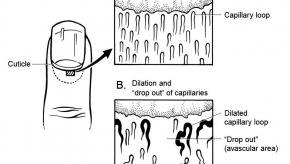
What Lies Beneath: Understanding Nailfold Capillaroscopy
Capillaroscopy is a non-invasive imaging technique used for the in vivo assessment of the microcirculation. kin capillaries at the nailfold are evaluated because the fingers are involved in pathological processes such as Raynaud’s phenomenon. Several abstracts and sessions on nailfold capillaroscopy were presented during ACR24.
Read Article
Gender Differences in SpA
One of the hot topics during the meeting was gender differences in SpA. Three abstracts presented addressed issues related to these differences particularly in the aspects of treatment response and disease activity.
Read Article