At the CCR West 2026 conference in Huntington Beach, California, Dr. Michelle Petri updated her Petri Pearls. Some are derived from new data, while others are from her extensive experience caring for patients with systemic lupus erythematosus (SLE).

All News
There is no doubt it is an incredibly exciting time to be tackling obesity-related diseases, like many rheumatic diseases appear to be, to some extent. However, deep down, a part of us must dread adding yet another conversation to a crowded consultation. One of two things has to happen: we either outsource, or get more efficient. Ideally we can do a bit of both.
That promised land of substantive weight loss comes within it the illusion of better disease control and, for inflammatory arthritis patients, the possibility of reducing the burden of regular medicines - often driven by the patient, with or without telling you. It is a dream worth aspiring to and, as we’ve discussed this month, one which is increasingly achievable, albeit still for a small minority of patients. So for those who do reach that ultimate goal, what next?
When Ms. RS came into my clinic for a new patient evaluation, she was suffering from highly active skin disease, joint swelling, pain and poor mobility. Her body mass index was 46, indicating class III obesity. A treatment plan focused solely on her inflammatory disease without addressing her weight would not fully address her overall disease burden.
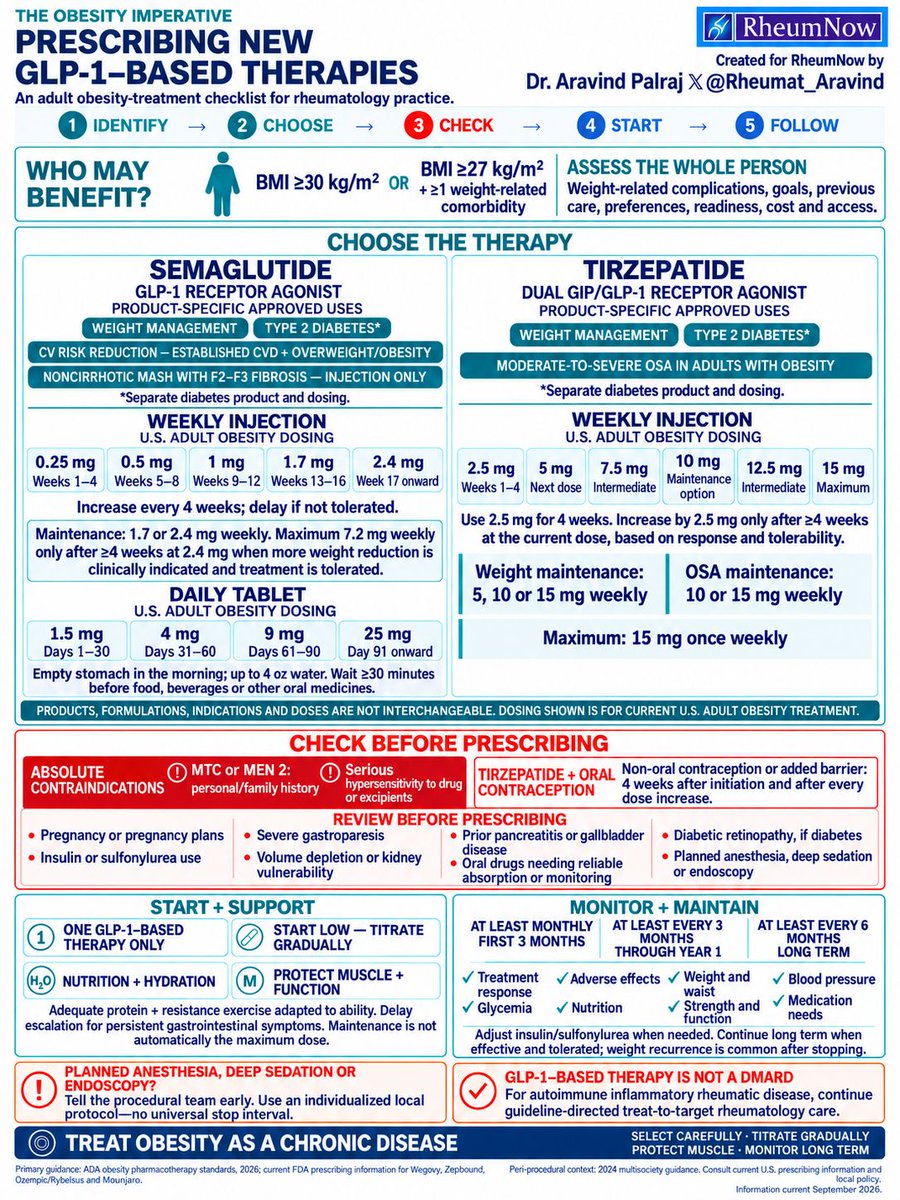
Annals of Internal Medicine has published the updated 2025 U.S. Department of Veterans Affairs and U.S. Department of Defense Clinical Practice Guidelines on adult Overweight and Obesity management. Here is a review of the guidelines, including five key takeaways for rheumatologists.
Gabapentin Use Rose as Restrictions Fell, Study Shows
Gabapentin use jumped quickly in Michigan after the drug was removed from the state's controlled substance schedule in 2024, a cross-sectional study showed.