

All News

Sleep Apnea Smart Watches (10.13.2023)
Dr. Jack Cush reviews the news, journal reports and regulatory approvals from this past week on RheumNow.com.
Read Article
53.2 Million with Diagnosed Arthritis (USA: 2019–2021)
This week the CDC's MMWR reports that during 2019–2021, 21.2% of U.S. adults (53.2 million) reported "diagnosed arthritis".
Read Article
FDA Approves IV Secukinumab
On Oct. 6, 2023, Novartis announced the US Food and Drug Administration (FDA) approved an intravenous (IV) formulation of secukinumab (Cosentyx) for use in treating adults with psoriatic arthritis (PsA), ankylosing spondylitis (AS) and non-radiographic axial spondyloarthritis (nr-axSpA).
Read Article
Surprising Link Between Weight Gain and RA Activity
In patients with rheumatoid arthritis (RA) treated with infliximab (Remicade), increases in body mass index (BMI) scores over time were not associated with increased disease activity or faster radiographic progression.
Read Article
PMR & Popeye's Spinach (10.6.2023)
Dr. Jack Cush reviews the big PMR reports from this week along with other journal reports from RheumNow.com.
Read Article
Sustained Efficacy of Bimekizumab in Psoriatic Arthritis
BE OPTIMAL trial tested the benefits of a dual IL-17 A/F inhibitor, bimekizumab (BKZ), in patients with active psoriatic arthritis and showed superior efficacy over placebo, that was sustained beyond the primary endpoint, from week 16 to 52.
Read Article
SAPHYR Trial: Sarilumab Wins in Relapsing Polymyalgia Rheumatica
NEJM reported today that polymyalgia rheumatica (PMR) patients who fail to respond to standard doses of prednisone therapy, were significantly better when given the IL-6 inhibitor sarilumab (than placebo).
Read Article
Predictive FDG-PET in Newly Diagnosed GCA
Annals of Internal Medicine reports that the use of 18F-fluorodeoxyglucose (FDG) PET imaging at the time of a giant cell arteritis (GCA) diagnosis may help estimate the risk for aortic aneurysm formation.
Read Article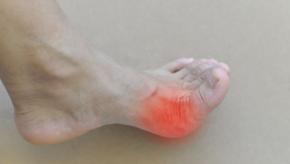
Gout Flare Prophylaxis - Colchicine or NSAIDs?
Flare prophylaxis is the standard when initiating urate-lowering therapy (ULT) in patients with gout. A new study suggests that colchicine, more so than non-steroidal anti-inflammatory drug (NSAID) prophylaxis, may increase the odds of adverse events, when initiating allopurinol for gout.
Read Article
RheumNow Podcast – with Special Guest Dr. Kathryn Dao (9.29.2023)
This week on the podcast, Dr. Jack Cush is joined by special guest, Dr. Kathryn Dao to review the news and journal reports from the past week on RheumNow.com. They discuss unmet needs in gout, obesity and CV disease in PsA and should you check ANCA antibodies in SLE?
Read Article
Uncertainty on Pre-Clinical RA – Rheumatologist Survey Results
In June 2023, RheumNow surveyed US and non-US rheumatologists (Rheums) about how they consider and manage pre-clinical rheumatoid arthritis (RA) in their practice.
Read Article
Microvascular CV Disease with Severe Psoriasis
While comorbidities, including an increased cardiovascular (CV) risk, are associated with severe psoriasis, less is known about subclinical CV disease and when it occurs in patients with psoriasis.
Read Article
Advice on Multi-Drug Failures in RA
What’s your next best approach to the rheumatoid arthritis (RA) patient who has failed several DMARDs and biologics? In such cases you have to either reconsider the diagnosis (especially if seronegative) or reach into your bag of tricks.
Read Article
RheumNow Podcast with Special Guest Dr. Michael Weinblatt (9.22.2023)
Dr. Jack Cush is joined by Dr. Michael Weinblatt as they discuss this weeks news and journal reports, including difficult RA, HLA typing and abatacept responses and new regulatory decisions.
Read Article
Cognitive-behavioral Therapy Lessens Fibromyalgia Pain
In a recent randomized clinical trial of patients with fibromyalgia, cognitive-behavioral therapy (CBT)—which uses structured techniques to alter distorted thoughts and negative moods—was superior to a matched education treatment in reducing the interfering effects of pain and other aspects of fi
Read Article
RA Associated Cancer Risk
A large cohort analysis of insured rheumatoid arthritis (RA) patients reveals that RA patients have a 1.69 to 2.08 fold higher risk of developing cancer, especially lymphoma or lung cancer, within 1 year of RA diagnosis.
Read Article
Machine Learning May Diagnose Psoriatic Arthritis Earlier
A machine learning approach was applied to two different population cohorts and was shown to be effective at the early identification of undiagnosed psoriatic arthritis (PsA).
Read Article
RheumNow Podcast – with Special Guest Dr. Peter Nash (9.15.2023)
This week, Dr. Jack Cush reviews the news with special guest, Dr. Peter Nash. They discuss COVID Autoantibodies, SpA life expectancy, HCQ, extraarticular RA and our approach to Early RA referrals and pre-clinical RA.
Read Article
TNR: Early RA - Referrals and Treatment
This Tuesday Night Rheumatology was an hour long panel discussion featuring Drs. Jack Cush, Vivian Bykerk, Glen Hazelwood and Martin J. Bergman.
The Panel discussed Rheumatologists views on Early RA referral and intake, initial treatment preferences and views on diagnosing and treating pre-clinical RA.
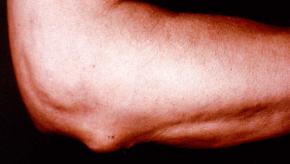
RA Extra-articular Manifestations Declining
A Mayo Clinic population based cohort study shows the extraarticular manifestations of rheumatoid arthritis (ExRA) have declined with time; but the increased mortality risk of RA remains unchanged.
Read Article
