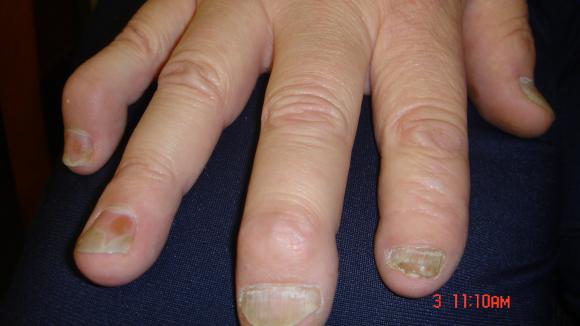
The occurrence of interstitial lung disease (ILD) in Systemic sclerosis portends serious morbid and mortal outcomes for those affected. This review examines the available clinical literature on the potential benefits and outcomes of JAK inhibitor use in SSc=ILD.

All News
The American College of Rheumatology (ACR) released a summary of its new guideline for Exercise, Rehabilitation, Diet and Additional Integrative Interventions for Rheumatoid Arthritis.
The easiest intervention for knee osteoarthritis (diet and exercise) is also the most difficult for many patients; but do these work? A new study of a weight loss and exercise program in community settings shows only marginal benefits.
Efgartigimod Treatment in Chronic Primary ITP
Patients taking efgartigimod, a drug being studied for use to treat chronic primary immune thrombocytopenia (ITP), exhibited a significantly greater improvement in platelet counts which are essential to clotting and stopping bleeding, compared to those taking a placebo, according to results repor
Giant cell arteritis (GCA) has historically been a clinical diagnosis (visual loss, headache, jaw pain, scalp tenderness, etc) supported by labs and histopathology.
Several recent articles inform us of recent trends in Telemedicine.
Xeljanz Cancer Risks Detailed
The degree to which the oral rheumatology drug tofacitinib (Xeljanz) seems to promote new malignancies is now fleshed out in the latest, and at least somewhat reassuring, report from a landmark safety study.
Bimekizumab, a selective inhibitor of interleukin (IL)-17F and IL-17, has shown superior efficacy and safety in a 16 week trial in patients with active psoriatic arthritis who previously failed therapy with tumour necrosis factor-α (TNFi) inhibitors.
The first large multi-ancestry genetics study of osteoarthritis (OA) has found 10 novel OA-associated genetic loci, and results showed some of the OA-associated regions are robustly found in every population ancestry studied.
Pregnant women with systemic lupus erythematosus (SLE) were more prone to cardiovascular complications during delivery, and their risk seems to have increased over the past 15 years, according to national administrative data.
The Infectious Diseases Society of America has recently updated its recommendations with regards to the treatment of severely ill, hospitalized COVID-19 infected patients and also about the appropriate use of anti-IL-6, JAKs and colchicine.
A UK study suggests the equivalent outcomes when patients with interstitial lung disease (ILD) associated with connective tissue disease (CTD) are treated with either intravenous rituximab (RTX) or cyclophosphamide (CTX), but with fewer adverse events with RTX.
When it comes to hydroxychloroquine dosing, issues on efficacy, toxicity and therapeutic thresholds may affect the optimal use of this important drug.
Following are three abstracts presented during the meeting that address these topics.
There is a large, unmet need in treating Sjögren’s syndrome, yet a new randomized clinical trial has shown that low-dose interleukin 2 (LD-IL-2) was effective effective and well tolerated in patients with primary Sjögren’s syndrome (pSS), with evidence of restored immune balance.
Deucravacitinib, an oral, selective TYK2 inhibitor, has demonstrated efficacy in a phase II trial active systemic lupus erythematosus (SLE) patients.
How women can reduce the risk of hip fracture?
The exact role of diet, physical activity, and stress management in the management of RA has long been debated. While reasonable evidence has supported the importance of physical activity in patients with RA, its capacity to reduce disease activity via conventional measures such as DAS28 was less well delineated.
The assessment of disease activity in AxSpA involves the use of objective inflammatory response (OIR) and patient reported outcomes (PROs). In clinics, a combination of OIR and PROs are used to measure disease activity and response to treatment.
Addressing chronic pain often leads general practitioners and specialists to prescribe opioids. However, opioids (weak and strong) have not demonstrated efficacy in long-term pain management; their chronic use could even worsen pain in users. Opioids prescription is often perceived as being safer than NSAIDs prescription, especially in respect to MACE.
Significant disparities exist in pregnancy outcomes in women with systemic lupus erythematosus (SLE), with previous cohorts identifying Black women as having a higher risk of maternal mortality compared to White women with SLE.