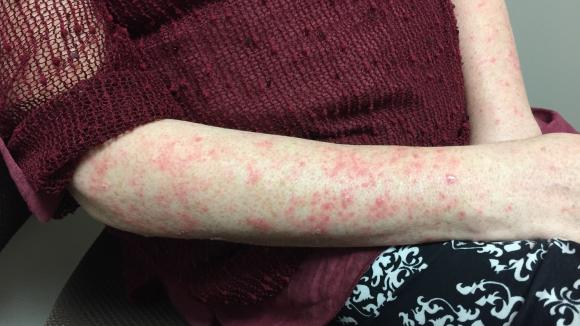
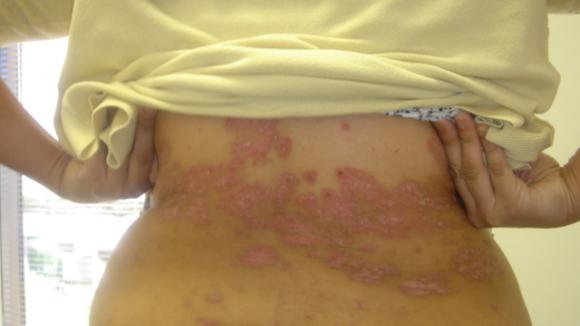
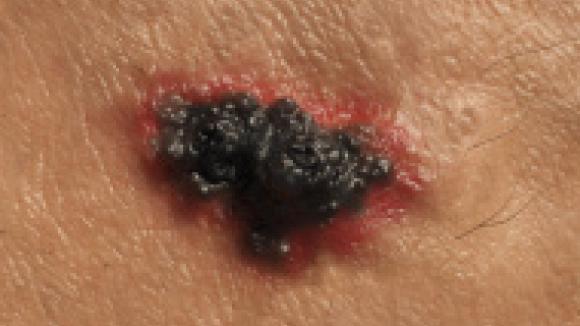
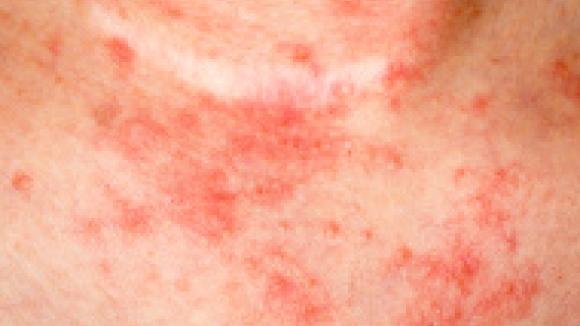
Choi and colleagues analyzed US hospitalizations (2009–2013) to assess the frequency and racial distribution of patients hospitalized with Stevens-Johnson Syndrome (SJS) and Toxic Epidermal Necrolysis (TEN) related to the use of urate-lowering (ULT) therapy (predominantly allopurinol).

All News
Danish researchers studied a cohort of 59,423 mild psoriasis and 11,566 severe psoriasis patients over a 14 year period, and found 240 and 50 cases of abdominal aortic aneurysms (AAA), repectively. (Citation source http://buff.ly/1YxGpDA)
Dr. Jack Cush reviews the rheumatology highlights from the news, media, and journals from this past week:
Pfizer has issued a press release of its preliminary results from the OPAL study that examined the efficacy and safety of tofacitinib 5 mg and 10 mg twice daily (BID) in adults active psoriatic arthritis (PsA).
There have been several reports of psoriasis being linked to chronic renal disease in the literature. Another population-based study has also found a link between severe psoriasis and kidney disease.
Researchers at the University of Toronto have prospectively studied a cohort of 464 psoriasis patients without a diagnosis of arthritis and followed them over 8 years to estimate the incidence and frequency of psoriatic arthritis (PsA).
Tuesday the FDA approved the IL-17 inhibitor, Taltz (ixekizumab) for adults with moderate to severe plaque psoriasis. (Citation source http://buff.ly/1py10wd)
The UNCOVER-2 and UNCOVER-3 trials were presented at the American Academy of Dermatology (AAD) Annual Meeting taking this week in Washington, D.C.
It is estimated that nearly 30% of psoriasis patients will develop psoriatic arthritis (PsA). This prevalence was studied by performing MRI scans on asymptomatic psoriasis (n=56) and 30 control patients without arthritis.
In the current issue of Lancet, Pierre Miossec discusses the challenges of studying and managing juvenile dermatomyositis and, specifically, the
Rheumatoid arthritis (RA) patients are said to have a neutral risk for neoplasia, but this is because they have a lower risk of colon cancer and breast cancer but a higher risk of lung cancer, lymphoma and skin cancers.
NEJM has published the results of two studies wherein IL-17 inhibition with secukinumab (SEC) was shown to be effective in patients with anklylosing spondylitis.
Tofacitinib has been approved for use in rheumatoid arthritis.
Lancet reports the results of a randomized controlled trial comparing prednisone alone to prednisone combined with either methotrexate (MTX) or cyclosporine (CyA) in new-onset juvenile dermatomyositis (JDM).
Containment of health care costs was a primary goal of the Patient Protection and Affordable Care Act. But there is little evidence of success in curbing the rising price of prescription drugs. As such, many medications are unaffordable to those who need them.
A prospective, international observational study of systemic sclerosis patients enrolled in the Digital Ulcers Outcome (DUO) Registry: Patients were required to have ≥3 follow-up visits over at least a 2 year observation period between 2008-2013.
A recent report from the Journal of the American Academy of Dermatology found that the oral Janus kinase (JAK) inhibitor tofacitinib to be effective in the treatment of moderate to severe atopic dermatitis.
The number of patients with psoriasis who go on to develop psoriatic arthritis (PsA) is considerably higher than has previously been estimated, a prospective cohort study found.
Using Medicare claims data, a retrospective cohort study analyzed the risk of a second non-melanomatous skin cancer (NMSC) in 9460 individuals (6841 with RA and 2788 with IBD).