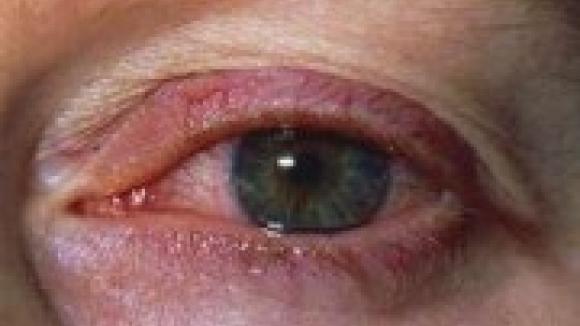
It has long been observed that patients receiving monoclonal antibody based anti-TNF (TNFi) therapies for spondylitis or psoriatic disease have less inflammatory eye complications, such as uveitis. These agents have become common interventions based on these observational results.

All News
Researchers from Germany have analyzed their large prospective rheumatoid arthritis (RA) registry to address whether being on biologic therapies leads to poorer outcomes - namely sepsis or death, following a serious infection (SIE).
The goal in rheumatoid arthritis (RA) treatment is remission. But what level or method of remission is best?
A U.S. court has affirmed its decision that the patent for Johnson & Johnson's drug Remicade is invalid. This new ruling favors the intent of Celltrion and Pfizer, who are seeking to bring their biosimilar versions of infliximab to market in the near future.
A new national survey in the United States of nearly 600 individuals with psoriasis, reveals that although patients have numerous treatment options, they have difficulty finding treatment plans that work. In addition, respondents reported a heavy emotional toll, with many feeling isolated and stigmatized due to the condition.
Watch Dr. Cush review 13 highlights from this week on RheumNow.
Warnings of cancer, especially lymphoma, have accompanied the development and promotion of tumor necrosis factor inhbitors (TNFi) in the treatment of RA and other inflammatory disorders.
The pathogenesis of Alzheimer's disease (AD) is unknown but some have speculated a role for inflammation.
Psoriasis and psoriatic arthritis are more prevalent, often more severe, and sometimes refractory to conventional treatments in HIV-positive patients, but clinicians are understandably concerned about moving on to immunosuppressive anti-tumor necrosis factor (TNF) agents when other treatments fai
Chingcuanco and coinvestigators have reported on their comparative analysis of biosimilars and their originator TNF inhibitors in the current issue of Annals of Internal Medicine. (Citation source: http://buff.ly/2arTd1q)
Dr Jack Cush reviews this week's highlights from RheumNow.com.
Burmester and colleagues have published their review of the long-term outcomes and safety issues with the TNF inhibitor, adalimumab (ADA). The analysis included 15,132 patients exposed to adalimumab in global RA clinical trials.
From tofacitinib developmental trials in RA and psoriasis and adherence to T2T in early RA to a rheumatology pearl about dapsone and much more, here are the highlights of what you may have missed on RheumNow.com this week.
In the last 6 months, the FDA Arthritis Advisory Committee has recommended three biosimilars (CT-P13, GP-2015, ABP-501) for approval, with one achieving FDA approval Inflectra/CT-P13) and the other two pending a probable approval in the months to come.
Porter and colleagues have reported that both rituximab (RTX) and tumour necrosis factor inhibitors (TNFi) are equally and highly effective in early, active, biologic-naive rheumatoid arthritis patients.
Dr. Jack Cush reviews highlights from this week's rheumatology news on RheumNow.com.
The Food and Drug Administration’s Arthritis Advisory Committee (AAC) yesterday recommended that the Sandoz etanercept (Enbrel) biosimilar (GP-2015) be approved for use in the United States.
The Food and Drug Administration’s Arthritis Advisory Committee yesterday recommended that Amgen biosimilar (ABP 501) to Humira (adalimumab) be approved for use in the United States.
Autoimmune ophthalmic disease is a frequent challenge to rheumatologists from both a diagnostic and therapeutic perspective. Approved therapies are limited and have only been infrequently or comfortably utilized by rheumatologists and autoimmune ophthalmologists.
Since the introduction of TNF inhibitors nearly 20 years ago, concerns over a potential associated cancer risk have abounded. The recent ACR RA treatment guidelines have addressed this recently, stating that patients with any solid tumor cancer or risk thereof should be treated as if they ha