


Predictors of Calcinosis Cutis in Systemic Sclerosis Save

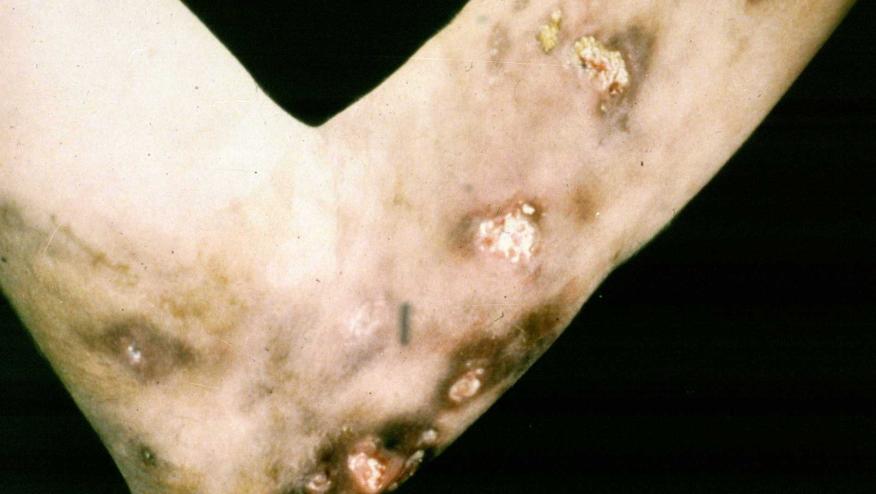
Calcinosis cutis (CaC) is a common and disabling non-lethal manifestations in systemic sclerosis (SSc). This study used SSc patients from the EUSTAR database to clinically characterize patients and identify risk factors for CaC development.
Patient characteristics (with vs without CaC) were assessed at baseline and 5 and 10 years later.
Among 7,114 SSc patients in the EUSTAR database, 11.9% had CaC at baseline. Among ~1,000 without baseline CaC, 40% developed CaC within 5 years and and 46% by 10 years.
Calcinosis cutis patients more frequently were/had:
- female
- longer disease duration
- higher modified Rodnan Skin Score
- telangiectasia
- digital ischemia
- late capillaroscopy patterns
- joint contractures
- tendon friction rubs
- gastrointestinal involvement (all p< 0.001)
- pulmonary arterial hypertension (PAH) (p= 0.02)
- joint synovitis
- renal crisis (both p= 0.04)
Labs revealed CaC patients to have anti-centromere and anti-PM/Scl antibody positivity (p< 0.001; p= 0.03, respectively.
Predictors for the development of CaC at 5 years:
- longer disease duration (OR 1.04)
- cardiac involvement (OR 1.63)
- late capillaroscopy pattern (OR 1.70)
- telangiectasia (OR 1.92)
- digital ulcers (OR 2.60)
- PAH (OR 2.10).
Predictors of CaC at 10 years included longer disease duration (OR 1.03), diffuse cutaneous SSc (OR 1.51), female gender (OR 1.85), telangiectasia (OR 1.92), and digital ulcers (OR 2.92).
ADD THE FIRST COMMENT
Disclosures
Disclosures
The author has no conflicts of interest to disclose related to this subject






If you are a health practitioner, you may Login/Register to comment.
Due to the nature of these comment forums, only health practitioners are allowed to comment at this time.