


Uricase-Targeted Therapies in Gout Save

Know-it-now
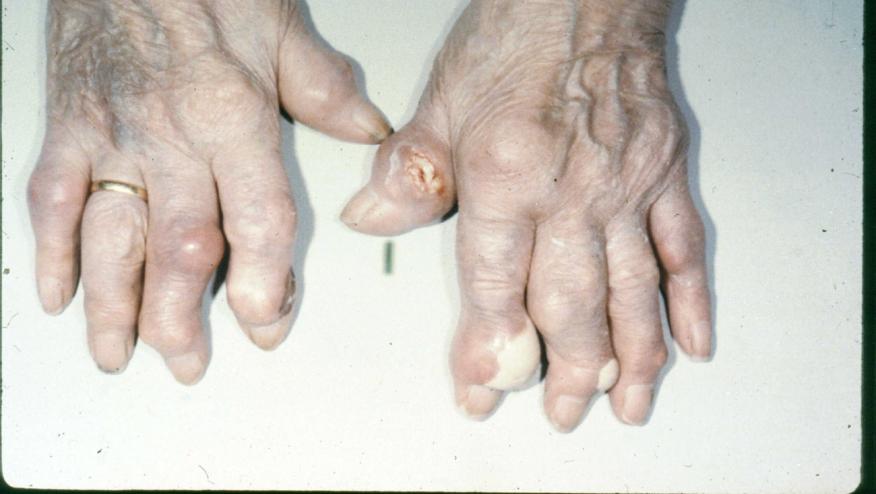
- Uricase therapy is indicated for refractory/uncontrolled gout after oral ULT failure.
- Pegloticase's major limitation is anti-drug (often PEG) antibodies (ADA) that can nullify drug benefits and lead to infusion reactions; serial serum uric acid (SUA) monitoring at every infusion is essential to catch loss of response early.
- Concomitant methotrexate (or mycophenolate/azathioprine) improves pegloticase response rates (by inhibiting ADA) and is guideline-endorsed but adds another layer to toxicity monitoring.
- NASP (pegadricase + nanoencapsulated sirolimus) offers a new combo drug strategy — avoiding additional immunosuppression — with monthly dosing and phase III efficacy signals. This is not yet FDA approved.
In most mammals, uricase catalyzes the oxidation of uric acid to allantoin, a highly soluble compound easily excreted by the kidneys. But humans lack functional uricase, leaving xanthine oxidase inhibitors (allopurinol/febuxostat) as first-line urate-lowering therapy (ULT). Uricase-based biologics are reserved for uncontrolled/refractory gout patients with gouty flares, active synovitis, and/or non-resolving tophi despite optimized oral ULT (target SUA <6.0 mg/dL, or <5.0 mg/dL in severe disease). Given the cost, infusion burden, and immunogenicity risk, this is a rescue therapy tier, not a first-line alternative.
Rasburicase was the first recombinant uricase (FDA approved 2002), approved only for tumor lysis syndrome. Its ~18-hour half-life and high immunogenicity make it impractical for chronic gout; off-label use risks flares and hypersensitivity, and there's no validated dosing regimen for this indication.
Pegloticase (FDA-approved 2010) remains the only uricase specifically indicated for chronic refractory gout. PEGylation extends its half-life to 10–12 days, enabling biweekly infusions, and it drives tophus resolution along with clinical and functional improvements. However, 40–58% of patients fail to sustain response due an immunogenic response (primarily) to polyethylene glycol (PEG) and subsequent anti-drug antibodies (ADAs). High-titer ADAs may lead to infusion-reactions (up to 26%) or anaphylaxis risk (5% in pivotal trials). This can be monitored as the pegloticase dramatic drop in SUA is reversed by nullifying ADA’s leading to a rising or persistently elevated SUA (>6 mg/dL, or two consecutive elevated measurements).
DMARD use with Pegloticase. This potential problem is obviated by the concomitant use of an immunosuppressive (e.g., methotrexate) to inhibit ADA formation. Since 2022, the FDA-endorsed strategy is co-administering methotrexate with pegloticase, which markedly improves response rates (MIRROR trial: 78.6% vs. historical 42% monotherapy) and lowers ADA formation/infusion reactions. Mycophenolate mofetil (RECIPE trial: 86% vs. 40% placebo at 12 weeks) and azathioprine are validated alternatives for patients who can't tolerate MTX. But there is a trade-off as the secondary use of an immunomodulator adds monitoring and drug specific risks which can be significant given the high comorbidity burden (cardiovascular disease, hypertension, CKD) typical of uncontrolled gout patients.
Pegadricase/NASP. Nanoencapsulated sirolimus plus pegadricase (NASP, formerly SEL-212) sequentially infuses NAS (sirolimus in a viral-sized nanoparticle that induces tolerogenic antigen-presenting cells and pegadricase-specific regulatory T cells) immediately followed by pegadricase, a novel PEGylated Candida utilis-derived uricase — every 4 weeks. This achieves targeted, antigen-specific immunotolerance without systemic immunosuppression. Phase I and phase II trials established optimal dosing (NAS 0.15 mg/kg + pegadricase 0.2 mg/kg); the COMPARE trial showed monthly NASP was comparable to biweekly pegloticase (not statistically superior) with fewer infusions and 26% less cumulative glucocorticoid exposure. Combined DISSOLVE I/II phase III data showed SUA responses of 51% (high-dose), 43% (low-dose), vs. 8% (placebo), with reduced tophus burden and meaningful patient-reported outcome improvements — including a signal of benefit in CKD stage 3 patients. Stomatitis (a known sirolimus effect, dose-related) and infusion reactions/anaphylaxis are the notable safety considerations; NASP has not yet compared directly against pegloticase-plus-methotrexate, since COMPARE predated that FDA-approved regimen. NASP is investigational, not yet FDA-approved, and is expected to be approved in 2026 once the FDA’s questions on manufacturing are satisfactorily resolved. Full publication of DISSOLVE data is pending.
Editor's note: For more content like this, visit our "Gout: More than Flares" page.
Related Content
ADD THE FIRST COMMENT
Disclosures
Disclosures
The author has no conflicts of interest to disclose related to this subject
The author used AI to research and organize this content, and maintains responsibility for its accuracy




If you are a health practitioner, you may Login/Register to comment.
Due to the nature of these comment forums, only health practitioners are allowed to comment at this time.