

A Tribute to Thomas A. Medsger Jr., MD (1936–2026) Save
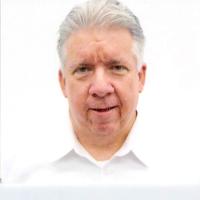
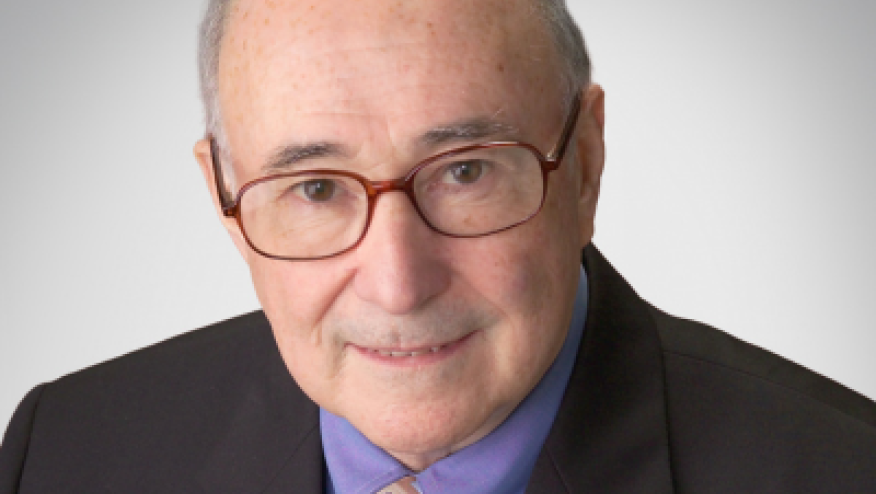
The rheumatology and scleroderma communities mourn the loss of Dr. Thomas A. Medsger Jr., who died August 15, 2026, in Pittsburgh, at age 89.
Born September 19, 1936, in East Orange, New Jersey, Medsger's family relocated to Edgeworth, Pennsylvania, in 1944. He attended Northfield-Mt. Hermon School, Haverford College, and earned his medical degree from the University of Pennsylvania School of Medicine in 1962. After an internship at Jackson Memorial Hospital in Miami and two years of service in the United States Air Force, he returned to Pittsburgh in 1965. The city and university, Pittsburgh was to be his home, career and legacy.
At the University of Pittsburgh School of Medicine, Tom joined Gerry Rodnan in a tireless mission to research, understand and treat systemic sclerosis. While their personalities contrasted, their dedication to excellence, mentoring and disciplined research made the Pittsburgh Division of Rheumatology and Clinical Immunology an international force and mecca for Scleroderma. After five decades on the faculty of the University of Pittsburgh Medical Center, Medsger became the Gerald P. Rodnan Professor of Medicine and served as Director of its Scleroderma Research Program. He authored more than 280 peer-reviewed publications and over 120 invited chapters and reviews, transforming the field's understanding of the epidemiology, clinical subsets, autoantibody associations, organ involvement, and natural history of systemic sclerosis. He also published widely on adult-onset Still's disease, polymyositis-dermatomyositis, lupus, Raynaud's phenomenon, and Sjögren's syndrome.
Medsger's fingerprints are all over modern rheumatology. He co-authored the original American Rheumatism Association preliminary criteria for scleroderma classification, helped define the limited/diffuse cutaneous subset system with E. Carwile LeRoy, and later contributed to the 2013 ACR/EULAR systemic sclerosis classification criteria. He developed a widely used damage index for scleroderma-affected organs and, along with Dr. Rodnan, built the University of Pittsburgh Scleroderma Patient Registry (a model for a rare disease) from a box of index cards into a longitudinal database now exceeding 4,000 patients — a resource that continues to drive discovery today.
Beyond the bench and clinic, Medsger was a devoted teacher both at the medical school and throughout rheumatology. He is well known by medical students and medical residents for his generous, insightful and positive guidance. He is loved by countless rheumatology fellows, many of whom went on to establish scleroderma research and patient-care programs at their own institutions — a mentorship legacy that endures with an amplified bibliography and excellence in patient care. The Scleroderma Foundation named him Doctor of the Year in 2005 and honored him with its Lifetime Achievement Award in 2009. In 2016, Pittsburgh's Department of Medicine established an endowed professorship in arthritis research in his name, now held by his successor, Dr. Robert Lafyatis.
So many trainees, coworkers, researchers, patients and organizations closely aligned with this pensive visionary. They may be tearful with his passing, but because of Tom they are better, more thoughtful, more planful and never shy away from that which is hard. Tom was a master at kindness and ‘do the right thing’.
Tributes have poured from many throughout the rheumatology world:
- Janet Pope, MD (St. Josephs Medical Center): As a rheumatologist and scleroderma researcher, Dr. Tom Medsger was a giant in the field. He commanded authority despite being soft-spoken; in areas where he knew more than everyone in the room. He was an excellent mentor, a teacher and was impactful in scleroderma including developing a damage index that led to other important contributions from the community. Most of all, he will be missed because he was a thoughtful, kind person.
- Carol Feghali-Bostwick, PhD (Chair, National Scleroderma Foundation): The scleroderma community lost a giant on August 15. Dr. Thomas Medsger was an amazing mentor who made an indelible impact on me. He was smart, knowledgeable, humble, compassionate, caring, and so passionate about taking care of his scleroderma patients and advancing the scleroderma field. His legacy lives on in the numerous people he mentored and trained who continue his important work.
- Virginia Steen, MD (Georgetown University): Tom Medsger has been the cornerstone of my whole career, from his exceptional teaching of rheumatology when I was a third-year medical student which got me 'hooked' on rheumatology, to my first day of fellowship when he handed me 300 5×7 cards of Gerry Rodnan's scleroderma patients to put into the computer, which was the start of the Pittsburgh Scleroderma Database, to the decades of collaboration and passion in working together. His enthusiasm, support, optimism, his great red pen for editing and guidance through all aspects of my career, as well as so many others in scleroderma, have allowed the scleroderma community to benefit and have a much better understanding of all aspects of scleroderma. Now, Tom is joining the others who are giants of scleroderma. We will all miss him.
- Rosalind Ramsey-Goldman, MD, DrPH (Northwestern University): Dr. Thomas Medsger’s attributes of empathy, kindness, and friendship complemented his expert teaching with his clinical acumen when working with patients, trainees, mentees, and colleagues. As my mentor, he designed a career path for success ranging from overseeing my first successful research grant application during my first year of fellowship to coordinating an application for a career development award to support protected time for coursework, research activities, and networking. He was a master editor and had a never-ending stock of red pens. I no longer an undated cartoon from my time as a fellow, but it shows an editor (aka TAM), completely rewriting an essay. I am continuing that legacy with my current students who will corroborate my editorial activities with their grants and manuscripts as I try to continue his lessons striving for research excellence.
- Kathryn Torok, MD (CHP): As a pediatric rheumatology fellow, I was honored when Dr. Medsger agreed to mentor me on a fellowship research project. He was already a giant in the field of scleroderma, and while I was initially a bit intimidated by that, you would never have known it sitting beside him in clinic. His humility, kindness, and lighthearted demeanor with patients immediately put everyone at ease. Although my early manuscript drafts returned covered in red ink, which he later jokingly switched to blue ink so as not to scare trainees away, his methodical approach to teaching and mentoring was incredible. Through his guidance, I published a first-author paper examining composite hand function measures in patients with scleroderma and their relationship to disease status. We assembled an outstanding multidisciplinary team, including a dedicated occupational therapist, and the experience shaped how I approach research and mentorship to this day. What I remember most, however, was calling Dr. Medsger's patients and asking them to come into the city on a Saturday to participate in our hand function study. Time after time, the response was overwhelmingly positive. Patients were grateful for the call and eager to participate, often saying they were happy to do anything to support Dr. Medsger and his team because of all he had done for them. That was my first real appreciation of the impact he had on the scleroderma community, beyond his many scientific and academic accomplishments. His patients trusted him, admired him, and genuinely wanted to help him and his team succeed because he had devoted so much of himself to helping them. Truly an incredible person – he will be sorely missed. Please see what Chet and Dana posted on the National Scleroderma Foundation honoring Tom: https://scleroderma.org/remembering-dr-thomas-a-medsger-jr/
- Lee Shapiro, MD (Albany Medical College): As a former fellow (1980-1982), I never felt comfortable calling Dr. Medsger “Tom”, such was my level of respect. He was the consummate mentor. He had a formality and dignity which masked devilish humor. He was a wonderfully intent and patient listener whose observations were precise and incisive. He was unflappable. He was encouraging. His words, so carefully chosen, offered guidance and inspired trust, whether delivered to patients, students, or colleagues. He provided the standard to which, in so many ways, I aspired.
- Richard Silver, MD (MUSC): I will remember Tom as a devoted clinician and keen clinical observer who was dedicated to the advancement of scleroderma care and research. Tom’s legacy will go forward as his mentees and protégés carry the torch he lit. On a personal note, I first got to know Tom when we shared a sleeper compartment (along with Larry Shulman) on a train returning to Warsaw from a meeting in Poland! I will never forget being in the company of these giants of rheumatology. Tom was a great sports fan. We had many discussions -not just on scleroderma, but also on our favorite sport – baseball!
- Robyn Domsic-Degazio, MD (UPMC): Tom Medsger was a true gentleman, something which is becoming less frequent in today's world. He was the type of person/doctor/teacher/mentor that we should all strive to be. Always calm in every situation, I wish I could be more like him. He was a master clinician and taught me so many pearls. I had to spend an extra year of clinic working with him as a junior attending, as if I was a fellow. He felt it was the only way to train a strong clinician. I think he was right. I think anyone who wants a disease focus should do a year of dedicated fellowship, and I hope this is something the ACR supports in the future. More than that, Tom was a true friend. He showed up for me when times were hard. He and his wife, Anne, are the most welcoming people you'll ever meet.
- James Seibold, MD (Scleroderma Research Consultants): I last worked closely with Tom in 1980. Two things pop to mind: 1) Tom claimed to have taught me everything I knew about scleroderma while also claiming that he didn't teach me everything that he knew. 2) Tom Medsger was singular in his commitment to scleroderma and his careful cataloguing of data both defined the natural history of disease but also provided the basic template for our attempts at developing effective therapy.
- David J. Helfrich, MD (Chief, Rheumatology, UPMC): I met Dr. Medsger for the first time as a 4th year medical student. At the time he was still making attending rounds on the general medicine service. My grandmother had been admitted with pneumonia and after seeing her with the team he took time to talk with me to explain everything that was being done. Dr. Rodnan died when I was an intern and Dr. Medsger took over the division. I recall hearing the stories that Gerry would call for Tom to come to his office to give him colchicine for his gout. I interviewed with Dr. Medsger for fellowship a year later, and he said he was looking for fellows interested in research. I told him that was unfortunate because I was sure I was going to go into practice. For some reason, he accepted me anyway. I was grateful that he always allowed me to think out of the box. As a first-year fellow one of the first cases I presented to him was a woman who had scleroderma and acute renal failure. I told him it couldn't be scleroderma because she wasn't hypertensive. He thought for a bit and recalled a case report or two without hypertension which led me to my fellowship project of reviewing all our cases of normotensive renal failure in scleroderma. Tom was patient with trainees and gave freely of his time. He was meticulous in documentation and details. I was always early to bed and early to rise so as a fellow I dreaded the 10PM phone call from Tom to review the patients on service. Later as a colleague, he was always willing to see my complex patients for a second opinion and never limited himself just to scleroderma. Tom opened his home to us for graduation celebrations, and he and Anne were gracious hosts. Tom was a wonderful teacher, mentor, colleague and will be greatly missed.
- Dame Carol Black and Christopher Denton PhD FRCP FMedSci (University College, London): Dr Thomas Medsger was a giant in the scleroderma field and an inspiration to generations of rheumatologists. Our world-renowned Scleroderma Centre at the Royal Free Hospital owes him a great debt of gratitude. Dr Medsger generously shared his experience and expertise and showed by example that excellent clinical care and thorough documentation underpin management of complex connective tissue disease. He was modest and approachable but always demonstrated firm conviction and formidable knowledge underpinned by unrivalled clinical experience. Rheumatology has lost “one of the greats” and we will always be grateful for his advice, guidance, and friendship over many decades.
- Sindhu R Johnson MD PhD (Univ. of Toronto): Dr. Tom Medsger was a legendary figure in the world of scleroderma and a cherished supporter of the Toronto Scleroderma Program. As a visiting professor at our intra-city rounds, he generously shared his time and wisdom with faculty and trainees alike. On a personal note, I will always be grateful for his encouragement and mentorship in my work on SSc classification criteria, challenging me to think in new ways and explore novel concepts, including the rate of change in skin involvement. His wisdom, generosity, and statesmanlike presence at scleroderma meetings will be deeply missed.
- Masataka Kuwana, MD, PhD (Nippon Medical School): From 1993 to 1996, I spent three years as a postdoctoral research fellow at the University of Pittsburgh, where I had the privilege of being trained in clinical care and research of scleroderma under Tom’s mentorship. I was continually impressed by his profound clinical insight, and from him I learned that the answers we seek often lie in the patients’ own words and in careful physical examination. The lessons I learned from Tom during those years became the foundation of my subsequent career and have continued to guide me ever since. Tom also had a wonderful sense of humor and was always making jokes. As a non-native English speaker, I understood very few of them at first. I still remember how delighted he was when, after some time, I finally laughed at one of his jokes—and even managed to make a joke in return. Many people might have hesitated to joke so freely with someone when there was a language barrier between them. Perhaps Tom was quietly testing my English, but I prefer to think that it simply reflected who he was: warm, open, and someone who treated everyone around him naturally and without distinction. I will always be grateful for his mentorship, the lessons he taught me, and the warmth and humor with which he welcomed a young fellow from Japan. His influence has remained with me throughout my career, and it always will.
- Noreen Fertig: Dr. Medsger leaves behind a legacy that reaches beyond our borders. He shared his methods and system with investigators worldwide. His approach- a systematic, quiet, deliberate collection of information that is unrivaled. Truly a visionary individual. What is less known is that he was a patient and thorough instructor. Very late one evening, as I was also working late in his lab, I spied him in the conference room of the academic office huddled with a group of medical students who were about to graduate. He spent hours with them. I later discovered that he was teaching them how to elicit, not "take" a medical history. He received the " Golden Apple Award" from the medical students for that effort. It was a proud moment for him. He will be missed.
- Carol Feghali-Bostwick, PhD, FNAI (MUSC): Tom Medsger was a thoughtful and kind mentor, a brilliant rheumatologist, and the type of person who could restore your faith in humanity. He cared deeply about scleroderma patients. I remember how intimidated I was when he approached at a meeting when I was a graduate student to ask me if I wanted to consider Pitt for a post-doctoral fellowship. That feeling was quickly replaced by admiration after my move. Tom was always kind, helpful, thoughtful, supportive, and fair. I learned so much from him! We all used to joke about his editing. He preferred to edit hard copies using a red ink pen. I started out with drafts that had more red ink edits than printed text to ultimately, copies with very few red ink marks - that is when I realized how far I had come thanks to his patience, guidance, and mentoring. Tom was always there for the big events in my life: my wedding, the birth of my children, and even illness. He was there for all of them and even cried tears of joy at my wedding saying ‘I am so happy for you’ as he hugged me, which made me cry too. He genuinely cared! Professionally, the highlight of my career was having the opportunity to learn from him and work with him! Personally, he has made an indelible impact on me!
- Rojit Aggarwal, MD (UPMC): Tom Medsger was my first mentor in rheumatology, and he remains one of the very best I have ever had. To train under him was to train under a giant of our field — and yet what I remember most is not his towering reputation, but his generosity, his humor, and his red pen. He taught the way he practiced medicine: with precision, patience, and deep care. I will always smile at the memory of handing him a manuscript in neat black and white and getting it back covered, edge to edge, in red — every sentence weighed, every word reconsidered, every argument made sharper. That sea of red could be humbling at first, but I came to understand it for what it truly was: a master's way of teaching, and proof of how much he cared about getting it right, and about the people he was shaping. He set a standard of scholarship and compassion that I have spent my career trying to reach, and that I now try to pass on to my own trainees. Perhaps that is the truest measure of the man — his influence will live on in everyone he taught, and in every patient they will ever touch. Thank you, Tom, for the red ink, and for everything. I will miss you.
- Dana Ascherman, MD and Chester Oddis, MD: On Saturday, August 15, the Pittsburgh rheumatology community lost a friend and beloved colleague when Dr. Thomas A. Medsger, Jr. passed away at the age of 89. The world of rheumatology similarly will grieve the loss of an international, academic icon whose trailblazing efforts galvanized our understanding of a disease, systemic sclerosis, that has relentlessly ravaged our patients and their families. Tom dedicated his entire career to care for patients with scleroderma with a masterful blend of compassion and consummate expertise. His patients respected and loved him, and he will be remembered by them for his wonderful bedside manner and thoughtful and measured responses to their questions. Their fears were calmed by his demeanor sprinkled with his wonderful sense of humor and candor. Those of us who were trained by Tom to care for scleroderma patients will recall a similar, measured approach where he skillfully taught us and mentored us to treat our patients as we would care for family. Dr. Medsger’s research efforts in systemic sclerosis placed him at the pinnacle of international academic brilliance that will be difficult to replace and impossible to replicate. An era has truly passed with the loss of our wonderful friend and dedicated mentor, Thomas A. Medsger, Jr. MD.
- Ghaith Noaiseh, MD (KUMC): This is absolutely devastating news. My deepest condolences to the friends at UPMC rheumatology division on the loss of a true giant in our field. Dr. Medsger’s compassion, wisdom, and devotion to his patients and colleagues was always palpable. It was truly an honor to have overlapped with him for a few years. He will be deeply missed, but his influence will continue through everyone fortunate enough to have known, learned from, or worked with him.
- Bevra Hahn, MD (UCLA): Sad news - such a productive and pleasant person. What a privilege to know him.
- Jack Cush, MD: Tom was my exclamation point to entering rheumatology. I was a resident at Coney Island Hospital in NY with an interest in adult-onset Still’s disease. I wrote him, he called me back! I was encouraged to come to Pitt and review the UPMC AOSD patients. This legendary rheumatologist let me stay at his home for nearly 5 weeks! Who does that? Is this why rheumatologists are the best? He complained I made him late every morning, ate all the chocolate cookies and that he had to work with a despicable NY Ranger hockey fan. Yet, he adroitly and lovingly tutored, encouraged, challenged, corrected (the velvet hand), and became a once-in-a-lifetime friend. What better inspiration for a career in Rheumatology? Tom was a card-carrying methodologist, epidemiologist, and pain in the ass word smith. And also a major fanman of sports, rheumatology and inquisitive people. Perfect, as he was always the ‘Man With A Plan’. His loss is so tearful and crushing because his example and influence were so heavenly. Did he not complete you as he did me? When you were invited into Toms world, you became family. I did not do my fellowship at UPMC, but Tom always included me in all events Medsger and Pittsburgh. To live with Tom, Anne, Eric and Philip in Squirrel Hill was beyond wonderful – they were all warm, humorous, smart, and truly welcoming. Every night at the dinner table was testimony to what we learned today and why tomorrow was going to even be better. God Bless the Medsgers.
Tom is survived by his wife of 64 years, Anne, sons Philip (Amanda) and Eric, six grandchildren, and extended family.
Rheumatology has lost one of the architects of scleroderma medicine as we know it. His registry, his criteria, and above all his trainees carry his work forward.
Related Content




If you are a health practitioner, you may Login/Register to comment.
Due to the nature of these comment forums, only health practitioners are allowed to comment at this time.