

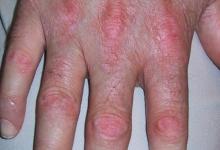
Joint Disease in SLE Reconsidered Save

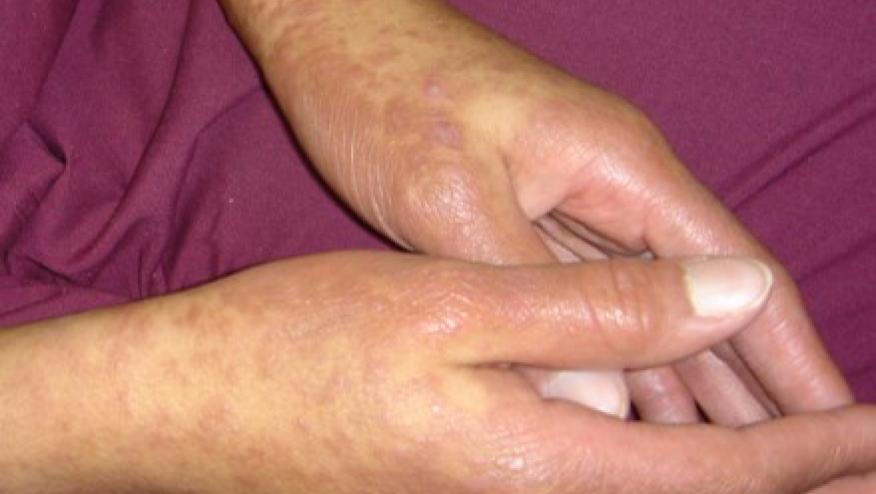
A new Frontiers in Immunology review from Ong, Wincup and colleagues, shows that lupus arthropathy is not a single uniform entity and it is biologically under-studied and clinically mismeasured, Moreover, the biology of lupus arthritis may shed light on choosing the best therapy for MSK manifestations of SLE.
Lupus arthropathy is at least two diseases - In the Toronto cohort of 2,264 patients, 55.1% had arthritis. Of these, 72.6% had non-deforming arthritis, 19.2% had Jaccoud’s arthropathy, and 8.1% had irreducible deformity, including rhupus. Interferon signature data were available for 475 patients, with disparate results. Because the data are cross-sectional, it is unresolved whether this reflects distinct biology or late-stage burnout.
- Non-deforming and Jaccoud’s disease were IFN-high.
- Irreducible deformity was IFN-low, with higher joint counts but lower SLEDAI-2K.
Lupus synovium is different from RA synovium - There is limited research and evidence in this area, including six untreated knee biopsies, a computational reanalysis of legacy datasets, and a 1991 histology series. Together they describe the lupus synovium that is:
- pauci-immune and myeloid-dominated
- IFN-imprinted (IFI27, IFI44, IFI44L)
- without ectopic germinal centers
- low in FAPα expression.
Tph and DN2 B cells, which are central to SLE biology, have never been studied in lupus synovium. Synovial fluid IL-6 and IL-17A exceed plasma levels, so the joint behaves as its own compartment. Anti-CarP antibodies (28.3%, versus 11.2% for ACPA) track with ultrasound erosions and may explain erosive disease in ACPA-negative patients.
Bedside exam misses half the disease - Ultrasound and contrast MRI each find inflammation in roughly half of clinically unremarkable joints. On MRI, 51.6% of patients with arthralgia alone had synovitis. In the Zayat study, ultrasound confirmed inflammation in 68% of symptomatic patients, yet only 32% met the SLEDAI musculoskeletal criterion. In another MRI study, wrist erosions were present in 93% of patients, although only 8.8% were ACPA-positive. Fibromyalgia (pooled prevalence 15.8%) inflates tender joint counts. Once it was excluded, ultrasound-positive patients responded better to glucocorticoids.
Clinical trials are blind to the joints - Placebo response on articular endpoints ranged from 37.5% to 50.5%. In TULIP-2, joint response was 42.2% with anifrolumab versus 37.5% with placebo, a non-significant difference. Yet in a 13-patient ultrasound cohort, anifrolumab abolished power Doppler signal in 90%. In LILAC, the placebo group improved by 11.6 joints. No registrational program has used imaging to measure articular response, and ALLEGORY (obinutuzumab) reported no joint outcome at all.
Does Biology Lead to Better Treatment? (these are extrapolations)
- IFN-high, non-deforming and Jaccoud’s disease: For such patients should we target IFN-pathway agents (anifrolumab, litifilimab, deucravacitinib, JAK inhibitors)? If Jaccoud’s arthropathy arises from recurrent tenosynovitis, so early suppression may be the only way to prevent deformity.
- IFN-low, irreducible deformity or rhupus (may be RF, CCP, or anti-CarP positive): This group appears to be biologically similar to RA. RA-style strategies and B-cell depletion have more rationale here than IFN blockade. In nine rhupus patients treated with rituximab, DAS28 fell from 5.73 to 3.02.
- IL-6: Higher overproduction in the synovium of SLE patients makes IL-6 a rational target. However, 5 of 7 tocilizumab responders relapsed within 8 weeks of stopping, which suggests suppression rather than reset.
- Myeloid-dominant synovium: This raises the possibility that macrophage-directed strategies matter more in the joint than lymphocyte targeting.
- Ultrasound enthesitis (29.2%): Patients with this finding responded poorly to B-cell depletion, which argues for choosing other mechanisms.
- Trial design: We should consider: a) assessing joint outcomes in all SLE trials; and b) Enroll patients for substudy by ultrasound or MRI, exclude fibromyalgia, and stratify by phenotype and IFN status. An effective drug may already have failed under the current design.
Lupus arthritis is heterogeneous, distinct from RA, and systematically misclassified. Phenotype-matched therapy may benefit from synovial biopsy acquisition and stratification, advanced lupus-specific imaging (and score), and imaging-anchored outcome measures. Until then, ultrasound is the most practical way to confirm inflammation before escalating treatment.
Related Content



ADD THE FIRST COMMENT
Disclosures
Disclosures
The author has no conflicts of interest to disclose related to this subject
The author used AI to research and organize this content, and maintains responsibility for its accuracy




If you are a health practitioner, you may Login/Register to comment.
Due to the nature of these comment forums, only health practitioners are allowed to comment at this time.