

What Factors Predict RA in First-Degree Relatives?
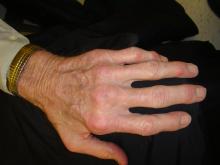
Among a cohort of first-degree relatives of patients with rheumatoid arthritis (RA), certain patient characteristics, as well as symptoms, helped predict a possible increased risk for developing the disease, U.K. researchers reported.
In a group of 870 first-degree relatives, 13.3% had the symmetrical and small joint pain that are typical of RA, according to Ian N. Bruce, MD, of the University of Manchester in England, and colleagues.
Booster Shots for Rheumatology Patients on Immunosuppressive Medications

ACR Update on Tocilizumab Shortages
The American College of Rheumatology (ACR) is actively engaged with the FDA Center for Drug Evaluation and Research (CDER) drug shortage team as they work with the manufacturer to resolve current shortages of tocilizumab (Actemra). Demand for tocilizumab has outpaced supply, with demand increasing after the FDA’s June 24 Emergency Use Authorization (EUA) for tocilizumab to be used for the treatment of COVID-19 in some hospitalized adult and pediatric patients.

Non-Serious Infection Risk with Biologics in RA
Tocilizumab in Refractory Skin and Joint Scleroderma
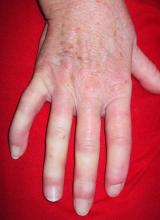
The interleukin-6 inhibitor, tocilizumab (TCZ), was studied in a cohort of difficult systemic sclerosis (SSc) and was shown to be effective in refractory joint and skin disease with good long-term retention rates and disease stabilization.
TCZ is currently FDA approved for use in SSc with interstitial lung disease for the purpose of slowing the rate of decline in pulmonary function in adult patients with SSc-ILD. Prior reports were unable to establish clinical benefits for skin or joint outcomes in SSc.

Inflammatory Arthritis Impairs Male Fertility
A new study in Annals of Rheumatic Disease shows that inflammatory arthritis (IA) may impair male fertility, especially during the peak reproductive age when lower fertility rates, higher childlessness rates and more fertility problems were seen.
Inflammatory arthritis (IA) and rheumatoid arthritis (RA) have been associated with male infertility, erectile dysfunction and hypogonadism. The current study sought to assessed the risk of infertility according to male reproductive age.

HHS, FDA & CDC Joint Recommendation on COVID Booster
Today, public health and medical experts from the U.S. Department of Health and Human Services (HHS) released the following statement on the Administration’s plan for COVID-19 booster shots for the American people.

EULAR Points on Managing Difficult Rheumatoid Arthritis

Sustained Effectiveness of mRNA Vaccines Against COVID-19 Hospitalizations
The CDC has reported that mRNA vaccine effectiveness against COVID-19–associated hospitalizations was sustained over 24 weeks; but there is evidence of waning protection amongst the immunosuppressed.
They studied vaccine responses among 1,129 patients who received 2 doses of a mRNA vaccine, no decline in vaccine effectiveness against COVID-19 hospitalization was observed over 24 weeks. Vaccine effectiveness was 86% 2–12 weeks after vaccination and 84% at 13–24 weeks. Vaccine effectiveness was sustained among groups at risk for severe COVID-19.
Oligoarticular vs. Polyarticular Psoriatic Arthritis
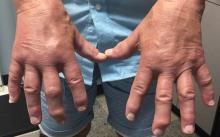
A psoriatic arthritis (PsA) cohort analysis reveals many similarities and few distinctions between those who present with oligoarticular and polyarticular PsA.
A total of 402 PsA patients from the University of Toronto PsA clinic (1978 - 2018) were included. Oligoarthritis was defined by the presence of ≤4 inflamed joints and progression (to polyarticular) as an increase to ≥5 joints.

Passive Smoke Exposure and Rheumatoid Risk
A current report in Arthritis & Rheumatology examined the Nurses Health Study II data set and shows that parental smoking, and passive exposure to children, can later lead to an increased risk of adult-onset incident seropositive rheumatoid arthritis (RA).
FDA Approves First COVID-19 Vaccine
Today, the U.S. Food and Drug Administration (FDA) approved the first COVID-19 vaccine, manufactured by Pfizer-BioNTech COVID-19 the vaccine, now marketed as Comirnaty (koe-mir’-na-tee), is approved for the prevention of COVID-19 disease in individuals 16 years of age and older.
This long-awaited approval is the result of a Priority Review granted by the FDA.
The current emergency use authorization (EUA) will still apply to children 12 through 15 years of age and as a third dose "booster" for immunocompromised individuals.
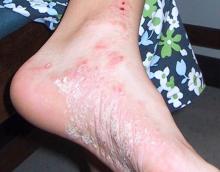
Biologic Therapy of Psoriasis May Prevent Psoriatic Arthritis
Another retrospective cohort study has shown that biologic treatment of psoriasis may reduce the subsequent incidence of psoriatic arthritis (PsA).
Analysis of electronic medical records of a large HMO identfied psoriasis patients who had received treatment for psoriasis (but were without a diagnosis of psoriatic arthritis). A total of 1326 cases psoriasis cases were included; 663 received biological treatment and 663 that had not.
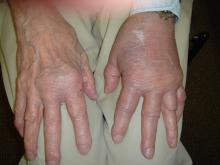
Rheumatic Events With Checkpoint Inhibitors: Tumor Type Matters
Among the factors that were associated with an increased risk for the development of rheumatic immune-related adverse events following cancer treatment with immune checkpoint inhibitors (ICIs) was the type of malignancy involved, a large case-control study found.

ACR Guidance on Timing of 3rd Dose Booster with Immunomodulatory Drugs
The American College of Rheumatology has issued an updated version of its COVID-19 Vaccine Clinical Guidance for Patients with Rheumatic and Musculoskeletal Diseases following recent recommendations from the CDC that certain immunocompromised patients receive a third dose of an available mRNA vaccine. Based on evidence published to date, the task force continues to feel the benefits of the COVID-19 vaccine outweigh the potential for vaccine harm for most rheumatology patients.

The Predictive Value of Morning Stiffness

Mediterranean Diet Benefits Spondyloarthritis
Can an antiinflammatory diet impact axial spondyloarthritis (axSpA)? A 6-month dietary intervention shows that adherence to a Mediterranean diet lowers disease activity in axSpA; but dietary adherence is often incomplete.
This prospective, 6 month trial assessed whether nutritional advice (at baseline, and every 2 months until month 6) on a Mediterranean diet. Adherence was scored using the PREDIMED questionnaire and disease activity was evaluated with ASDAS-CRP.
Rare Risks Associated with BNT162b2 mRNA Covid-19 Vaccine
The current NEJM reports that the use of the Pfizer mRNA vaccine (BNT162b2) demonstrated a very low risk for certain serious adverse events, including the risk of myocarditis (1 to 5 events per 100,000 persons).
The paper examines the safety of the BNT162b2 mRNA vaccine and a broad range of potential adverse events using data from the Israel health care organization use of the BNT162b2 mRNA vaccine. Vaccine outcomes were assessed at 42 days after vaccination.

Drug Choices After First TNF Inhibitor in RA

TNF Inhibitor Induced IgA Vasculitis in IBD
A new descriptive series shows an uncommon association between IgA vasculitis (IgAV) and inflammatory bowel diseases (IBD), with most cases interestingly arising after or during anti-TNF-α therapy.
A retrospectively analysis of the GETAID and FVSG networks identified, 43 patients with both IgAV and IBD, in 38 (88%) the IBD (mainly Crohn’s disease (CD) preceded IgAV by a median interval of 9.2 years.
In these 38 patients, at IgAV diagnosis, 13% had active IBD and 74% were treated with a TNF inhibitor (TNFi) for a median of 31.5 months.
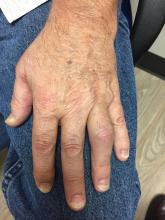
Predictors of Inflammatory Arthritis

FDA: New Cardiac and Cancer Warnings for All JAK Inhibitors

Not All Immunosuppression Alters Vaccine Immunogenicity
Chronic inflammatory disease (CID) patients are urged to receive the COVID-19 vaccines; but when a cohort of CID patients treated with immunosuppressive medications were given an mRNA-based SARS-CoV-2 vaccination, only those treated with glucocorticoids and B cell depleting therapies (BCDT) had lower SARS-CoV-2 vaccine antibody responses.
The I reported a prospective study of CID patients (n=133) receiving COVID-19 vaccination and controls (immunocompetent) were adult hospital employees (n=53).

Expert Panel: Initial Views on FDA Warnings for JAK Inhibitors

RheumNow Podcast – Saphnelo (Anifrolumab) Approved for Lupus (8.6.2021)
RheumNow Podcast – JAK Inhibitor Warnings from the FDA

ICYMI: The Greatest Rheumatologist - Part I
Who is the greatest rheumatologist? What makes for a great rheum? Is it clinical acumen, scientific achievement, educational prowess or years of unrivaled service or mentoring? Rheumatologists are quite opinionated on this subject and very nostalgic about their mentors and leaders. When I’ve posed this question in small groups, it’s plain to see how moved they become when discussing mentors or peers who influenced them. Thus, I posed this question to many of our leaders and mentors: who do you think of as the greatest rheumatologist?
ICYMI: The Greatest Rheumatologist - Part I
Who is the greatest rheumatologist? What makes for a great rheum? Is it clinical acumen, scientific achievement, educational prowess or years of unrivaled service or mentoring? Rheumatologists are quite opinionated on this subject and very nostalgic about their mentors and leaders. When I’ve posed this question in small groups, it’s plain to see how moved they become when discussing mentors or peers who influenced them. Thus, I posed this question to many of our leaders and mentors: who do you think of as the greatest rheumatologist?

ICYMI: The Greatest Rheumatologist - Part II
Wow! I hope you read part I of yesterday's “Greatest Rheumatologist” article. So many big names and yet, other names and stories that were equally inspirational.
If you read the comments of the part I article you can clearly see several themes emerge.
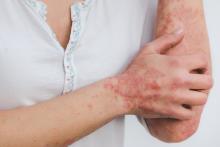
Diagnostic Delay in Half of Psoriatic Arthritis Patients
A Mayo Clinic/ Olmsted County study of psoriatic arthritis (PsA) patients has shown that more than half (55%) of PsA patients had a diagnostic delay of > 2 years, and that this delay has not improved over time.
A retrospective, population-based cohort examined incident adult PsA patients diagnosed between 2000–2017. They identifed a total of 164 incident PsA cases (162 diagnosed by a physician or rheumatologist). The mean age was 41.5 years and 46% were female.