

DERM on RheumNow PODCAST (August 2026)
The Derm on RheumNow podcast is a review of recent citations and content curated for dermatologists – addressing Psoriasis, PsA, CLE, vasculitis, HS, CTD skin disorders. dermatology drugs, biologics, andJAK inhibitors - their use, efficacy and side effects.
Features Dr. Jack Cush, Editor at RheumNow.com.
Show Notes:
- Latest #s: EHR estimates from 6 large US medical systems, estimated prevalence of autoimmune Dz (AID) to be >15 million (4.6% US population); 34% have > 1 AID. Women have 2x risk. Sex ratio of 1.7:1 F:M. https://buff.ly/fYgRfZ0
- POETYK PsA-1: Deucravacitinib in Biologic-Naïve PsA POETYK PsA-1 trial tested the disease modifying efficacy of deucravacitinib, a tyrosine kinase 2 (TYK2) inhibitor, in PsA patients and was shown to be superior vs to placebo for clinical responses, patient-reported outcomes, https://t.co/VjwpCVKPz0
- MoonLake announced positive phase 3 data from its IZAR-1 RCT using its dual A/F IL-17 inhibitor sonelokimab, showing significant responses at week 16: 66% ACR20, 42% ACR50, 41% minimal disease activity (MDA), & 61% PASI90 at week 16. a 2nd IZAR-2 PsA RCT is in progress https://t.co/eX0cxekRKG
- British Dermatology Biologics registry (BADBIR) 18976 #PSO pts had incidence serious infxns (SIE) 28 SEI/1000 Pt-Yrs; higher if they had prior infxn (79/1000 PYs). SIE signif lower w/ RIZankizumab (HR 0.74-.80) vs BROAD, ETN, other standards Rxs. SIE deaths rare (1.81/1000 PYs) https://t.co/GTr3DLCVXs
- 39 studies compared Juvenile systemic sclerosis (jSSc) & adult SSc. 935 jSSc vs 15,451 aSSc pts; jSSc had more diffuse cutaneous dz (70% vs 41%), more overlap myositis (33% vs. 5%), arthritis (33% vs 18%), digital ulcers (51% vs 20%), less renal crisis (0% vs 6%) & lower mortality jSSc (7.7% vs. 20.4%) https://t.co/vflarmwSyv
- Italian SPRING cohort of #SSc pts found only 5.3% (of 1689 pts) without the typical scleroderma pattern on nailfold change by NVC. They had milder dz, with less vascular dz (pitting scars 33 vs 48%), telangiectasias (52 vs 74%), calcinosis 3.4 vs 12%) & higher DLCOs at 12, 24, https://t.co/AoNAhVYfII
- Review of CAR-T 29 trials in systemic sclerosis (SSc): 27/29 target CD19 (other CD20, BCMA), 20/29 autologous. Only 2 RCTs; 1 w/ RTX comparator. Most included CREST. Schetts largest series had 6 dcSSc w/ skin/lung improvements. Need fewer & larger multicenter RCTs https://t.co/Me28HbaFhR
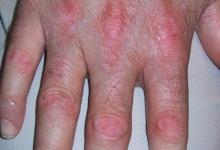
- SLE & Dermatomyositis rashes maybe classically red or violaceous in Whites,but different in people of color, where erythema often appears brown/violaceous, Gottron papules can be mistaken for "dry skin." This delays dx, especially in anti-MDA5+ RP-ILD, where rash may be the https://t.co/Savx5IOTcG
- Yesterday the EMA approved upadacitinib (Rinvoq) for the Treatment of Adults and Adolescents with Non-Segmental Vitiligo - the 1st therapy approved for the most common form of vitiligo. Based on positive results from the Phase 3 Viti-Up trials https://t.co/MMv5LjZclQ
- 3 Rx are FDA approved for hidradenitis supprativa (secukinumab, adalimumab, bimekizumab). New JAK1i Povorcitinib in STOP-HS1 and STOP-HS2 ph 3 PCTs (608/619 pts). Povo showed HiSCR50 ~42% vs PBO 29% @wk12. AE: acne, pharyngitis https://t.co/n3FJUOjNuo
Transcription
Welcome to the August 2026 edition of the Derm on RheumNow podcast. Hi, I'm Dr. Jack Cush, executive editor of RheumNow.com. This podcast is for you. It's about what dermatologists should know, want to know. We discuss and manage the same kinds of patients, use the same kinds of drugs, and hence the reason for my doing this podcast, which I do for rheumatologists as well. Please tell your colleagues about this podcast. You can sign up to receive our daily email at RheumNow.com. Better yet, you can sign up just to get a once-a-week report on psoriasis or on lupus, or a once-a-week email, however you want to do it.
This week we're going to start by talking about autoimmune disease. You know, they're rare conditions, right? But we see them. The generalist doesn't. Numbers of autoimmune patients out there are estimates better done by worldwide estimates, but this month there was an interesting report for a US estimate. This estimate was based on six large US medical systems and their EHR data. They were looking for the prevalence of autoimmune disease in the United States, and it's felt to be over 15 million, and that includes many different kinds of autoimmune disease — not just lupus and dermatomyositis, but I think up to 20-something different kinds of forms of autoimmune disease. An overall population risk of 4.6%, twice as high in women as in men, and a third of people with autoimmune disease are likely to have two or more autoimmune diseases. That's worth knowing.
You may be familiar with the POETYK trials in psoriasis. There's a POETYK PsA1 trial we've been talking about for over a year now. It finally got published. This is deucravacitinib in biologic-naive PsA patients. It tested whether the TYK2 inhibitor met the primary endpoint, secondary endpoint, joint. It's a drug we're using in rheumatology just as you're using it in psoriasis. You have the jump on it. We had a later FDA approval than you, but this is the evidence upon which our use and FDA approval is based.
Moon Lake announced new positive phase 3 data from the ICES ONE controlled trial. That's using its dual inhibitor sonelokimab. This is the — I think it's the Nanobody — that looked very good in this trial. At week 16, patients were either treated with sonelokimab or placebo. The rates were very good for ACR20 joint responses: 66%; ACR50, 42%; minimal disease activity, 41%; 61% had a PASI 90 at week 16. There is in process right now another phase 3 trial — I believe this is going to be the trial that will ultimately be used for approval in psoriasis and psoriatic arthritis. I think it's already approved in psoriasis, is it not?
An interesting study comes from the British dermatology biologics registry — the BADBIR; it's not something you order when you go out on Friday night. Almost 19,000 psoriasis patients, and they looked at the incidence of serious infections. Overall the rate was 28 per 1,000 patient-years — that's 2.8 per 100 patient-years. Let me give you a perspective on that. In the pre-biologic era in rheumatoid arthritis, where the rates of serious infections are higher than psoriasis, the rate is about nine per 100 patient-years. With the development of all the biologics, especially the TNF inhibitors and whatnot, the rate reported from like 2000 to 2020-something is like 3 to 6 per 100 patient-years, suggesting that biologic interventions might lower the risk of serious infectious events — maybe by control of inflammation overall. SIE rates in dermatology and psoriasis are less than in RA and Crohn's disease. So this rate of 2.8 per 100 patient-years is about what you see with biologics in individual trials in psoriasis and also for psoriatic arthritis.
The big teaching point of this study was that that rate of serious infection went up threefold to 7.9 per 100 patient-years if the patient had a prior SIE event. If the patient was previously hospitalized with sepsis or septic arthritis or meningitis or urosepsis, they're more likely to get it again, and more likely to get it especially if you're using a biologic. So that might be someone for whom you have some degree of hesitancy.
They compared a lot of the drugs, and it looked like the lowest risk of a serious infectious event was seen with the IL-23 inhibitor risankizumab, where there was basically a 26 to 20% drop compared to other drugs. That includes bimekizumab and other standards of care. The good news also in your psoriasis patients is that there's a very low risk of death — less than two cases per 1,000 patient-years. That means a thousand patients treated with a biologic followed for a year, only two are going to die related to the drug. I think that's encouraging data.
A comparative study looked at which is worse, juvenile systemic sclerosis or adult systemic sclerosis — a meta-analysis of 39 studies, 935
juvenile patients, 15,000 adult systemic sclerosis. And guess what? The juveniles had worse diffuse disease, 70% versus 41%. That's juvenile versus adult. More overlap myositis, 33 versus 5. More arthritis, 33 versus 18. More digital ulcers, 51% versus 20%. Less renal crisis and less mortality. So adults have more mortality and more renal crisis, meaning they probably need more comorbidities or more disease duration to develop those ugly ugly outcomes.
There's a registry cohort study called SPRING from Italy that looked at patients with systemic sclerosis. And I don't know about you, but when I get a systemic sclerosis patient, whether it's limited or diffuse, I will do nail fold capillaroscopy. I use a cheap 10x child's microscope that I bought at the Container Store for $6. You can buy it online at Amazon for probably 10 or 12. But you probably have a dermatoscope or have a better microscope. So the idea here is if they have that scleroderma pattern, you know, significant dropout, dilated loops, hemorrhages, that's bad news. That's a more aggressive disease.
The question that they asked in the study of almost 17,000 patients in their cohort, how many of these people did not have the typical scleroderma pattern on nail fold video capillaroscopy? The best tool that you can use. And it turns out it was only 5%. Out of the 1689 patients, these people who didn't have the typical scleroderma pattern were going to have milder disease, less vascular complications, less pitting — 33% versus 48%, less telangiectasias, 52% versus 74%, less calcinosis, three versus 12%, and higher DLCOs at 12, 24, and 36 months. Meaning they had better lung function if they didn't have that sclerodermal pattern. Again, this is reason enough to do nail fold capillaroscopy in patients with systemic sclerosis. It only takes a minute to do.
You are the expert at rashes. We struggle in rheumatology. We learn from you. We want to learn from you, and I've learned that the rashes of dermatomyositis and lupus don't look the same in patients of color. So I posted for you in the show notes a publication that basically reviews this issue, and I put it up for rheumatologists but I thought you may want to have it and use it and refer your colleagues that are not seasoned dermatologists. You know that red rashes can look brown or violaceous, that Gottron's lesions and heliotrope lesions can look scaly and eczematous. And the problem is that if it's not recognized, this will delay the diagnosis, and this is a problem especially in MDA5-positive patients who have skin involvement, rapidly progressive and deadly lung involvement. Again, early diagnosis is paramount.
This month, upadacitinib was approved for adults and adolescents in the EMA — that's the European Union — for use in non-segmental vitiligo, based on positive results from the VITI-UP study. Giddy up, VIDI-UP, and yeah, it works in vitiligo. The list of indications we're going to have for JAK inhibitors in dermatology is going to be large, which means that you need to understand the risks of JAK inhibitors and tick inhibitors, and not be so freaked out by the ORAL Surveillance study that put a big-time warning on the labels of all the JAK inhibitors saying you've got to use a TNF before you use a JAK. And that's good advice, but the real risk of cancer, MACE, serious infectious events, and VTE was primarily noted in people over 65, not over 50. People who had a cardiovascular history like MI, and people who were smokers. Having two out of those three are people I definitely wouldn't use a JAK inhibitor in. The rest I'm using it all the time. But I still think you need to be mindful of the recommendations. And I'm going to guess that when it gets around to this being approved in the United States, it's going to have those same warnings and you're going to need to know how to navigate that.
My last report is on hidradenitis. A lot of interesting stuff going on in HS these days. Right now there are three drugs that are FDA approved for hidradenitis — secukinumab, adalimumab. There's a new JAK1 inhibitor that I'm not familiar with called povorcitinib, and they have two studies, the STOP-HS1 and STOP-HS2 studies — two study names but three RCTs, I can't figure that out. Bottom line is, combining the data, the povorcitinib had significant results at Week 12, an HiSCR50 score of 42% with the JAK inhibitor versus 29% with the placebo. The adverse events with this new drug are like the other ones — acne and folliculitis and nonsensical things.
It's been an interesting month for skin stuff on RheumNow.com. Tune in next month. We'll talk then.
This week we're going to start by talking about autoimmune disease. You know, they're rare conditions, right? But we see them. The generalist doesn't. Numbers of autoimmune patients out there are estimates better done by worldwide estimates, but this month there was an interesting report for a US estimate. This estimate was based on six large US medical systems and their EHR data. They were looking for the prevalence of autoimmune disease in the United States, and it's felt to be over 15 million, and that includes many different kinds of autoimmune disease — not just lupus and dermatomyositis, but I think up to 20-something different kinds of forms of autoimmune disease. An overall population risk of 4.6%, twice as high in women as in men, and a third of people with autoimmune disease are likely to have two or more autoimmune diseases. That's worth knowing.
You may be familiar with the POETYK trials in psoriasis. There's a POETYK PsA1 trial we've been talking about for over a year now. It finally got published. This is deucravacitinib in biologic-naive PsA patients. It tested whether the TYK2 inhibitor met the primary endpoint, secondary endpoint, joint. It's a drug we're using in rheumatology just as you're using it in psoriasis. You have the jump on it. We had a later FDA approval than you, but this is the evidence upon which our use and FDA approval is based.
Moon Lake announced new positive phase 3 data from the ICES ONE controlled trial. That's using its dual inhibitor sonelokimab. This is the — I think it's the Nanobody — that looked very good in this trial. At week 16, patients were either treated with sonelokimab or placebo. The rates were very good for ACR20 joint responses: 66%; ACR50, 42%; minimal disease activity, 41%; 61% had a PASI 90 at week 16. There is in process right now another phase 3 trial — I believe this is going to be the trial that will ultimately be used for approval in psoriasis and psoriatic arthritis. I think it's already approved in psoriasis, is it not?
An interesting study comes from the British dermatology biologics registry — the BADBIR; it's not something you order when you go out on Friday night. Almost 19,000 psoriasis patients, and they looked at the incidence of serious infections. Overall the rate was 28 per 1,000 patient-years — that's 2.8 per 100 patient-years. Let me give you a perspective on that. In the pre-biologic era in rheumatoid arthritis, where the rates of serious infections are higher than psoriasis, the rate is about nine per 100 patient-years. With the development of all the biologics, especially the TNF inhibitors and whatnot, the rate reported from like 2000 to 2020-something is like 3 to 6 per 100 patient-years, suggesting that biologic interventions might lower the risk of serious infectious events — maybe by control of inflammation overall. SIE rates in dermatology and psoriasis are less than in RA and Crohn's disease. So this rate of 2.8 per 100 patient-years is about what you see with biologics in individual trials in psoriasis and also for psoriatic arthritis.
The big teaching point of this study was that that rate of serious infection went up threefold to 7.9 per 100 patient-years if the patient had a prior SIE event. If the patient was previously hospitalized with sepsis or septic arthritis or meningitis or urosepsis, they're more likely to get it again, and more likely to get it especially if you're using a biologic. So that might be someone for whom you have some degree of hesitancy.
They compared a lot of the drugs, and it looked like the lowest risk of a serious infectious event was seen with the IL-23 inhibitor risankizumab, where there was basically a 26 to 20% drop compared to other drugs. That includes bimekizumab and other standards of care. The good news also in your psoriasis patients is that there's a very low risk of death — less than two cases per 1,000 patient-years. That means a thousand patients treated with a biologic followed for a year, only two are going to die related to the drug. I think that's encouraging data.
A comparative study looked at which is worse, juvenile systemic sclerosis or adult systemic sclerosis — a meta-analysis of 39 studies, 935
juvenile patients, 15,000 adult systemic sclerosis. And guess what? The juveniles had worse diffuse disease, 70% versus 41%. That's juvenile versus adult. More overlap myositis, 33 versus 5. More arthritis, 33 versus 18. More digital ulcers, 51% versus 20%. Less renal crisis and less mortality. So adults have more mortality and more renal crisis, meaning they probably need more comorbidities or more disease duration to develop those ugly ugly outcomes.
There's a registry cohort study called SPRING from Italy that looked at patients with systemic sclerosis. And I don't know about you, but when I get a systemic sclerosis patient, whether it's limited or diffuse, I will do nail fold capillaroscopy. I use a cheap 10x child's microscope that I bought at the Container Store for $6. You can buy it online at Amazon for probably 10 or 12. But you probably have a dermatoscope or have a better microscope. So the idea here is if they have that scleroderma pattern, you know, significant dropout, dilated loops, hemorrhages, that's bad news. That's a more aggressive disease.
The question that they asked in the study of almost 17,000 patients in their cohort, how many of these people did not have the typical scleroderma pattern on nail fold video capillaroscopy? The best tool that you can use. And it turns out it was only 5%. Out of the 1689 patients, these people who didn't have the typical scleroderma pattern were going to have milder disease, less vascular complications, less pitting — 33% versus 48%, less telangiectasias, 52% versus 74%, less calcinosis, three versus 12%, and higher DLCOs at 12, 24, and 36 months. Meaning they had better lung function if they didn't have that sclerodermal pattern. Again, this is reason enough to do nail fold capillaroscopy in patients with systemic sclerosis. It only takes a minute to do.
You are the expert at rashes. We struggle in rheumatology. We learn from you. We want to learn from you, and I've learned that the rashes of dermatomyositis and lupus don't look the same in patients of color. So I posted for you in the show notes a publication that basically reviews this issue, and I put it up for rheumatologists but I thought you may want to have it and use it and refer your colleagues that are not seasoned dermatologists. You know that red rashes can look brown or violaceous, that Gottron's lesions and heliotrope lesions can look scaly and eczematous. And the problem is that if it's not recognized, this will delay the diagnosis, and this is a problem especially in MDA5-positive patients who have skin involvement, rapidly progressive and deadly lung involvement. Again, early diagnosis is paramount.
This month, upadacitinib was approved for adults and adolescents in the EMA — that's the European Union — for use in non-segmental vitiligo, based on positive results from the VITI-UP study. Giddy up, VIDI-UP, and yeah, it works in vitiligo. The list of indications we're going to have for JAK inhibitors in dermatology is going to be large, which means that you need to understand the risks of JAK inhibitors and tick inhibitors, and not be so freaked out by the ORAL Surveillance study that put a big-time warning on the labels of all the JAK inhibitors saying you've got to use a TNF before you use a JAK. And that's good advice, but the real risk of cancer, MACE, serious infectious events, and VTE was primarily noted in people over 65, not over 50. People who had a cardiovascular history like MI, and people who were smokers. Having two out of those three are people I definitely wouldn't use a JAK inhibitor in. The rest I'm using it all the time. But I still think you need to be mindful of the recommendations. And I'm going to guess that when it gets around to this being approved in the United States, it's going to have those same warnings and you're going to need to know how to navigate that.
My last report is on hidradenitis. A lot of interesting stuff going on in HS these days. Right now there are three drugs that are FDA approved for hidradenitis — secukinumab, adalimumab. There's a new JAK1 inhibitor that I'm not familiar with called povorcitinib, and they have two studies, the STOP-HS1 and STOP-HS2 studies — two study names but three RCTs, I can't figure that out. Bottom line is, combining the data, the povorcitinib had significant results at Week 12, an HiSCR50 score of 42% with the JAK inhibitor versus 29% with the placebo. The adverse events with this new drug are like the other ones — acne and folliculitis and nonsensical things.
It's been an interesting month for skin stuff on RheumNow.com. Tune in next month. We'll talk then.
Disclosures
Disclosures
The author has no conflicts of interest to disclose related to this subject





If you are a health practitioner, you may Login/Register to comment.
Due to the nature of these comment forums, only health practitioners are allowed to comment at this time.