

JAMA: Review of Adult Rheumatoid Arthritis Save


Know-it-now
- Treat-to-target remains pivotal: aim for ≥50% CDAI improvement at 3 months and remission/low disease activity by 6 months.
- Disease activity control (more than seropositivity) drives mortality. Seropositive patients may need more monitoring.
- 3-month response is the strongest predictor of LDA or remission.
- Methotrexate plus short-term glucocorticoids is first-line and achieves remission in >40%.
- Glucocorticoid bridging is both pragmatic and evidence-supported (they note the guideline disagreement between EULAR (favors bridging steroids) vs ACR (conditionally against).
- Add, don't switch: when methotrexate is insufficient, adding a biologic or JAK inhibitor is superior to monotherapy.
- JAK inhibitor use guidelines differ by regulator: FDA reserves them for post-TNF failure due to MACE/malignancy/VTE signals, whereas EULAR/EMA allows earlier use in low-risk patients. (you must document cardiovascular/VTE/malignancy risk assessment before prescribing regardless of jurisdiction)
Smolen, Kerschbaumer, Aletaha, and Robinson have published a comprehensive review article of rheumatoid arthritis (RA) in JAMA, noting significant changes to our understanding and treatment guidelines.
This JAMA narrative review is a follow-up to their 2018 publication, informed by 123 articles (46 RCTs, 28 cohort studies, 11 systematic reviews/meta-analyses, 15 guidelines) covering epidemiology, pathogenesis, diagnosis, and treat-to-target RA.
Epidemiology and pathogenesis
RA affects 0.53% of adults worldwide and 0.74% of US adults, is 2–3× more common in females, and peaks at ages 55–75. Genetic susceptibility accounts for ~60% of risk, dominated by the HLA-DRB1 shared epitope (carried by 70–80% of patients). The mucosal-origins hypothesis is emphasized: periodontitis (adjusted HR 1.90, Taiwan cohort), smoking (OR 1.34), and EBV reactivation are as drivers of citrullination-triggered autoimmunity, with ACPA detectable up to 14 years before clinical onset. Mucosal-origins model suggests insults or barrier disruption at oral, pulmonary, and intestinal surfaces drives citrullination and loss of tolerance, followed by T-cell/B-cell activation, ACPA and rheumatoid factor production, immune-complex formation, and TNF/IL-6–driven synovitis with osteoclast-mediated erosion and fibroblast-mediated cartilage damage. A "pre-RA" phase (seropositive without synovitis) precedes clinical disease, with autoantibodies detectable up to ~14 years before symptoms. It is still unclear if aggressive treatment in this phase can prevent RA onset.
Diagnosis and assessment
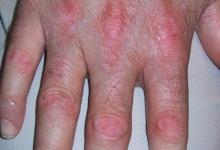
While there are no formal diagnostic criteria, the diagnosis is supported by ACR-EULAR 2010 classification criteria (≥6 points). Characteristic findings include symmetric soft-tissue synovial swelling of wrists, MCPs, and PIPs (DIP sparing distinguishes RA from OA and psoriatic arthritis), morning stiffness >30 minutes (~75%), and elevated CRP/ESR. Seropositivity (RF and/or ACPA) is present in 40–60% at diagnosis, rising to ~80% by 3 years, and predicts radiographic progression. Radiography detects erosions and joint-space narrowing (the latter more strongly tied to functional impairment); MRI/ultrasound add no proven benefit over clinical assessment and radiographs for follow-up. Composite indices (CDAI, SDAI, DAS28-CRP) guide monitoring every 1–3 months.
Treatment
The treat-to-target goal is ≥50% CDAI improvement by 3 months and remission (CDAI ≤2.8) or low disease activity by 6 months.
- First-line: Oral methotrexate 7.5–10 mg/wk → 20–25 mg/wk over 4–8 weeks, ± short-course glucocorticoids (prednisone 5–7.5 mg/d for 6–12 wk, or single 80–160 mg IM methylprednisolone). This combination yields CDAI remission in >40% at 6 months (NORD-STAR: 42.7%).
- Escalation trigger: <50% CDAI improvement at 3 months or no remission at 6 months should trigger the addition of a biologic or JAK inhibitor.
- Combination > monotherapy consistently: TNFi/IL-6Ri + MTX improves ACR70 (34% vs 25% monotherapy, OR 1.82). IL-6 receptor inhibitor monotherapy is preferred when MTX is not tolerated.
- JAK inhibitors: ACR70 rates 20–30% when added to MTX. The ORAL Surveillance study resulted in restricted JAKi use based on an elevated MACE/malignancy signal (tofacitinib HR 1.33 for MACE, 1.48 for malignancy vs TNFi) that applies to all JAK inhibitors. While the FDA recommends using a TNFi before JAKi, EMA/EULAR guidance permits first-line use in low-risk patients. New baricitinib VTE-risk data show MACE noninferiority but failed VTE noninferiority (HR 1.61, P=.07).
Safety
The serious infection (SIE) risk with biologics is 5.9% at 12 months vs 1.5% general population (Danish cohort). TNFi relative risk for serious infection 1.48 vs csDMARDs. Herpes zoster is significantly increased (up to 7.5%/year) with JAKi. Updated 2022 ACR vaccination guidance (zoster, pneumococcal, HPV 26–45y, HBV <60y) should precede biologic/JAKi initiation. (Editor’s note especially with rituximab, B cell depletion therapy).
Prognosis
About 40% achieve sustained CDAI remission at 10 years, with another ~40% reaching low disease activity. Seropositivity roughly doubles radiographic progression risk. RA carries increased mortality (SMR ~1.4–1.5), concentrated in high–disease-activity patients; patients maintaining DAS28 <3.2 show no excess mortality - a strong argument for treat-to-target rigor rather than seropositivity-driven management alone. Comprehensive cardiovascular prevention and smoking cessation are advised for all RA patients.
Continue Reading
Related Content


ADD THE FIRST COMMENT
Disclosures
Disclosures
The author has no conflicts of interest to disclose related to this subject
The author used AI to research and organize this content, and maintains responsibility for its accuracy




If you are a health practitioner, you may Login/Register to comment.
Due to the nature of these comment forums, only health practitioners are allowed to comment at this time.