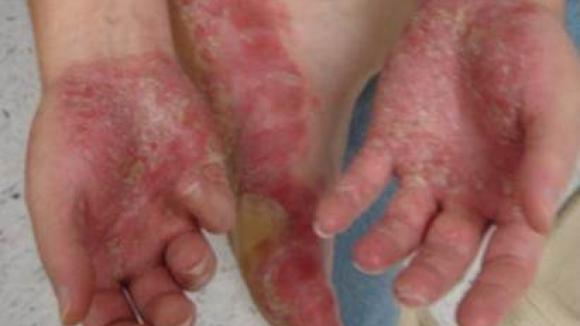
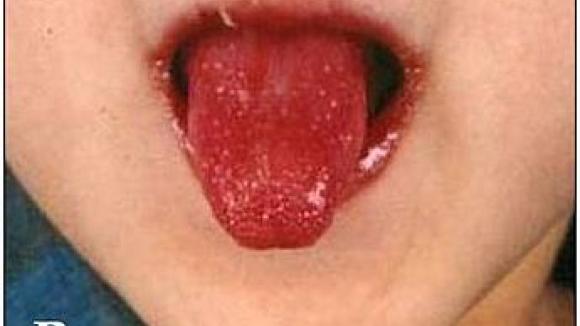
Researchers from the Toronto Hospital for Sick Children have published in the Journal of Immunology that a polymorphism in the inositol-triphosphate 3-kinase C (ITPKC) (rs28493229) is associated with the pathogenesis of Kawasaki's disease (KD).
All News
Following is a list of top tweets in September and October 2016; they were selected based on the number of clicks, retweets and likes by the viewership. More than 40,000 people were reached with the first one on our list.
The current JAMA Pediatrics issue has published a report showing that adjunctive corticosteroid therapy yielded significantly fewer coronary artery complications compared with intravenous immunoglobulin therapy alone, particularly among high-risk patients with Kawasaki disease.
The results of the Nor-Switch study were presented at the United European Gastroenterology annual congress this week demonstrating no significant difference in effect, adverse effects or antibody formation in patients switched from Remicade to the biosimilar infliximab (CT-P13, Remsima).
Researchers from the University of British Columbia reported on their systematic review and meta-analysis of risk of herpes zoster (HZ) in patients receiving biologics, DMARDs and/or corticosteroids for autoimmune diseases.
A Lancet meta-analysis has reviewed the preventative effects of low-molecular-weight heparin (LMWH) on placenta-mediated pregnancy complications include pre-eclampsia, late pregnancy loss, placental abruption, and birth of a small-for-gestational-age (SGA) neonate.
Rheumatologists have been challenged to treat hepatitis C virus (HCV)-induced rheumatic disease since discovery of the virus in 1989.
A recent article published by the American Academy of Ophthalmology presented new recommendations for screening of patients being managed with hydroxychloroquine that changed the previous monitoring paradigm. More importantly, it has repositioned hydroxychloroquine from one of the safest medications that rheumatologists use to a drug that can have potentially significant ocular morbidity (if used in doses greater than 5 mg per kilogram and or for prolonged periods of time).
Aromatase inhibitors (AI) are often given in the setting of estrogen receptor-positive (ER+) breast cancer therapy.
Dr. Jack Cush reviews highlights from the journals and news this week on RheumNow.com.
The October 7th edition of MMWR reports that severe joint pain (SJP) has significantly risen from 10.5 million in 2012 to 27.2% in 2014, based on recent NHIS surveys.
RheumNow will periodically review this subject with “Biosimilar Reports” providing updates, news, new publications, overview articles and research results impacting to biosimilar development and use.
Children with juvenile idiopathic arthritis (JIA) treated with biologic therapies were at no higher risk for hospitalized infections than those treated with methotrexate alone, But, higher rates were seen with anakinra in systemic JIA.
Singh and colleagues have published a systematic review and Bayesian network metaanalyses of clinical trials of immunosuppressive drugs and corticosteroids in patients with lupus nephriti.
Management of moderate to severe plaque psoriasis has advanced significantly with FDA approved therapies capable of targeting TNF alpha, IL-17 and IL-12/23.
Baricitinib is an oral, small molecule, once-daily DMARD, that specifically inhibits Janus kinase 1 and 2 and is being developed for use in rheumatoid arthritis. With much of the developmental clinical trials completed, the drug is slated for review and potential approval near the end of the year.
Three new FDA approvals, proteomics, cancer, infectious risk, nonadherence and disappointing clinical trial results covered in this RheumNow Week in Review.
BMJ has reported the results of a case-control study that analyzed the risk of hospitalization from heart failure associated with the use of NSAIDs amongst healthcare databases from four European countries (the Netherlands, Italy, Germany, and the United Kingdom).
Rates of serious infection and mortality among patients with systemic lupus erythematosus (SLE) did not depend on the immunosuppressive drug regimen they were on, investigators reported.
Ilaris was previously approved for use in systemic JIA and CAPS. The FDA has expanded this to include TRAPS, Hyper-IgD and FMF based on clinical trials.