It was a banner week at the FDA; a new drug approval you should know about; a lot of information about pregnancy and safety; and an interesting case plus a question from one of our readers submitted via Back Talk. This and more in this week's podcast. Let's dive in.
All News
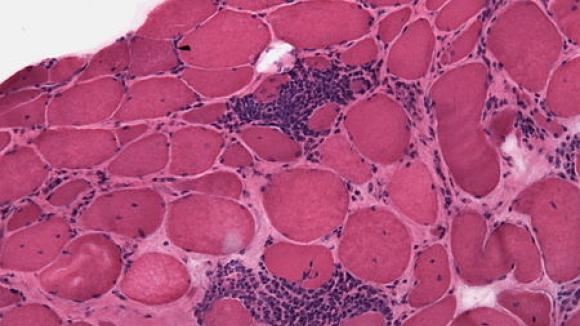
The Journal of Autoimmunity reports that anti-HMRCR antibody positive, necrotizing myositis patients frequently have cutaneous lesions, moreso than previously reported.
AstraZeneca announced today that anifrolumab (Saphnelo or anifrolumab-fnia) was approved by the the Food and Drug Administration (FDA) for that treatment of adult patients with moderate to severe systemic lupus erythematosus (SLE) who are receiving standard therapy.
"Fibromyalgianess" is highlighted as a risk factor for undue, extended glucocorticoid use in rheumatoid arthritis (RA) patients, according to Wallace and colleagues in Rheumatology.
How much psoriasis do you need to have in order to have psoriatic arthritis? This plus a review of rheumatology and COVID news from the past week on RheumNow.com.
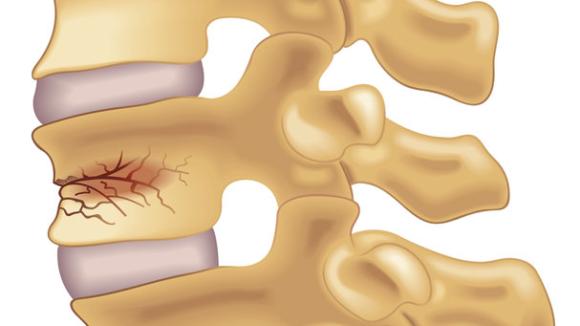
A large RA cohort analysis shows that low-dose glucocorticoid therapy in rheumatoid arthritis (RA) patients may carry an increased risk of vertebral osteoporotic (OP) fractures.
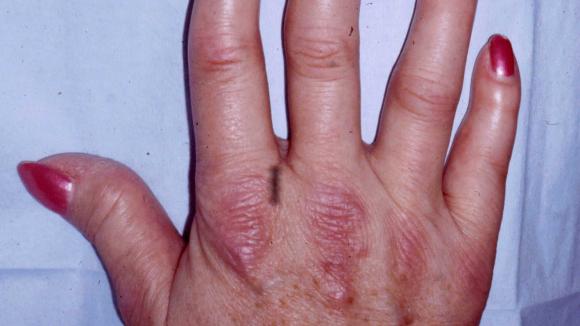
The U.S. Food and Drug Administration (FDA) has approved Octagam 10% [Immune Globulin Intravenous (Human)], as the first and only intravenous immunoglobulin (IVIg) formulation to be approved for adult dermatomyositis (DM).
The ACR and the Vasculitis Foundation have published their evidence-based recommendations and expert guidance for the management of GCA and Takayasu arteritis. These recommendations address a variety of clinical questions and scenarios including diagnostic testing, imaging, treatments, and surgical interventions. Recommendations for GCA and TAK include support for the use of glucocorticoid-sparing immunosuppressive agents and the use of imaging to identify large vessel involvement. Recommendations for TAK include the use of glucocorticoids as initial therapy.
A single center analysis of systemic lupus erythematosus (SLE) patients found symptomatic osteonecrosis (ON) in nearly 10%.
Slow Steroid Tapering Succeeds in SLE
Gradual withdrawal of glucocorticoids was successful among patients with systemic lupus erythematosus (SLE) after 2 years of clinically quiescent disease, without an increased likelihood of flares, Canadian researchers reported.
Dr. Jack Cush reviews and discusses the news and journal reports from the past week on RheumNow.com.
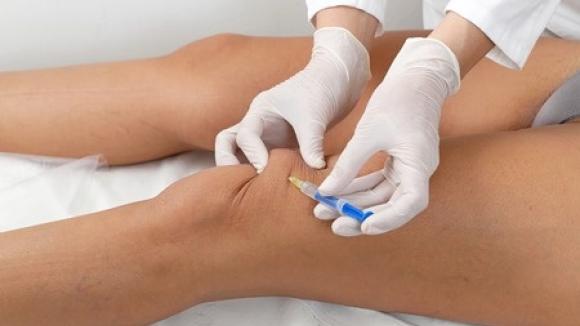
EULAR has published evidence-based recommendations on the use of intra-articular therapies (IAT) based on the literature review and recommendations of a multidisciplinary international task force. These IAT recommendations apply to adult patients with peripheral arthropathies.
Dr. Jack Cush reviews and highlights his favorite abstracts and presentations from last week's virtual EULAR 2021 meeting.
EULAR 2021 opened with a grand debate to answer this essential question: should clinicians treat to remission or to Lupus Low Disease Activity State (LLDAS)?
In RA, the two most common peaks of incidence are thirties and fifties; however a significant percentage of patients above the age of 70 present with active RA -of early or later onset- and require adapted treatment.