

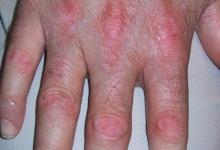
DERM on RheumNow PODCAST (January 2026)
The Derm on RheumNow podcast is a collection of Citations and Content curated for dermatologists – addressing Psoriasis, PsA, CLE, vasculitis, HS, other CTD skin disorders. dermatology drugs, biiologics, JAKs - their use, efficacy and side effects.
Features Dr. Jack Cush, Editor at RheumNow.com.
SHOW NOTES
- Lupus Accelerating Breakthroughs Consortium commissioned a stakeholders group (including the FDA) to assess drug development in Cutaneous lupus CLE), and they have endorsed CLASI (CLE Dz Area & Severity Index) as the outcome measure for CLE clinical trials. https://t.co/q7If97AHBa
- PAPA Syndrome: When Sterile Inflammation Mimics Infection (Pyogenic Arthritis, Pyoderma gangrenosum, Acne) •A rare monogenic autoinflammatory disease •Caused by gain-of-function mutations in PSTPIP1 🧠 Pathophysiology •Mutant PSTPIP1 → increased interaction with pyrin https://t.co/tJ4INdgfky
- Turkish study of 128 Psoriatics (62 PSO, 66 PsA) found more periodontitis in PsA vs PSO (47% vs 31%; P=.058). Assoc. w/ Signif. higher levels of Dz activity seen for PSO (CPDAI: OR 1.38; P = .001) & enthesitis (MASES: OR 1.39; P < .001) if periodontitis present in PsA patients. https://t.co/d8OfarFWeG
- Subcutaneous Anifrolumab in SLE Manzi et al. have published the results of the TULIP-SC trial that showed that weekly subcutaneous (SC) anifrolumab, when given to severe SLE patients, had comparable efficacy and safety to the approved intravenous (IV) anifrolumab. https://t.co/EzaqS5q096
- Did you know theres a Subcutaneous (SC) rituximab (Hycela)? Its same RTX but combined w/ hyaluronidase, faster 5-7 minute injection Vs hours for IV RTX. FDA approved 2017 for Follicular Lymphoma (FL) and Diffuse Large B-cell Lymphoma (DLBCL). Give 1st dose IV, then use SC RTX. https://t.co/piQ2ZhAOyf
- German psoriasis registry PsoBest reports on 595 Rx w/ apremilast (417 APR monotherapy). Compared to Ptx Rx w/ other DMARDs/biologic drugs, APR pts higher age, more comorbidities. Nonserious AEs: ineffectiveness (14%), diarrhea (9%), nausea (7%), HA (6%). https://t.co/TviJmM7Fr9 https://t.co/tY89oHgUgV
- DMARD Responses in Localized Scleroderma – MMF = MTX ~114 pts
- Advanced Practitioner Biologic Prescriptions for Psoriasis Advanced practice clinicians (APCs; nurse practitioners and physician assistants) deliver a large share of US dermatologic care, accounting for 37% of clinicians and 27% of dermatology visits by 2020. A current JAMA https://t.co/3NtntmpSPV
- GLP-1 Agonist plus IL-17 Inhibition in Obese Psoriatic Arthritis Lilly announced the topline results from its phase 3b "TOGETHER PsA" trial, showing that the combination use of ixekizumab (Taltz) and tirzepatide (Zepbound) was superior to IXE alone, yielding both significant https://t.co/8fOXWULH7w
Transcription
Welcome to the Derm on RheumNow podcast. Hi, I'm Jack Cush, executive editor of RheumNow.com. This podcast is a collection of citations and content that's curated for you, the dermatologist. You know, we cover a lot of dermatology content on RheumNow.com and we invite you to join us. This includes reports, advances, regulatory issues on psoriasis, psoriatic arthritis, cutaneous lupus, vasculitis, hidradenitis, a lot of connective tissue related stuff including the drugs that we both use. Biologics, small molecule, JAK inhibitors, both how they work, where their new uses, what are the concerns on toxicities. So I hope you enjoy this podcast. I hope you'll — you know that we've been doing it since September, I believe. Every month the podcast comes out at the end of the month. Please tell your colleagues, please sign up. Please register at RheumNow.com.
This podcast is brought to you by not just RheumNow, but RheumNow Live. RheumNow has an annual meeting that's going to run February 7th and 8th in Dallas. You can sign up and attend. We have a bunch of dermatologists who are lecturing at the meeting and also coming to the meeting. We have a whole — a session, a two-hour session on psoriatic disease. Joe Merola talking about paradoxical skin reactions to the drugs that you use that I use. André Rivero talking about choosing between IL-17 and IL-23 inhibition. Artie Kavanaugh saying why he doesn't do X-rays in psoriatic arthritis. I think he's gone to Maui Derm too many times and he's starting to think like a dermatologist rather than a rheumatologist. But we got to go to the lecture and see what he's going to say.
All right. So we have a number of things to review. I think it's important to note — those of you who do research were in a panic last year with all these cuts, and research grants looked like they disappeared. Well, there were a number of publications this week and announcements including the Lupus Accelerated Breakthroughs Consortium, which published their recommendations about skin outcomes. It was a multistakeholder meeting and ended up in a publication that included the FDA, and in this publication that's in Nature they addressed best outcomes for cutaneous lupus. They endorsed — of course — the CLASI, the Cutaneous Lupus Erythematosus Disease Activity and Severity Index, developed by Victoria Werth, a dermatologist at UPenn. It is the primary endpoint — it should be the primary endpoint in lupus clinical trials. On this basis we'll see more drugs being developed for lupus. Later on I'm going to talk about anifrolumab, the alpha interferon inhibitor, and although that's not specifically approved for cutaneous lupus, it looks good.
The second report is just a review of the PAPA syndrome. This is when sterile pyogenic arthritis meets sort of pustular disease — so pyogenic arthritis, pyoderma gangrenosum, and cystic acne. It's a rare autoinflammatory syndrome with a gain-of-function mutation in PSTPIP1, regulating an inflammasome and producing more pyrin. This leads to what is a classic monogenic autoinflammatory disease, usually with onset in children, but I've seen them later — you know, in adolescence and leading on into adulthood. They often get attacks at infrequent — we don't know why they get attacks or what — there's no periodicity to it, and that's sort of interesting. It's sometimes triggered by minor trauma. They have all the markers of inflammation — high sed rate, CRP — but have normal cell counts, normal cultures. If you do genetic testing you can find a few of these variants, and this is an autosomal dominant condition. A nice review for you online and in the speaker notes.
The Turkish League Against Rheumatism, TLAR, did a study looking at the association between periodontal disease, periodontitis, and psoriatic disease. Now periodontal disease is a big issue in RA, and the biology of periodontitis is the same as gingivitis in RA — it's probably similar to what you see in psoriasis as well. And in this study of 66 — sorry — 66 psoriatic arthritis and 62 psoriasis-only patients from Turkey, they did extensive assessments on them and found that periodontal disease was seen in 31% of psoriasis patients but a higher number in PsA — 47% — almost significant, p=0.058. But periodontal disease was significantly correlated and seen in psoriasis patients with disease activity in psoriasis as measured by the CPDAI. I'm not familiar with that measure but you are. Again, a very significant association, higher odds ratio 1.38, and it was also associated with enthesitis significantly — about 39% higher — using a measure seen in patients who have enthesitis and psoriatic arthritis. Again, problematic psoriatic disease — look at their teeth, send them to the dentist; it's not a bad idea. I inferred earlier about the association — the —
outcomes of the alpha interferon monoclonal antibody anifrolumab — a summary from Pittsburgh — published the report that subcutaneous anifrolumab is now available. It was previously a monthly infusion indicated for lupus, worked very very well. The subanalyses of those lupus trials showed that it worked really well in skin and joints, really well in skin and joints. And there's a ton of reports of problematic skin lupus and/or dermatomyositis responding really well to anifrolumab. Now with this report, which is called the TULIP-SC subQ study, it shows that subQ anifrolumab is as effective as the IV. SubQ anifrolumab is given as a weekly injection, easy to give, looks like it has a good safety profile, it's going to soon be available to you. So subQ therapy is something we use a lot of.
I'm sure you use some of — I came across this issue this week in managing patients — I'd like to use rituximab but I can't give an infusion for money reasons and a lot of administrative reasons, can't do IV rituximab. But you know there's a subcutaneous rituximab that was approved in 2017, it's called Rituxan Hycela, it's basically rituximab but formulated with hyaluronidase to be given subcutaneously, and it's a faster injection — subQ 5 to 10 minutes as opposed to hours. Unfortunately it's only approved for two or three different lymphomas, and that's probably where its primary use is. And if you are going to use this, and you know there are certain conditions that you manage or that we co-manage where rituximab is a drug of choice, if you are going to use this you have to give the first dose IV and then subsequently subcutaneous. Weekly rituximab seems to be the way to go — is that weekly? I think it is weekly.
In Germany there's a registry of psoriasis patients called PsoBest. This includes almost 600 patients treated with apremilast either as monotherapy — the vast majority, about 80% of them, are on monotherapy — and the rest are on some combinations. And when they compared outcomes they basically showed that patients in their registry who took apremilast tend to be a little older, tended to have more comorbidities, cardiovascular especially. They had a few more non-serious adverse events, URIs and things like that, and side effects — the main one was ineffectiveness 14%, diarrhea 9%, nausea 7%, headache 6%. So certainly you are using a lot more apremilast than most rheumatologists are, but rheumatologists are using it as well, both for skin but also for joint, although they believe — wrongly so — that it's for mild joint disease, and actually that's not in the indication and that's never been proven. So why do they give it for mild disease? Well, it's easy to take and it doesn't require monitoring. But it got the label of mild because the response rates — which for other DMARDs is like 50–60% — with apremilast for joint disease the response rates are like 38 to 42%. They're not that high. So being less effective than, for instance, methotrexate or etanercept in clinical trials, it gets the mild label. And I can tell you I've treated a lot of patients with arthritis with apremilast and I've seen bad disease melt away, except the response rates are low. So again, don't necessarily believe that mild thing. I'd be interested in what you would say about what kind of responses you see when using apremilast just for the skin disease alone.
An interesting report this week — I think in JAMA Dermatology — about the use of DMARDs in localized scleroderma. You know, we have Heidi Jacobe at UT Southwestern who has taught all us rheumatologists about the use of methotrexate in localized scleroderma — morphea, linear, etc. — but also other DMARDs. In this study it's basically looking to compare outcomes between methotrexate and mycophenolate, 114 patients with localized scleroderma, and they were equivalent in their responses. And again it wasn't a randomized trial — I think it was an experiential observational retrospective thing — but the outcomes were the same. I mean, who can do a randomized trial on localized scleroderma? Who's got the number of patients? Well, they got 114 — that's commendable. As you might expect, side effects were the same except methotrexate had more fatigue, 47% versus 11% in mycophenolate, and more nausea, 60 versus 7%. So again, another option for you.
I found this report also in JAMA Dermatology about advanced practice providers, or APPs, working in dermatology clinics and working on psoriasis. This was an accounting of what they're doing and what they're prescribing, basically showing that in outpatient dermatology care APPs are delivering a large amount of outpatient care, accounting for over a third of clinician visits — or dermatology visits in general. Bottom line, all prescription costs written by APPs rose from 140 million at the
beginning of this study which was 2013 to 2017, it's going to come to me — 2013, 140 million in 2013 to 952 million in 2020 — that's all prescriptions written by the APCs, physician assistants and nurse practitioners. But the use of the prescription, the cost of or this writing of specialty drugs, you know, that they have to go to specialty pharmacy, we're largely talking about biologics and JAKs, increased from 24 million in 2013 to 744 million in 2022, a 46% increase per year.
And the number of specialty drugs by APCs increased from 10% to 31%. In this period of observation, I guess from 2013 to 2022, the number of dermatologists being added to practices only grew about 1.2%. But the number of APCs went up much more, went from 21% to 38%. And during this period they're taking on a larger proportion of the expensive drugs. Interesting. I didn't know that that was happening. And I think it says that you have great faith in your physician assistant, nurse practitioner, as I do in rheumatology. My nurse practitioners that work with me can do everything I can do — inject joints, write biologics, manage the most complex vasculitis and lupus patients. I don't give them the easy stuff or the stuff I don't want to see. I put them to work and they're highly productive.
Lastly, I think this was the report of the month and it came out mid-month. It was an announcement — it was a press release. So there's not a lot of data here. Actually there's no data. It's a press release from Lilly, who as you know makes ixekizumab, an IL-17 inhibitor. But they're also getting more famous for their tirzepatide, the weight loss drug Zepbound. And they are the first to go public with their combination clinical trial called the TOGETHER PsA trial. It's a phase 3B study showing that you can use either ixekizumab alone or ixekizumab plus tirzepatide in psoriatic arthritis patients who are obese.
Now I'm going to disappoint you and say I don't have a skin outcome here. Their press release basically said that the combination was better than a single drug — adding in the GLP-1 agonist to the IL-17 inhibitor was better than the IL-17 inhibitor alone. And that was with a primary endpoint of an ACR50, a very stringent joint outcome, plus greater than 10% weight loss. Oh my goodness.
And then more importantly, the question is what is tirzepatide, the GLP-1, adding to this? Is it just weight loss making the arthritis better? Is it just weight loss making the skin better? And I don't have that data on skin. So they looked at just ACR50 responses and they saw the same thing. But again, they didn't give us a detailed analysis. Maybe the paper, or when it's presented at one of our meetings, will tell us whether the outcomes look like the addition of a GLP-1 agonist provides more of an anti-inflammatory effect or is it all just weight loss.
So anyway, I like this. Again, when you look at just ACR50 responses, when you took ixekizumab plus tirzepatide, a 33% ACR50 — that's pretty healthy compared to ixekizumab only 20% — and that was significant at 0.05 or less than 0.05. Anyway, that's the end of this podcast. I hope you take care of yourself. I hope to see you in Dallas or virtually online. RheumNow.live. Register for our meeting. I think you'll enjoy it. Take care.
This podcast is brought to you by not just RheumNow, but RheumNow Live. RheumNow has an annual meeting that's going to run February 7th and 8th in Dallas. You can sign up and attend. We have a bunch of dermatologists who are lecturing at the meeting and also coming to the meeting. We have a whole — a session, a two-hour session on psoriatic disease. Joe Merola talking about paradoxical skin reactions to the drugs that you use that I use. André Rivero talking about choosing between IL-17 and IL-23 inhibition. Artie Kavanaugh saying why he doesn't do X-rays in psoriatic arthritis. I think he's gone to Maui Derm too many times and he's starting to think like a dermatologist rather than a rheumatologist. But we got to go to the lecture and see what he's going to say.
All right. So we have a number of things to review. I think it's important to note — those of you who do research were in a panic last year with all these cuts, and research grants looked like they disappeared. Well, there were a number of publications this week and announcements including the Lupus Accelerated Breakthroughs Consortium, which published their recommendations about skin outcomes. It was a multistakeholder meeting and ended up in a publication that included the FDA, and in this publication that's in Nature they addressed best outcomes for cutaneous lupus. They endorsed — of course — the CLASI, the Cutaneous Lupus Erythematosus Disease Activity and Severity Index, developed by Victoria Werth, a dermatologist at UPenn. It is the primary endpoint — it should be the primary endpoint in lupus clinical trials. On this basis we'll see more drugs being developed for lupus. Later on I'm going to talk about anifrolumab, the alpha interferon inhibitor, and although that's not specifically approved for cutaneous lupus, it looks good.
The second report is just a review of the PAPA syndrome. This is when sterile pyogenic arthritis meets sort of pustular disease — so pyogenic arthritis, pyoderma gangrenosum, and cystic acne. It's a rare autoinflammatory syndrome with a gain-of-function mutation in PSTPIP1, regulating an inflammasome and producing more pyrin. This leads to what is a classic monogenic autoinflammatory disease, usually with onset in children, but I've seen them later — you know, in adolescence and leading on into adulthood. They often get attacks at infrequent — we don't know why they get attacks or what — there's no periodicity to it, and that's sort of interesting. It's sometimes triggered by minor trauma. They have all the markers of inflammation — high sed rate, CRP — but have normal cell counts, normal cultures. If you do genetic testing you can find a few of these variants, and this is an autosomal dominant condition. A nice review for you online and in the speaker notes.
The Turkish League Against Rheumatism, TLAR, did a study looking at the association between periodontal disease, periodontitis, and psoriatic disease. Now periodontal disease is a big issue in RA, and the biology of periodontitis is the same as gingivitis in RA — it's probably similar to what you see in psoriasis as well. And in this study of 66 — sorry — 66 psoriatic arthritis and 62 psoriasis-only patients from Turkey, they did extensive assessments on them and found that periodontal disease was seen in 31% of psoriasis patients but a higher number in PsA — 47% — almost significant, p=0.058. But periodontal disease was significantly correlated and seen in psoriasis patients with disease activity in psoriasis as measured by the CPDAI. I'm not familiar with that measure but you are. Again, a very significant association, higher odds ratio 1.38, and it was also associated with enthesitis significantly — about 39% higher — using a measure seen in patients who have enthesitis and psoriatic arthritis. Again, problematic psoriatic disease — look at their teeth, send them to the dentist; it's not a bad idea. I inferred earlier about the association — the —
outcomes of the alpha interferon monoclonal antibody anifrolumab — a summary from Pittsburgh — published the report that subcutaneous anifrolumab is now available. It was previously a monthly infusion indicated for lupus, worked very very well. The subanalyses of those lupus trials showed that it worked really well in skin and joints, really well in skin and joints. And there's a ton of reports of problematic skin lupus and/or dermatomyositis responding really well to anifrolumab. Now with this report, which is called the TULIP-SC subQ study, it shows that subQ anifrolumab is as effective as the IV. SubQ anifrolumab is given as a weekly injection, easy to give, looks like it has a good safety profile, it's going to soon be available to you. So subQ therapy is something we use a lot of.
I'm sure you use some of — I came across this issue this week in managing patients — I'd like to use rituximab but I can't give an infusion for money reasons and a lot of administrative reasons, can't do IV rituximab. But you know there's a subcutaneous rituximab that was approved in 2017, it's called Rituxan Hycela, it's basically rituximab but formulated with hyaluronidase to be given subcutaneously, and it's a faster injection — subQ 5 to 10 minutes as opposed to hours. Unfortunately it's only approved for two or three different lymphomas, and that's probably where its primary use is. And if you are going to use this, and you know there are certain conditions that you manage or that we co-manage where rituximab is a drug of choice, if you are going to use this you have to give the first dose IV and then subsequently subcutaneous. Weekly rituximab seems to be the way to go — is that weekly? I think it is weekly.
In Germany there's a registry of psoriasis patients called PsoBest. This includes almost 600 patients treated with apremilast either as monotherapy — the vast majority, about 80% of them, are on monotherapy — and the rest are on some combinations. And when they compared outcomes they basically showed that patients in their registry who took apremilast tend to be a little older, tended to have more comorbidities, cardiovascular especially. They had a few more non-serious adverse events, URIs and things like that, and side effects — the main one was ineffectiveness 14%, diarrhea 9%, nausea 7%, headache 6%. So certainly you are using a lot more apremilast than most rheumatologists are, but rheumatologists are using it as well, both for skin but also for joint, although they believe — wrongly so — that it's for mild joint disease, and actually that's not in the indication and that's never been proven. So why do they give it for mild disease? Well, it's easy to take and it doesn't require monitoring. But it got the label of mild because the response rates — which for other DMARDs is like 50–60% — with apremilast for joint disease the response rates are like 38 to 42%. They're not that high. So being less effective than, for instance, methotrexate or etanercept in clinical trials, it gets the mild label. And I can tell you I've treated a lot of patients with arthritis with apremilast and I've seen bad disease melt away, except the response rates are low. So again, don't necessarily believe that mild thing. I'd be interested in what you would say about what kind of responses you see when using apremilast just for the skin disease alone.
An interesting report this week — I think in JAMA Dermatology — about the use of DMARDs in localized scleroderma. You know, we have Heidi Jacobe at UT Southwestern who has taught all us rheumatologists about the use of methotrexate in localized scleroderma — morphea, linear, etc. — but also other DMARDs. In this study it's basically looking to compare outcomes between methotrexate and mycophenolate, 114 patients with localized scleroderma, and they were equivalent in their responses. And again it wasn't a randomized trial — I think it was an experiential observational retrospective thing — but the outcomes were the same. I mean, who can do a randomized trial on localized scleroderma? Who's got the number of patients? Well, they got 114 — that's commendable. As you might expect, side effects were the same except methotrexate had more fatigue, 47% versus 11% in mycophenolate, and more nausea, 60 versus 7%. So again, another option for you.
I found this report also in JAMA Dermatology about advanced practice providers, or APPs, working in dermatology clinics and working on psoriasis. This was an accounting of what they're doing and what they're prescribing, basically showing that in outpatient dermatology care APPs are delivering a large amount of outpatient care, accounting for over a third of clinician visits — or dermatology visits in general. Bottom line, all prescription costs written by APPs rose from 140 million at the
beginning of this study which was 2013 to 2017, it's going to come to me — 2013, 140 million in 2013 to 952 million in 2020 — that's all prescriptions written by the APCs, physician assistants and nurse practitioners. But the use of the prescription, the cost of or this writing of specialty drugs, you know, that they have to go to specialty pharmacy, we're largely talking about biologics and JAKs, increased from 24 million in 2013 to 744 million in 2022, a 46% increase per year.
And the number of specialty drugs by APCs increased from 10% to 31%. In this period of observation, I guess from 2013 to 2022, the number of dermatologists being added to practices only grew about 1.2%. But the number of APCs went up much more, went from 21% to 38%. And during this period they're taking on a larger proportion of the expensive drugs. Interesting. I didn't know that that was happening. And I think it says that you have great faith in your physician assistant, nurse practitioner, as I do in rheumatology. My nurse practitioners that work with me can do everything I can do — inject joints, write biologics, manage the most complex vasculitis and lupus patients. I don't give them the easy stuff or the stuff I don't want to see. I put them to work and they're highly productive.
Lastly, I think this was the report of the month and it came out mid-month. It was an announcement — it was a press release. So there's not a lot of data here. Actually there's no data. It's a press release from Lilly, who as you know makes ixekizumab, an IL-17 inhibitor. But they're also getting more famous for their tirzepatide, the weight loss drug Zepbound. And they are the first to go public with their combination clinical trial called the TOGETHER PsA trial. It's a phase 3B study showing that you can use either ixekizumab alone or ixekizumab plus tirzepatide in psoriatic arthritis patients who are obese.
Now I'm going to disappoint you and say I don't have a skin outcome here. Their press release basically said that the combination was better than a single drug — adding in the GLP-1 agonist to the IL-17 inhibitor was better than the IL-17 inhibitor alone. And that was with a primary endpoint of an ACR50, a very stringent joint outcome, plus greater than 10% weight loss. Oh my goodness.
And then more importantly, the question is what is tirzepatide, the GLP-1, adding to this? Is it just weight loss making the arthritis better? Is it just weight loss making the skin better? And I don't have that data on skin. So they looked at just ACR50 responses and they saw the same thing. But again, they didn't give us a detailed analysis. Maybe the paper, or when it's presented at one of our meetings, will tell us whether the outcomes look like the addition of a GLP-1 agonist provides more of an anti-inflammatory effect or is it all just weight loss.
So anyway, I like this. Again, when you look at just ACR50 responses, when you took ixekizumab plus tirzepatide, a 33% ACR50 — that's pretty healthy compared to ixekizumab only 20% — and that was significant at 0.05 or less than 0.05. Anyway, that's the end of this podcast. I hope you take care of yourself. I hope to see you in Dallas or virtually online. RheumNow.live. Register for our meeting. I think you'll enjoy it. Take care.
Disclosures
Disclosures
The author has no conflicts of interest to disclose related to this subject




If you are a health practitioner, you may Login/Register to comment.
Due to the nature of these comment forums, only health practitioners are allowed to comment at this time.