

Most rheumatologists, if asked, would say that every rheumatoid arthritis patient should be started on a DMARD of some sort - if not at diagnosis, then pretty soon after. So I am genuinely shocked that, in a large United States Medicare 20% sample dataset between 2008-17, less than 30% of new RA patients aged 66 years or older have a DMARD initiated.

Early treatment with DMARDs has revolutionised the outcomes of patients with rheumatic arthritis. However, this concept has not been fully extrapolated to other autoimmune rheumatic diseases such as systemic lupus erythematosus.

Remission had been a dream, an elusive concept. But then, with the introduction of biologics, conventional synthetic and targeted synthetic DMARDS, patients are able to live longer and with a better quality of life. While these therapeutics have been helpful, they are expensive and carry potential side effects. The big question looms: Do we stop or continue treatment?

You can see that the JAKi/TYK2i have both approved or potential seropositive and seronegative indications. There are also improvements in PsO for the class and studies in CTDs. So, it is difficult to know which to choose.

Chronic low back pain is a common complaint that brings patients to the doctor’s attention. Although the majority of low back pain is mechanical in nature, an important minority is inflammatory in nature. Therefore, prompt referral to a rheumatologist is warranted particularly in the presence of other features suggestive of axial spondyloarthritis (axSpA).
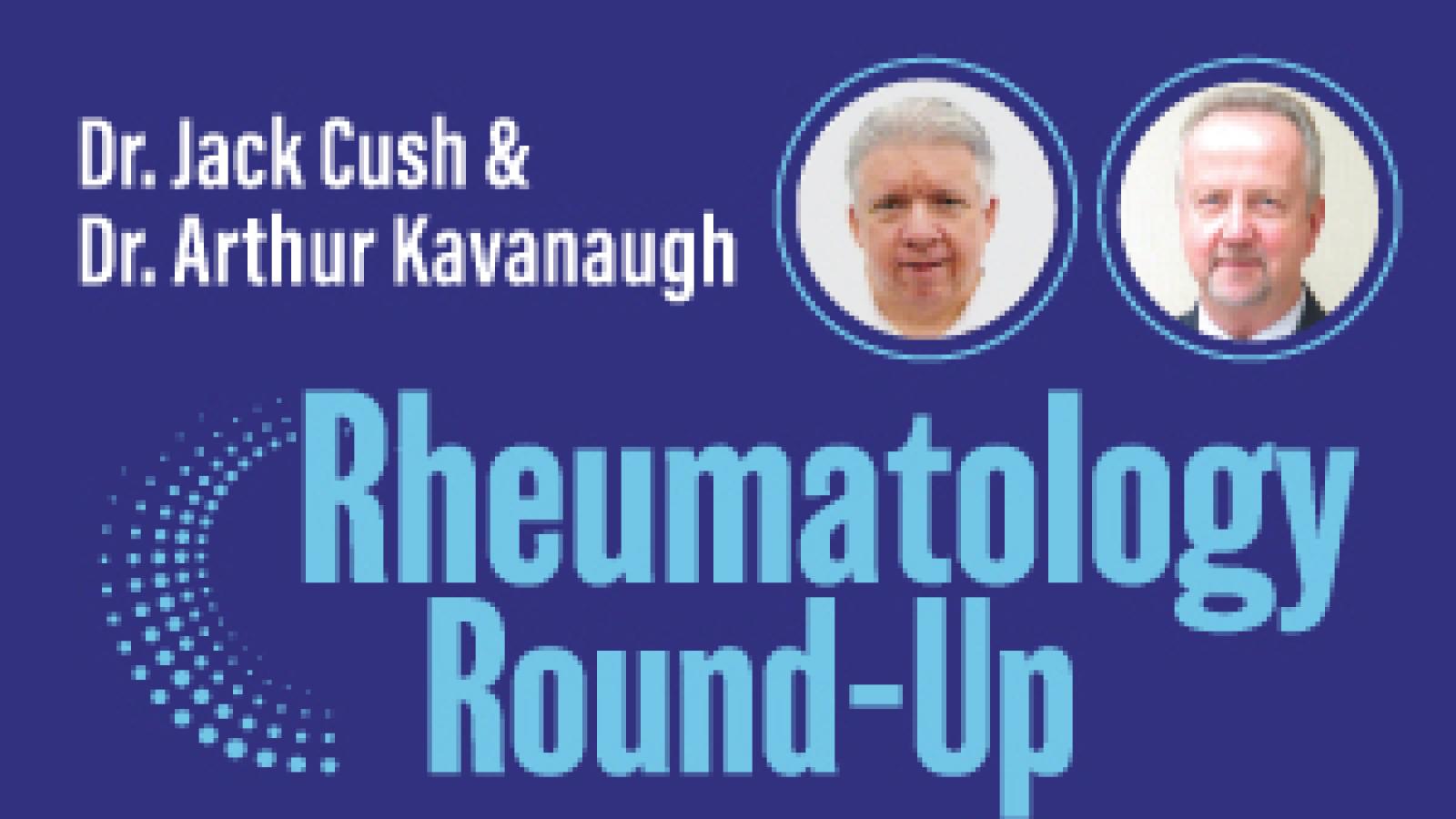
Drs. Jack Cush and Arthur Kavanaugh discuss highlights and key takeaways from ACR 23.

While there wasn’t much original new programming and research presented on the final day, that didn’t slow the RheumNow faculty from tweeting the noteworthy “Best of ACR” abstracts. Enjoy these below.

Since chronic kidney disease is one of the strongest CV risk factors, any new strategy to reduce proteinuria and avoid a decline in renal function may likely improve patient outcomes. In large cardiovascular outcome trials, the use of a fairly new-kid-on-the-block therapy, sodium–glucose cotransporter-2 inhibitors (SGLT2i) appear to be both cardio and renal-protective. Would the use of SGLT2i have the same impact in SLE?

The last day at ACR23 was a ghost town as most left, largely because there was limited programming on the fourth and final day. The main attraction on Day 4 was the late-breaking abstract – oral presentations. Here’s a list of the late breakers; below, I provide commentary on the ones that caught my attention.

We have known about the VEXAS (vacuoles, E1 enzyme, X-linked, autoinflammatory, somatic) syndrome for nearly 3 years, but there has been relatively little to say about how to treat it. To date there have been over twice as many publications about VEXAS (263 publications) as there have been patients described with respect to treatment strategies (116 patients). One of the late breaking abstracts may finally have rectified this imbalance.

Should rheumatologists be counseling patients on cervical cancer prevention and screening? The data from Abstract #1479 at ACR Convergence 2023 suggests that this should be an important conversation with our female lupus patients.

These year’s annual ACR Convergence has been a success with the return of an insanely active Poster Hall! F2F learning amidst miles of research and many young talented aside wizened establish presenters is such a welcome return to ACR, the way it should be.

For as long as I can remember, methotrexate has been the anchor drug treatment of rheumatoid arthritis. We also know it has limited oral bioavailability at doses greater than 15mg. There are subcutaneous forms that offer better bioavailability, but its subcutaneous nature can sometimes sway patients away from trying it in addition to its higher cost. Split dosing of methotrexate can be a solution to attain higher bioavailability; however, its
Today was a big day for the Plenaries, Curbside Consults, ACR Business meeting (and induction of our new ACR President Dr. Deborah Desir) and Late-Breaking Posters. Our hot-button reporters have compiled these #ACRbest abstracts for you! (November 14, 2023 at #ACR23)

Acute anterior uveitis is the most common extra-musculoskeletal manifestation in axial spondyloarthritis (axSpA) affecting up to 50% of patients in some age groups. AAU can have a significant impact on quality of life with risk of permanent visual deficits if not adequately treated.

