TNR - Controversies in PMR
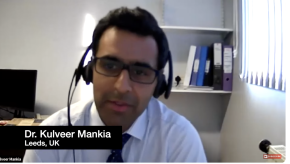
A TNR Panel discussion on controversies in PMR: diagnosis, imaging, PCP roles, Lumping vs. Splitting.
Featuring Drs. Sarah Mackie, Wolfgang Schmidt, and Len Calabrese.
Moderated by Dr. David Liew.
Recorded on 10/24/2023

Search for Terms or Answers
A TNR Panel discussion on controversies in PMR: diagnosis, imaging, PCP roles, Lumping vs. Splitting.
Featuring Drs. Sarah Mackie, Wolfgang Schmidt, and Len Calabrese.
Moderated by Dr. David Liew.
Recorded on 10/24/2023
The ACR has published its updated recommendations for prevention and treatment of glucocorticoid-induced osteoporosis (GIOP) for patients receiving >3 months treatment with glucocorticoids (GCs) ≥2.5 mg daily.
UCB announced today that the US Food and Drug Administration (FDA) has approved bimekizumab-bkzx (Bimzelx)) for the treatment of moderate to severe plaque psoriasis in adults who needing systemic therapy or phototherapy.
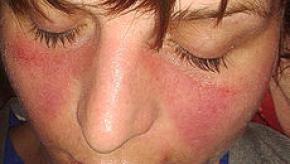
EULAR has published updated recommendations for the management of systemic lupus erythematosus (SLE) based on new evidence and expert opinion - formulationg five overarching principles and 13 recommendations.
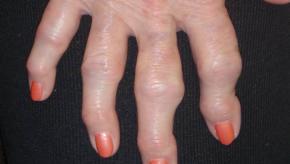
Lancet reports the results of the METHODS study from Australia where hand osteoarthritis (HOA) patients benefitted from 6 months of methotrexate (MTX) - as long as there was MRI synovitis!
Dr. Jack Cush reviews the news, journal reports and regulatory approvals from this past week on RheumNow.com.
This week the CDC's MMWR reports that during 2019–2021, 21.2% of U.S. adults (53.2 million) reported "diagnosed arthritis".
On Oct. 6, 2023, Novartis announced the US Food and Drug Administration (FDA) approved an intravenous (IV) formulation of secukinumab (Cosentyx) for use in treating adults with psoriatic arthritis (PsA), ankylosing spondylitis (AS) and non-radiographic axial spondyloarthritis (nr-axSpA).
In patients with rheumatoid arthritis (RA) treated with infliximab (Remicade), increases in body mass index (BMI) scores over time were not associated with increased disease activity or faster radiographic progression.
By downloading this material, I acknowledge that it may be used only for personal use and personal education and that I will accredit RheumNow.com as the source and owner of this material. Commercial use or mass reproduction of this material without permission from RheumNow (info@rheumnow.com) is prohibited.