


Hip Replacement Advances Save

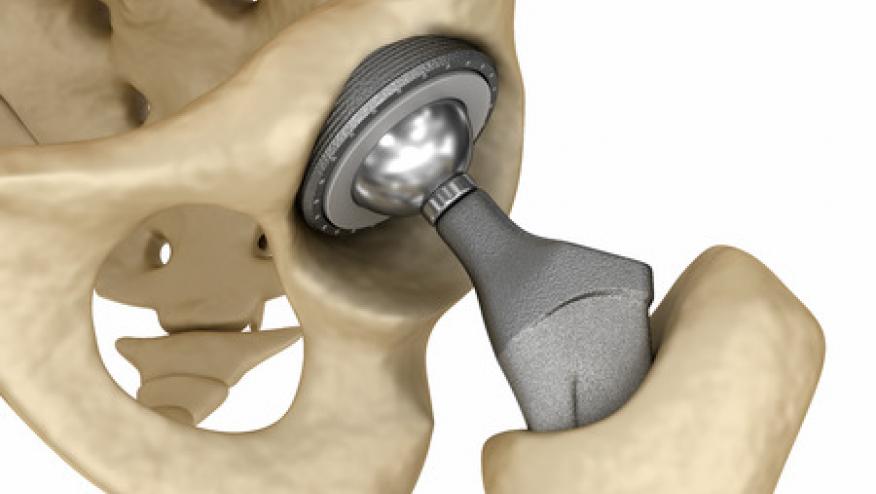
Hip replacement surgery has been a major advance in the management of patients with hip damage and diminishing quality of life. While this review provides new information regarding a new type of hardware (end of article), lets begin with a general overview.
"Types" of hip replacement vary by surgeon, patient (anatomy, age, activity), implant materials, what is being replaced and the surgical approach.
Extent of Replacement
Total Hip Replacement (THR / Total Hip Arthroplasty/ THA): The most common procedure. Both the damaged femoral head (ball) and the acetabulum (socket) are completely removed and replaced.
Partial Hip Replacement (Hemiarthroplasty): Only the femoral head (ball) is replaced. Most frequent in elderly patients with femoral neck fractures.
Hip Resurfacing: The femoral head is trimmed and capped with a smooth metal covering, while the socket is lined. This is favored for younger, highly active males.
Revision Hip Surgery: Performed to replace worn-out, loose, or infected implants from a previous hip replacement.
Surgical Approaches
Posterior Approach: The traditional and most common technique, where the incision is made at the back of the hip.
It gives the surgeon excellent visualization of the joint but historically carried slightly higher baseline dislocation risks compared to newer techniques. Direct Anterior Approach: A muscle-sparing technique where the incision is made at the front of the hip.
Because it moves muscles aside rather than cutting them, it often results in less immediate post-operative pain and a quicker initial recovery, with lower early dislocation risks. Lateral / Anterolateral Approach: Accesses the hip from the side, offering excellent stability but requiring brief detachment of some abductor muscles.
Hip Implant Types
Ceramic-on-Polyethylene (Plastic): The contemporary gold standard for most standard THRs. It pairs a highly resilient ceramic ball with a highly cross-linked polyethylene liner, offering exceptionally low wear rates.
Metal-on-Polyethylene: A reliable, long-standing option pairing a cobalt-chromium metal ball with a plastic liner.
Ceramic-on-Ceramic: Highly wear-resistant and ideal for younger patients, though historically carrying a small risk of "squeaking" or catastrophic material fracture.
Metal-on-Metal: Widely abandoned over the last 15 years due to concerns over adverse local tissue reactions caused by microscopic metal debris.
Dual Mobility Total Hip Replacement (THR)
A standard THR an artificial ball rotates directly inside the fixed socket liner. A newer Dual Mobility (DM) implant introduces a second point of motion to drastically increase stability. It features a small ceramic or metal ball locked inside a larger polyethylene ball, which in turn sits inside a metallic outer shell. This "ball within a ball" design provides a much larger jump distance, making it incredibly difficult for the hip to dislocate. This type has become popular over the last decade, especially in the United States and Europe. It is used 12% to 15% of primary THR and in roughly a third of revision THR, primarily to combat instability. DM are selected by surgeons in vulnerable to instability: with a high dislocation risk, advanced age, young/high-impact patients and post fracture.
A recent Lancet report compared DM-THR to standard THR in 1566 elderly patients with a displaced femoral neck fracture. Dislocation, the primary outcome, occurred in ten (1.3%) of 779 participants in the DM-THR group and in 33 (4.2%) of 787 in the THR group (adjusted hazard ratio 0·27, 95% CI 0·13−0·56; p<0·0001). DM-THR substantially reduced the risk of dislocation and of any surgical complication among people treated with THR after a displaced femoral neck fracture.
ADD THE FIRST COMMENT
Disclosures
The author has no conflicts of interest to disclose related to this subject
The author used AI to research and organize this content, and maintains responsibility for its accuracy






If you are a health practitioner, you may Login/Register to comment.
Due to the nature of these comment forums, only health practitioners are allowed to comment at this time.