


Optimizing Hydroxychloroquine Blood Levels in Lupus Save


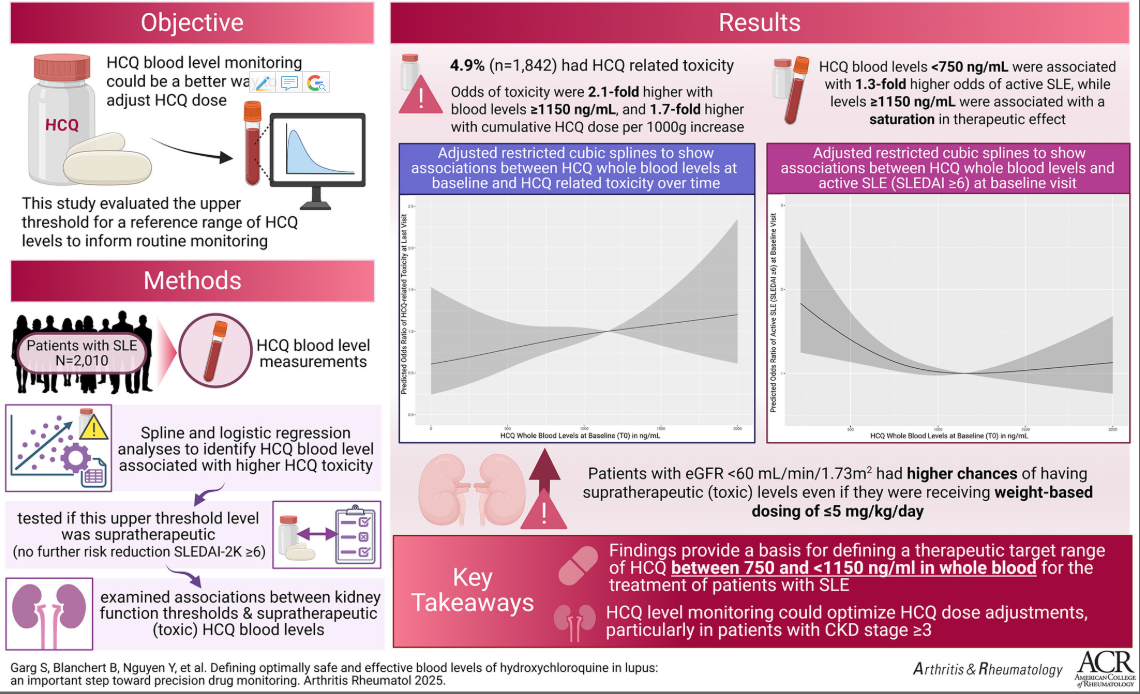
A large observational cohort study suggests that monitoring hydroxychloroquine (HCQ) blood levels is effective in systemic lupus erythematosus (SLE) patients with a target therapeutic range (for HCQ level monitoring) of 750-<1150 ng/ml.
The goal of HCQ monitoring would be to optimize dose, clinical outcomes, minimize flares and, potentially, lessen ocular toxicity.
Over 2000 patients from the Systemic Lupus International Collaborating Clinics (SLICC), Wisconsin, International, and French studies, underwent HCQ blood level measurements. The objective was to correlate levels with risk reduction according to the SLE Disease Activity Index 2000 (SLEDAI-2K ≥6). These outcomes were also tested in patients with CKD.
From a total of 2010 patients, 168 patients were excluded with very low HCQ blood levels. Among the remaining 1842 patients, 4.9% had HCQ related toxicity. When ocular toxicity was correlated with blood levels, the follow conclusions were surmised:
- Ocular toxicity was: 2.1-fold higher if blood levels ≥1150 ng/mL
- 1.7-fold higher if cumulative HCQ dose per 1000g increase
- Blood levels ≥1150 ng/mL were associated with a saturation in therapeutic effect, indicating supratherapeutic levels.
- CKD patients (stage ≥3) had 2.3-fold higher odds of having supratherapeutic levels (≥1150 ng/mL).
HCQ level monitoring could optimize HCQ use, particularly in patients with CKD stage ≥3.
Join The Discussion
Hopefully, Dr. Garg's paper will finally convince everyone that through whole blood HCQ drug levels should be measured regularly in our patients. Using HCQ drug levels religiously since 2016 has greatly transformed my lupus clinic into a much higher prevalence of remission and low disease activity patients and getting them off steroids. They should be the standard of medical care for every lupus patient who is on HCQ
I agree. I think many of us are not doing this, largely because we dont know where or how to get this assay performed. The first step is to inquire about and insist on availability. This assay is available with most major clinical laboratories, such as Quest and Labcorp!
Disclosures
Disclosures
The author has no conflicts of interest to disclose related to this subject






If you are a health practitioner, you may Login/Register to comment.
Due to the nature of these comment forums, only health practitioners are allowed to comment at this time.