

Over the past 5 years, there has been growing interest in RA-ILD due to its relative prevalence and severity. This seems to be one of the few RA outcomes not improving much, even with the advent of expanded treatment options. There is also a shocking lack of trial data. This year, there were two oral sessions dedicated to RA-ILD, one of which even the overflow room was standing room only, in addition to many posters.
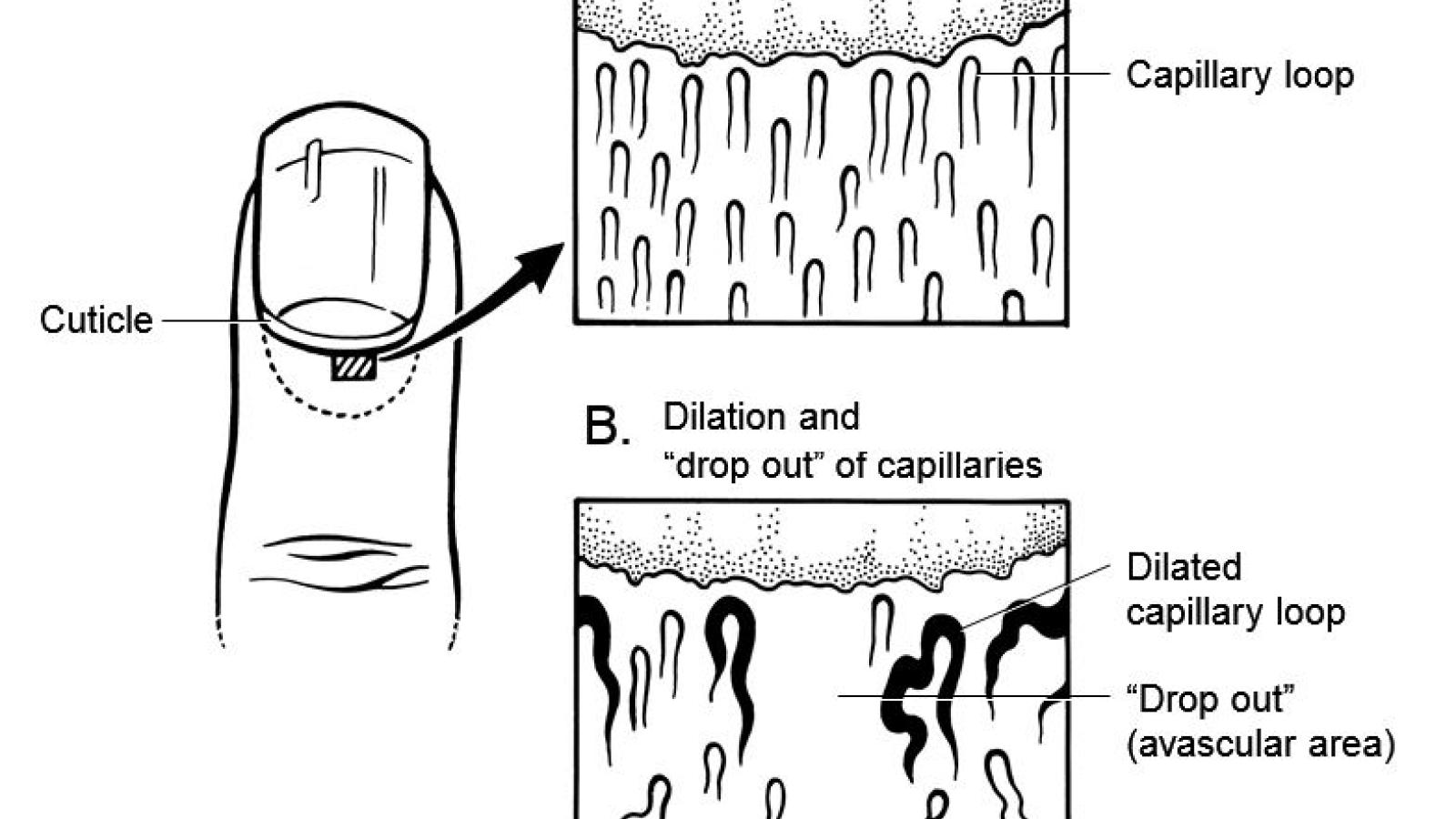
Capillaroscopy is a non-invasive imaging technique used for the in vivo assessment of the microcirculation. kin capillaries at the nailfold are evaluated because the fingers are involved in pathological processes such as Raynaud’s phenomenon. Several abstracts and sessions on nailfold capillaroscopy were presented during ACR24.

In 1950, three scientists were awarded the Nobel Prize for their groundbreaking discovery of steroids, heralded at the time as a "miracle cure" for rheumatoid arthritis (RA). However, just a year after their introduction, evidence began to surface regarding the harmful side effects and withdrawal symptoms such as pain and fatigue that were independent of RA itself.
Recent advancements in targeted therapies, including selective inhibitors of key inflammatory pathways, offer promising outcomes for patients with active psoriatic arthritis (PsA). At ACR 2024, there have been further developments in novel therapies in PsA. Three innovative treatments: Zasocitinib, Vunakizumab, and Sonelokimab, as detailed in recent phase 2 trials, were presented at ACR 2024.

the predictive value of a positive ANA test—especially in the absence of other clinical symptoms—remains a challenge. A positive test often leads to further testing, yet it does not necessarily indicate whether a patient truly has an underlying autoimmune disease. The development of AI and machine learning algorithms presents an opportunity to interpret autoantibody tests and predict autoimmune diseases. Here are three studies looking at this

Randomized controlled trials (RCTs) drive guidelines; guidelines drive clinical practice. Because updated guidelines lag trials by many years and dissemination of guidelines takes additional time, rheumatologists often practice “behind the data.” The 2024 ACR Guidelines for the Management of SLE Nephritis reaffirmed many of our typical practice patterns, including hydroxychloroquine for all, renin/angiotensin blockade, and favoring mycophenolate

Managing health conditions is rapidly evolving as patients increasingly turn to online resources for answers—over 65% search for health-related questions online. Our study analyzed Google search trends for rheumatic disease topics, offering a fascinating glimpse into how online search behavior can reveal patient needs and experiences. This approach, known as "infodemiology," tracks real-time Google Trends data to understand symptom- and

Sleep plays a critical role in regulating inflammation and overall health. In rheumatic diseases like lupus and rheumatoid arthritis (RA), disrupted sleep is common and can exacerbate symptoms and disease progression. Experts Dr. Al Kim, Patty Katz, and Dr. Yvonne Lee emphasized the importance of addressing sleep disturbances in these conditions.

Although the last day of ACR Convergence 2024 was but a half day - it was chock full of gems, many coming from the late breaking abstracts presented today. As chosen by the RheumNow faculty, here are some highlight presentations you need to know about.

Intervention in individuals predisposed to develop RA, with a holy grail of prevention of RA, has long been a hot topic. The 4-year results of the TREAT EARLIER study, presented at Tuesday’s oral abstract session, show that methotrexate appears to prevent the development of RA in high risk ACPA- patients.
Rheumatic diseases, such as axial spondyloarthritis (axSpA) and rheumatoid arthritis (RA), are marked by unpredictable disease flares that adversely impact quality of life and long-term outcomes. Advances in machine learning (ML) provide a promising avenue for predicting these flares, enabling proactive management and personalised interventions.

Bimekizumab (BKZ), a monoclonal antibody that selectively targets both IL-17A and IL-17F, was evaluated in the BE MOBILE 1 (non-radiographic axSpA) and BE MOBILE 2 (radiographic axSpA) trials and found to yield significant clinical benefit – around 60% of patients in both trials achieved an Assessment in SpondyloArthritis international Society (ASAS)40 response rate, with i

For many women, the journey to motherhood brings a sense of anticipation and joy. However, for those with rheumatoid arthritis, this journey presents unique challenges. At ACR Convergence 2024, researchers discussed how advancements in reproductive medicine and RA management are paving the way for improved outcomes.

Different factors are known to influence disease characteristics and outcomes in psoriatic arthritis (PsA). Recently, there is new evidence that sex-related differences play a role not only in disease manifestations but also in efficacy and safety of treatments as well as outcomes and prognosis.

Reported safety signals, at odds with the efficacy of these medications, have left rheumatology clinicians in a difficult position when considering when during a patient’s treatment course and in which patients, specifically, JAKi should be used. Two abstracts from ACR convergence 2024 further contribute to our understanding of this potential risk profile.

