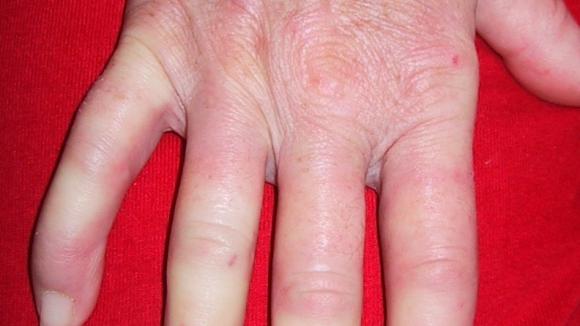
No drug is FDA approved to manage the skin or joint complaints of systemic sclerosis (SSc); a recent metanalysis suggests that rituximab may improve skin score and disease activity indices (DAS, mRSS) while stabilizing organ involvement in SSc patients.
All News
Dr Jack Cush reviews the news and Journal reports and takes "Back Talk" questions from viewers.
The American College of Rheumatology (ACR) today commended leaders in the United States Senate for introducing the bipartisan Safe Step Act of 2021 (S. 464), new legislation that would place reasonable limits on insurer use of step therapy.
McInnes and colleagues have published the results of the SELECT - PsA trial in NEJM showing updacitinib (UPA) to be superior to placebo in active psoriatic arthritis (PsA) patients, with 15 mg UPA equal to adalimumab (ADA) and 30 mg UPA qd being superior to ADA.
The European Journal of Preventive Cardiology reports that younger patients with their first myocardial infarction before age 50 yrs have a higher risk of having a systemic inflammatory disease (SIDs) and higher rates all-cause mortality.
Dr. Jack Cush reviews the news, FDA Denials and journal articles from the past week on RheumNow.com.
A two day FDA review by the Drug Safety and Risk Management and Arthritis Advisory Committees has yielded a 19-1 vote against the approval of tanezumab, a nerve growth factor inhibitor, for use in osteoarthritis (OA).
In case you missed it, RheumNow Live 2021 delivers what it promises: a good consistent program pack with high energy interactive learning.
A large cohort study of expectant fathers treated for immune-mediated inflammatory diseases (IMIDs) failed to show any detrimental effect from paternal exposure to immunosuppressive or biologic agents on offspring outcomes.
Pegloticase is indicated in the treatment of severe gout patients but prolonged use may be limited by immunogenicity to the PEG moiety. A randomized, controlled trial has shown that concomitant mycophenolate mofetil (MMF) may prolong the efficacy of pegloticase in gout.
There are no current FDA approved therapies for rheumatoid arthritis associated interstitial lung disease (RA-ILD) or bronchiectasis, but a recent retrospective cohort study showed equivalent outcomes when RA-ILD patients were treated with either rituximab or janus kinase inhibitors.
Dr. Jack Cush rants on the journal reports, news and FDA actions featured this past week on RheumNow.com.
JAMA Dermatology has published a Danish national cohort study showing that potent topical corticosteroid use was associated with an increased risk of osteoporosis and major osteoporotic fractures with a dose-response association for cumulative use.
Schett and colleagues studies the secukinumab (an IL-17 inhibitor) response in patients from 3 clinical trials with enthesitis and ankylosing spondylitis (AS) and demonstrated consistent efficacy with improved enthesitis scores at both peripheral and axial sites.
There is a growing body of evidence regarding COVID-19 outcomes (including death) in rheumatic disease patients; analysis of a German registry shows that poor control, rituximab, sulfasalazine and other immunosuppressives could be risk factors for COVID-related death.
On Feb. 27, the Food and Drug Administration announced it has issued an emergency use authorization for Johnson & Johnson’s one-dose Covid vaccine, making it the third COVID-19 vaccine to be commercially available. We've compiled a comparison table and some key information relevant to your delivering patient guidance henceforth.
Incident or worsening colitis is a rare complication of IL-17 inhibitor therapy; a real world study confirms very low rates of new IBD in patients starting secukinumab.
Genentech announced Thursday that the US Food and Drug Administration approved tocilizumab (Actemra) for the treatment of Systemic Sclerosis-associated Interstitial Lung Disease (SSc-ILD), specifically indicated for slowing the rate of decline in pulmonary function in adul
Dr. Jack Cush reviews and discusses nearly a dozen news reports and journal articles from the past week on RheumNow.com.
A systematic review of telehealth in delivering equivalent care in RA patients demonstrates there is limited evidence that virtual RA care is equivalent to conventional face-to-face care. Despite current widespread use, there is a great need for credible well-designed research that will address comparable patient outcomes, implementation strategies and long‐term health system consequences.