

NME: New Molecular Entities (8.28.2026)
Transcription
It's August 28th, 2026. This is the RheumNow podcast. Hi, I'm Dr. Jack Cush, executive editor of RheumNow.com. This week on the podcast, we'll talk about vasculitis, scleroderma, new drugs in development. I call that new molecular entities. But let's begin with a report on aortopathies. You know, it doesn't come up much, but I encountered it this week in clinic. Wanted to know the differential diagnosis to aortitis. Interestingly, there was a paper just published on this and the list includes a number of things I did not know and I'm going to rehash that for you here. Obviously Takayasu's and giant cell arteritis as large vessel vasculopathies, but aortitis has been also described in IgG4-related disease, RA, lupus, spondylitis, scleroderma, relapsing polychondritis, Cogan syndrome, and Behçet's. [snorts]
The approach to take with these folks, short of biopsy, would be imaging with CT angiography, MRI — and usually they like MRI — and then PET CT, FDG PET. FDG PET is really good at activity, MRI is good at damage, and CT might be good at damage. But anyway, I think that we do see a fair amount of this and need to use those tools.
Um, speaking of new molecular entities, Spyre is a company that's developing an anti-TL1A antibody called SPY072 in RA. They reported their topline results, which some thought were disappointing. I thought were okay. It's a phase 2 trial, so you don't have to hit home runs. You need to be consistently good.
This is a study of their TL1A antibody in RA patients — 133 RA patients, phase 2 — they get two doses of SPY072 and they showed it was better than placebo at a 12-week endpoint. ACR20s were 63 and 58 versus 43% — that's a high placebo response — but the delta between the higher dose and placebo is 20 points. That's FDA approvable in my book. ACR50 was 31 and 38 versus 19. That's certainly good. And again, there's this trend of the lower dose doing better than the higher dose. It's roll of the dice, folks. It's not really science.
And the delta CRP, which was I think their primary endpoint — reduction in delta CRP was minus 1.5 and minus 1.9 for the drugs and then minus 1.3 — so the delta there wasn't as great. But these drugs are the hot new thing in autoimmune disease drug development. You know, the hot new thing is CAR-T and we'll talk about that, but they're further along there. I know of four or five of these in development. Again, TL1A stands for tumor necrosis factor-like cytokine 1A. It binds to the DR3 death receptor 3 on T-cells and lymphoid cells. And in binding it induces not only inflammation but also fibrosis, and we have so few drugs that are targeting fibrosis. IL-6 inhibitors somewhat target fibrosis but we have no anti-fibrotic drugs. So if this were to move along with these different companies that would be encouraging. The drugs are being developed in inflammatory arthritis, RA, PsA, I believe in ulcerative colitis, and also in scleroderma. So hopefully we'll see a lot of these presented at ACR, probably the early phase 2 studies like this one.
Um, another new drug, this one from China — invaritanib, also known as SHR32. Let's go with invaritanib. That's easier. It's a JAK1 inhibitor from China. China's got a number of JAK1 inhibitors that they are developing. I think one's actually FDA approved for use in China. This was a study — a phase 2, maybe phase 3. I guess there's an arm of it that will extend into their phase 3. And they showed fairly interesting results here.
So they did a study in ankylosing spondylitis patients. They treated 187 with 4 milligrams once a day versus placebo — 187 patients treated with 4 milligrams once a day versus 186 patients treated with placebo. At week 12 it was significantly better: ACR20 responses 49% versus 29%, and better ASAS40 responses 32 versus 18. That's ballpark for what's been described with JAK inhibitors in spondylitis. They also showed other secondary outcomes that were superior — total back pain by visual analog score, night pain, ASDAS scores — and they showed that when you continue the drug on through 6 months the responses were maintained.
Other JAK1 inhibitors in development in China include Zeberitanib, that's in phase 3 and we heard about it two years ago at ACR and EULAR, and TLL018, that's a JAK1/TYK2 combination drug that beat tofacitinib head-to-head — that's in the literature and was presented at the meeting. So again, interesting work being done out of China.
Another drug in development is a CAR-T therapy, CD19 CAR-T cell — the COMPARE trial. It's called MIV cell, mocabtagene autoiucel — let's call it MIV cell. This was a phase 1/phase 2, six patients, open label. The patients had to have RA refractory disease activity. They had
severe refractory disease, they were treated with lymphodepletion at the outset and then given CAR T cells and followed for 32 to 52 weeks. All of the patients — this was a safety study — had cytokine release syndrome, but not too bad, like manageable. None of them had ICANS, nor more serious adverse events in the limited follow-up they have. All of them had CD19 B cell depletion as a result of therapy and that was brisk, like you'd expect. And all of them had a reduction in autoantibodies. But not all of them — the autoantibodies like rheumatoid factor and anti-CCP went down a lot but not to zero in all of them.
Efficacy was okay. They started getting ACR20 responses by week 12, but gigantic responses like you might have expected with a CAR T cell therapy wasn't as much as we would hope for. Anyway, three out of six patients had an ACR70 and they had substantial reductions in DAS28-CRP scores. They have 10 more patients that are in development. But again, we're waiting for a real trial. These are the early dose-finding, show-it's-safe kind of studies you've got to do before — you know, you've got to crawl before you run in this game of CAR T.
Mike Putman put up a great email this week called "CAR T Reality Check." It's worth a click and looking at the numbers. I think the numbers are something like there are more studies than there are patients treated with CAR T, which is to say that in all of these burgeoning CAR T cell studies, they all have one, two, three patients. They're not like Professor Schett's 19-patient experience and long-term follow-up. They're all brand new. So Mike's point was the hype is outrunning the evidence. And so he created a dashboard so that you can track what's actually happening in the wonderful world of CAR T cell development. Few numbers, limited follow-up.
Again, I'm not as excited as you are, and that's because I'm a clinical trialist. I've been on the FDA advisory panel. I want to see the data. I want to see safety data first, which is what they're showing us. And it's good, but it's not totally safe. There are a lot of safety signals that are a little concerning here. But I want to see the data on performance with a comparator drug — active drug or placebo — and that hasn't happened yet.
The VA has a study of 4,000 patients with RA-ILD and they describe for you drug use in the VA system between 2006 and 2021. Up to three-quarters of the patients have received prednisone. Their first-line therapies are as you would expect: mycophenolate, azathioprine, rituximab, and cyclophosphamide. After the diagnosis of ILD in RA patients, use of those therapies went way up. Methotrexate use was very low. Maybe the rheumatologists are listening to the pulmonologists. I would use methotrexate in these patients, but depending on the cohort it was less than 12%. And after the diagnosis of ILD, methotrexate which was being used decreased by at least a third if not a half.
Drugs that increased after the diagnosis of ILD — and with the reduction of methotrexate use — were leflunomide, TNF inhibitors, and abatacept. In their study, the predictors of ILD treatment in RA were the FVC, forced vital capacity, being anti-CCP positive, and having an ILD diagnosis after 2012. I like that kind of study. It is retrospective, but it tells you the real-world trends of what's going on in a system of excellent physicians who work at our VA medical centers.
Another RA study looked at e-cigarette use and its association with incident RA and lupus. This comes from the All of Us research program. This is a nationwide program of almost a million patients. They collect data, they collect samples — they might be the largest genomics database out there. This is a study that matched almost 16,000 e-cigarette users versus nonusers, and they found that 66 new RA and lupus patients were amongst the e-cigarette users, with an incidence rate of 1.43 per 1,000. Non-users had a rate of less than 0.93 per 10,000 patient-years. So there's basically a 54% increased risk of developing either RA or lupus with e-cigarettes. We know cigarettes cause disease, worsen disease, worsen drug responses, etc., and they are a driver of incident disease for many diseases. We do know that secondhand smoke is a risk factor, as is environmental pollution. This is the first to show that e-cigarettes are as impactful as those other environmental toxins.
I like the study that compares via meta-analysis and systematic review juvenile systemic sclerosis and adult systemic sclerosis. They surveyed the literature — 39 studies that had a comparison. The numbers were: juvenile systemic sclerosis was 935 patients; adult systemic sclerosis was 15,000. And guess what?
Juvenile systemic sclerosis is worse. Just like lupus, pediatric lupus is worse than adult lupus. Juvenile systemic sclerosis had more cutaneous disease 70 versus 41%. More overlap myositis 33% versus 5. More arthritis 33% versus 18. More digital ulcers 51% versus 20% and less renal crisis — zero in the kids, 6% in the adults — but interestingly overall juvenile systemic sclerosis had a lower overall mortality.
So when you look at those last two figures where juvenile systemic sclerosis had less renal crisis and lower overall mortality, I think it speaks to the added problem of aging and additional comorbidities like hypertension and other comorbidities into some of the worst outcomes that we see in systemic sclerosis. They're not there from the start, they may need time and they may be driven or fortified by comorbidities. That's my take.
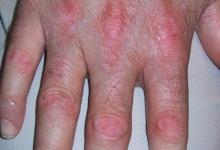
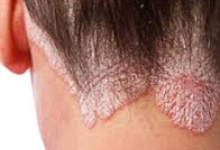
Another good study that came out this week looked at whether you can use ultrasound of enthesitis in psoriasis patients to see if it might predict future development of psoriatic arthritis or give us some insights. This was a study that specifically looked at apremilast patients with psoriasis and it's a low number. It was 20 patients with long-standing psoriasis. They had a lot of nail and scalp disease. They had not yet received biologics or targeted synthetics and they were being put on apremilast. It was an open label study of apremilast and a few things got better. It was a usual dose 30 milligrams BID, 6 month study. They did enthesitis assessments by MRI and high-res QCT. That did not change. They found a minority with enthesitis signal by those two very exacting imaging measures did not change with apremilast therapy over 6 months.
Similarly the PSAM wrist — this is the MRI validated tool for psoriatic arthritis — also showed no change in 6 months and there were of course no new erosions, and that might be a good thing, but there was no improvement. The PASI scores did improve, 11 to 5 were the means, and total joint counts improved from 3.2 to about 0.8. So there was again sort of modest to moderate improvement in things that you'd like to see — skin and joints — but at the enthesial level with high-res imaging, no benefit was seen. But then again maybe there was a small benefit in that no worsening was seen, right, even though some joints got worse. Hard to interpret data like this. I present it so that you can ponder it just as I am.
Found a meta-analysis this week of 61 studies looking at whether exercise modulates inflammatory markers. Overall they showed evidence that especially in chronic diseases exercise does have an anti-inflammatory effect with significant reductions in CRP, IL-6 and TNF alpha. The problem with this data was that the quality of the data was poor. Hence the certainty of evidence that exercise is inflammation-modulating is sort of on the low certainty side. But given that there are so many studies, I think it does speak to what you've probably been saying to your patients over time, which is exercise is good for you, exercise will help inflammation.
Let's get into some vasculitis. An interesting report from JAMA Network Open, again about Kawasaki's disease. I don't know why they're on a Kawasaki's bent over there at JAMA, but this Japanese study of 101,000 children looked at whether fertility treatments changed risk of disease. 101,000 patients, almost 102,000. They looked at ovulation induction, intrauterine insemination, in vitro fertilization, and they showed that these fertility treatments increased the risk of Kawasaki's disease significantly compared to those who had just spontaneous conception at birth. The risk of Kawasaki's was 274 per 100,000 patient years. Those who had assisted conception or fertility treatment: 391 per 100,000 patient years — that's a 42% significant increase in risk of Kawasaki's.
I present that because I think two or three weeks ago we talked about Kawasaki's and the incidence going down during COVID with restrictions on kids, and then it went back up in more recent years, suggesting the influence of environmental triggers, maybe infections, on Kawasaki's risk. This says it's not just environmental triggers — it could very well be a hormonal influence as well. I thought that was a good study.
The news this week — last week — was that the EU removed avacopan from the market based on concerns about the ADVOCATE trial and improper data handling when the drug was developed. It's still on the market in the United States. MedPage Today reported on a study showing registry data that sort of affirms the risk of liver disease with avacopan, also known as Tavneos. So it was approved in 2021 for ANCA-associated vasculitis. This registry study shows when it was used, higher rates of
LFTs, no liver deaths, no vanishing bile duct syndrome, modest elevations of LFTs, not enough I think to take the drug off the market, but again there are several infractions here and the worrisome vanishing bile duct syndrome. We're waiting to see what the FDA is going to do in the United States.
A retrospective study of PMR patients looked at whether PMR patients were treated with an IL-6 inhibitor or conventional DMARD. This is a Medicare database analysis and they had 450 PMR patients either receiving first-time IL-6 or first-time conventional DMARD at one year. The IL-6 treated patients had significantly more glucocorticoid discontinuations — 28% higher, or 28% more — and they had significantly more patients who achieved minimal glucocorticoid use meaning 1 or 2 milligrams per day. It turns out though that if they did get an IL-6 inhibitor, there were more hospitalizations and infections that were twofold higher in IL-6, 12.2 versus 5.7 per 100 patient years. They didn't say whether those infections were serious infections, but that number looks like it might be. And the risk was seen mainly in the first year, but not in the second year of these two different kinds of therapy.
I put it up because — one of recently we covered the guidelines for the treatment of large vessel vasculitis, GCA, and also PMR, and what drugs you can use when you want to steroid spare per the EULAR guidelines, that was covered a few weeks ago — but I'm of the belief that you and I are probably not using enough steroid-sparing therapy in PMR. Elderly patients and giving them steroids — is that really a good idea? It can't be. And if you have FDA-approved drugs that work, why not?
Speaking of drugs that work in PMR, secukinumab in PMR was published online back in June and then in paper I think this week in the New England Journal. This is a very important study because it's very well done. It's secukinumab in patients who have refractory polymyalgia rheumatica — 381 patients, three treatment groups. There were two doses of secukinumab, 300 milligrams and 150 milligrams, and a placebo group. So that's almost 380 patients followed out to 52 weeks. The primary endpoint was sustained remission, no PMR symptoms, and I think being on a successful wean from week 12 to week 52 — not easy to achieve. Secukinumab 300 was 41%, secukinumab 150 was 41%, placebo 20%. There was a significant lowering of mean glucocorticoid cumulative exposure for secukinumab — about 1,600 milligrams in both groups versus almost 2,100 in the placebo group.
And this is all interesting because, as you know, secukinumab was studied in GCA in a phase 2 trial called the TITAN study and it looked fabulous. It was the buzz about eight years ago, seven years ago, and then they did a phase 3 study which we reported on earlier this year of secukinumab in GCA and it did not meet its primary endpoint. So it'll be interesting to see how IL-17 inhibitor development goes in PMR. I think there are going to be a number of companies that are working in this area and we can expect maybe future FDA-approved drugs for PMR.
Right now we only have the results of the SAPPHIRE study data with baricitinib — right — and brepocitinib in dermatomyositis, that is poised for FDA approval in the next few weeks here in the United States. The results of their large VALOR study were presented in the New England Journal earlier this year, I want to say around April. This week they had a subanalysis of skin outcomes with brepocitinib in dermatomyositis patients. You know the usual myositis outcome measure is the total improvement score, which does not include skin scores. It includes CPK, global assessments, functional things, but no skin score. So this subanalysis is important.
This is the results of a 52-week phase 3 double-blind placebo-controlled multinational trial. The study was called the VALOR trial, that enrolled 241 adults who had active skin and joint disease, and patients were treated with either placebo or brepocitinib — the JAK1/TYK2 inhibitor — at 30 milligrams a day or 15 milligrams, I think that's once a day, I could be wrong. The validated outcomes from Victoria Werth's group at Penn is the Cutaneous Dermatomyositis Disease Activity and Severity Index, the CDASI.
The CDASI activity score — a clinically meaningful response was also reported. A number of outcomes looked actually very good. The CDASI activity score minus 6.4 versus placebo minus 3.5. The CDASI activity responders at a higher level, 33% versus 17%. Itch improved 38% versus 19%, and a skin-related quality of life outcome minus 3 versus minus 1. So that looks good, and I think that this is where maybe brepocitinib, when it gets approved, will hit the ground running. Because what are you using to treat patients with really problematic skin disease? You're using methotrexate, you're
using steroids, are you using IVIG? I think some are — it is FDA approved, but now you're going to have another option.
Lastly, we did a survey this past week on Sjögren's syndrome of you rheumatologists and I want to thank you for answering the survey. It was a one-time email on Monday morning. 383 of you answered that email, and here are the key takeaways. This is what you think about Sjögren's syndrome. I'm just giving you the summary statements. You want to see the results of the survey, go look at it online.
90% — 99% of rheumatologists treat Sjögren's syndrome. Thank goodness. Who's the one guy that's not doing it? Let's talk to him. Diagnostic uncertainty is seen in 25 to 37% of you, and that means criteria for diagnosis and confusion around the time of diagnosis. There still is some concern whether you can make it alone by dry eyes and dry mouth. Do you need serologics? Do you need minor lip gland biopsies? How important are the autoantibodies? There's still, I think, confusion around this and there probably shouldn't be. Diagnostic uncertainty comes up again, same number there.
The new drugs for these to be used — the main things on your mind about whether they'll be used or not is going to be number one access, number two safety, and three guidelines for use. Rheumatologists overall are favorably inclined towards using B cell depletion therapies in Sjögren's syndrome. You probably — some of you have been using rituximab off label. It doesn't work. It's been proven not to work. I don't know why you would do that. But we do have new drugs on the horizon that will probably be approved soon that are B cell depleters. Ianalumab from Novartis is being considered — that had a successful phase 3 — the Neptune 1 and Neptune 2 trials that look good, but there is no FDA approved B cell depletion therapy currently, but yet you're encouraged by it.
You seem to be wanting to see the data from the experts and consensus guidelines. You seem to be influenced by disease activity measures when it comes to outcomes in Sjögren's trials. There's a large educational need for Sjögren's, including treatment guidelines. And you claim that about a third — up to well, 10 to 33% — of your patients with lupus have Sjögren's. And there's little understanding, or a problem with understanding, the pathogenesis of Sjögren's, especially as it relates to the involvement of interferons and TYK2.
Anyway, that's it for this week on the podcast. You take good care of yourself. We'll be here next week.
The approach to take with these folks, short of biopsy, would be imaging with CT angiography, MRI — and usually they like MRI — and then PET CT, FDG PET. FDG PET is really good at activity, MRI is good at damage, and CT might be good at damage. But anyway, I think that we do see a fair amount of this and need to use those tools.
Um, speaking of new molecular entities, Spyre is a company that's developing an anti-TL1A antibody called SPY072 in RA. They reported their topline results, which some thought were disappointing. I thought were okay. It's a phase 2 trial, so you don't have to hit home runs. You need to be consistently good.
This is a study of their TL1A antibody in RA patients — 133 RA patients, phase 2 — they get two doses of SPY072 and they showed it was better than placebo at a 12-week endpoint. ACR20s were 63 and 58 versus 43% — that's a high placebo response — but the delta between the higher dose and placebo is 20 points. That's FDA approvable in my book. ACR50 was 31 and 38 versus 19. That's certainly good. And again, there's this trend of the lower dose doing better than the higher dose. It's roll of the dice, folks. It's not really science.
And the delta CRP, which was I think their primary endpoint — reduction in delta CRP was minus 1.5 and minus 1.9 for the drugs and then minus 1.3 — so the delta there wasn't as great. But these drugs are the hot new thing in autoimmune disease drug development. You know, the hot new thing is CAR-T and we'll talk about that, but they're further along there. I know of four or five of these in development. Again, TL1A stands for tumor necrosis factor-like cytokine 1A. It binds to the DR3 death receptor 3 on T-cells and lymphoid cells. And in binding it induces not only inflammation but also fibrosis, and we have so few drugs that are targeting fibrosis. IL-6 inhibitors somewhat target fibrosis but we have no anti-fibrotic drugs. So if this were to move along with these different companies that would be encouraging. The drugs are being developed in inflammatory arthritis, RA, PsA, I believe in ulcerative colitis, and also in scleroderma. So hopefully we'll see a lot of these presented at ACR, probably the early phase 2 studies like this one.
Um, another new drug, this one from China — invaritanib, also known as SHR32. Let's go with invaritanib. That's easier. It's a JAK1 inhibitor from China. China's got a number of JAK1 inhibitors that they are developing. I think one's actually FDA approved for use in China. This was a study — a phase 2, maybe phase 3. I guess there's an arm of it that will extend into their phase 3. And they showed fairly interesting results here.
So they did a study in ankylosing spondylitis patients. They treated 187 with 4 milligrams once a day versus placebo — 187 patients treated with 4 milligrams once a day versus 186 patients treated with placebo. At week 12 it was significantly better: ACR20 responses 49% versus 29%, and better ASAS40 responses 32 versus 18. That's ballpark for what's been described with JAK inhibitors in spondylitis. They also showed other secondary outcomes that were superior — total back pain by visual analog score, night pain, ASDAS scores — and they showed that when you continue the drug on through 6 months the responses were maintained.
Other JAK1 inhibitors in development in China include Zeberitanib, that's in phase 3 and we heard about it two years ago at ACR and EULAR, and TLL018, that's a JAK1/TYK2 combination drug that beat tofacitinib head-to-head — that's in the literature and was presented at the meeting. So again, interesting work being done out of China.
Another drug in development is a CAR-T therapy, CD19 CAR-T cell — the COMPARE trial. It's called MIV cell, mocabtagene autoiucel — let's call it MIV cell. This was a phase 1/phase 2, six patients, open label. The patients had to have RA refractory disease activity. They had
severe refractory disease, they were treated with lymphodepletion at the outset and then given CAR T cells and followed for 32 to 52 weeks. All of the patients — this was a safety study — had cytokine release syndrome, but not too bad, like manageable. None of them had ICANS, nor more serious adverse events in the limited follow-up they have. All of them had CD19 B cell depletion as a result of therapy and that was brisk, like you'd expect. And all of them had a reduction in autoantibodies. But not all of them — the autoantibodies like rheumatoid factor and anti-CCP went down a lot but not to zero in all of them.
Efficacy was okay. They started getting ACR20 responses by week 12, but gigantic responses like you might have expected with a CAR T cell therapy wasn't as much as we would hope for. Anyway, three out of six patients had an ACR70 and they had substantial reductions in DAS28-CRP scores. They have 10 more patients that are in development. But again, we're waiting for a real trial. These are the early dose-finding, show-it's-safe kind of studies you've got to do before — you know, you've got to crawl before you run in this game of CAR T.
Mike Putman put up a great email this week called "CAR T Reality Check." It's worth a click and looking at the numbers. I think the numbers are something like there are more studies than there are patients treated with CAR T, which is to say that in all of these burgeoning CAR T cell studies, they all have one, two, three patients. They're not like Professor Schett's 19-patient experience and long-term follow-up. They're all brand new. So Mike's point was the hype is outrunning the evidence. And so he created a dashboard so that you can track what's actually happening in the wonderful world of CAR T cell development. Few numbers, limited follow-up.
Again, I'm not as excited as you are, and that's because I'm a clinical trialist. I've been on the FDA advisory panel. I want to see the data. I want to see safety data first, which is what they're showing us. And it's good, but it's not totally safe. There are a lot of safety signals that are a little concerning here. But I want to see the data on performance with a comparator drug — active drug or placebo — and that hasn't happened yet.
The VA has a study of 4,000 patients with RA-ILD and they describe for you drug use in the VA system between 2006 and 2021. Up to three-quarters of the patients have received prednisone. Their first-line therapies are as you would expect: mycophenolate, azathioprine, rituximab, and cyclophosphamide. After the diagnosis of ILD in RA patients, use of those therapies went way up. Methotrexate use was very low. Maybe the rheumatologists are listening to the pulmonologists. I would use methotrexate in these patients, but depending on the cohort it was less than 12%. And after the diagnosis of ILD, methotrexate which was being used decreased by at least a third if not a half.
Drugs that increased after the diagnosis of ILD — and with the reduction of methotrexate use — were leflunomide, TNF inhibitors, and abatacept. In their study, the predictors of ILD treatment in RA were the FVC, forced vital capacity, being anti-CCP positive, and having an ILD diagnosis after 2012. I like that kind of study. It is retrospective, but it tells you the real-world trends of what's going on in a system of excellent physicians who work at our VA medical centers.
Another RA study looked at e-cigarette use and its association with incident RA and lupus. This comes from the All of Us research program. This is a nationwide program of almost a million patients. They collect data, they collect samples — they might be the largest genomics database out there. This is a study that matched almost 16,000 e-cigarette users versus nonusers, and they found that 66 new RA and lupus patients were amongst the e-cigarette users, with an incidence rate of 1.43 per 1,000. Non-users had a rate of less than 0.93 per 10,000 patient-years. So there's basically a 54% increased risk of developing either RA or lupus with e-cigarettes. We know cigarettes cause disease, worsen disease, worsen drug responses, etc., and they are a driver of incident disease for many diseases. We do know that secondhand smoke is a risk factor, as is environmental pollution. This is the first to show that e-cigarettes are as impactful as those other environmental toxins.
I like the study that compares via meta-analysis and systematic review juvenile systemic sclerosis and adult systemic sclerosis. They surveyed the literature — 39 studies that had a comparison. The numbers were: juvenile systemic sclerosis was 935 patients; adult systemic sclerosis was 15,000. And guess what?
Juvenile systemic sclerosis is worse. Just like lupus, pediatric lupus is worse than adult lupus. Juvenile systemic sclerosis had more cutaneous disease 70 versus 41%. More overlap myositis 33% versus 5. More arthritis 33% versus 18. More digital ulcers 51% versus 20% and less renal crisis — zero in the kids, 6% in the adults — but interestingly overall juvenile systemic sclerosis had a lower overall mortality.
So when you look at those last two figures where juvenile systemic sclerosis had less renal crisis and lower overall mortality, I think it speaks to the added problem of aging and additional comorbidities like hypertension and other comorbidities into some of the worst outcomes that we see in systemic sclerosis. They're not there from the start, they may need time and they may be driven or fortified by comorbidities. That's my take.
Another good study that came out this week looked at whether you can use ultrasound of enthesitis in psoriasis patients to see if it might predict future development of psoriatic arthritis or give us some insights. This was a study that specifically looked at apremilast patients with psoriasis and it's a low number. It was 20 patients with long-standing psoriasis. They had a lot of nail and scalp disease. They had not yet received biologics or targeted synthetics and they were being put on apremilast. It was an open label study of apremilast and a few things got better. It was a usual dose 30 milligrams BID, 6 month study. They did enthesitis assessments by MRI and high-res QCT. That did not change. They found a minority with enthesitis signal by those two very exacting imaging measures did not change with apremilast therapy over 6 months.
Similarly the PSAM wrist — this is the MRI validated tool for psoriatic arthritis — also showed no change in 6 months and there were of course no new erosions, and that might be a good thing, but there was no improvement. The PASI scores did improve, 11 to 5 were the means, and total joint counts improved from 3.2 to about 0.8. So there was again sort of modest to moderate improvement in things that you'd like to see — skin and joints — but at the enthesial level with high-res imaging, no benefit was seen. But then again maybe there was a small benefit in that no worsening was seen, right, even though some joints got worse. Hard to interpret data like this. I present it so that you can ponder it just as I am.
Found a meta-analysis this week of 61 studies looking at whether exercise modulates inflammatory markers. Overall they showed evidence that especially in chronic diseases exercise does have an anti-inflammatory effect with significant reductions in CRP, IL-6 and TNF alpha. The problem with this data was that the quality of the data was poor. Hence the certainty of evidence that exercise is inflammation-modulating is sort of on the low certainty side. But given that there are so many studies, I think it does speak to what you've probably been saying to your patients over time, which is exercise is good for you, exercise will help inflammation.
Let's get into some vasculitis. An interesting report from JAMA Network Open, again about Kawasaki's disease. I don't know why they're on a Kawasaki's bent over there at JAMA, but this Japanese study of 101,000 children looked at whether fertility treatments changed risk of disease. 101,000 patients, almost 102,000. They looked at ovulation induction, intrauterine insemination, in vitro fertilization, and they showed that these fertility treatments increased the risk of Kawasaki's disease significantly compared to those who had just spontaneous conception at birth. The risk of Kawasaki's was 274 per 100,000 patient years. Those who had assisted conception or fertility treatment: 391 per 100,000 patient years — that's a 42% significant increase in risk of Kawasaki's.
I present that because I think two or three weeks ago we talked about Kawasaki's and the incidence going down during COVID with restrictions on kids, and then it went back up in more recent years, suggesting the influence of environmental triggers, maybe infections, on Kawasaki's risk. This says it's not just environmental triggers — it could very well be a hormonal influence as well. I thought that was a good study.
The news this week — last week — was that the EU removed avacopan from the market based on concerns about the ADVOCATE trial and improper data handling when the drug was developed. It's still on the market in the United States. MedPage Today reported on a study showing registry data that sort of affirms the risk of liver disease with avacopan, also known as Tavneos. So it was approved in 2021 for ANCA-associated vasculitis. This registry study shows when it was used, higher rates of
LFTs, no liver deaths, no vanishing bile duct syndrome, modest elevations of LFTs, not enough I think to take the drug off the market, but again there are several infractions here and the worrisome vanishing bile duct syndrome. We're waiting to see what the FDA is going to do in the United States.
A retrospective study of PMR patients looked at whether PMR patients were treated with an IL-6 inhibitor or conventional DMARD. This is a Medicare database analysis and they had 450 PMR patients either receiving first-time IL-6 or first-time conventional DMARD at one year. The IL-6 treated patients had significantly more glucocorticoid discontinuations — 28% higher, or 28% more — and they had significantly more patients who achieved minimal glucocorticoid use meaning 1 or 2 milligrams per day. It turns out though that if they did get an IL-6 inhibitor, there were more hospitalizations and infections that were twofold higher in IL-6, 12.2 versus 5.7 per 100 patient years. They didn't say whether those infections were serious infections, but that number looks like it might be. And the risk was seen mainly in the first year, but not in the second year of these two different kinds of therapy.
I put it up because — one of recently we covered the guidelines for the treatment of large vessel vasculitis, GCA, and also PMR, and what drugs you can use when you want to steroid spare per the EULAR guidelines, that was covered a few weeks ago — but I'm of the belief that you and I are probably not using enough steroid-sparing therapy in PMR. Elderly patients and giving them steroids — is that really a good idea? It can't be. And if you have FDA-approved drugs that work, why not?
Speaking of drugs that work in PMR, secukinumab in PMR was published online back in June and then in paper I think this week in the New England Journal. This is a very important study because it's very well done. It's secukinumab in patients who have refractory polymyalgia rheumatica — 381 patients, three treatment groups. There were two doses of secukinumab, 300 milligrams and 150 milligrams, and a placebo group. So that's almost 380 patients followed out to 52 weeks. The primary endpoint was sustained remission, no PMR symptoms, and I think being on a successful wean from week 12 to week 52 — not easy to achieve. Secukinumab 300 was 41%, secukinumab 150 was 41%, placebo 20%. There was a significant lowering of mean glucocorticoid cumulative exposure for secukinumab — about 1,600 milligrams in both groups versus almost 2,100 in the placebo group.
And this is all interesting because, as you know, secukinumab was studied in GCA in a phase 2 trial called the TITAN study and it looked fabulous. It was the buzz about eight years ago, seven years ago, and then they did a phase 3 study which we reported on earlier this year of secukinumab in GCA and it did not meet its primary endpoint. So it'll be interesting to see how IL-17 inhibitor development goes in PMR. I think there are going to be a number of companies that are working in this area and we can expect maybe future FDA-approved drugs for PMR.
Right now we only have the results of the SAPPHIRE study data with baricitinib — right — and brepocitinib in dermatomyositis, that is poised for FDA approval in the next few weeks here in the United States. The results of their large VALOR study were presented in the New England Journal earlier this year, I want to say around April. This week they had a subanalysis of skin outcomes with brepocitinib in dermatomyositis patients. You know the usual myositis outcome measure is the total improvement score, which does not include skin scores. It includes CPK, global assessments, functional things, but no skin score. So this subanalysis is important.
This is the results of a 52-week phase 3 double-blind placebo-controlled multinational trial. The study was called the VALOR trial, that enrolled 241 adults who had active skin and joint disease, and patients were treated with either placebo or brepocitinib — the JAK1/TYK2 inhibitor — at 30 milligrams a day or 15 milligrams, I think that's once a day, I could be wrong. The validated outcomes from Victoria Werth's group at Penn is the Cutaneous Dermatomyositis Disease Activity and Severity Index, the CDASI.
The CDASI activity score — a clinically meaningful response was also reported. A number of outcomes looked actually very good. The CDASI activity score minus 6.4 versus placebo minus 3.5. The CDASI activity responders at a higher level, 33% versus 17%. Itch improved 38% versus 19%, and a skin-related quality of life outcome minus 3 versus minus 1. So that looks good, and I think that this is where maybe brepocitinib, when it gets approved, will hit the ground running. Because what are you using to treat patients with really problematic skin disease? You're using methotrexate, you're
using steroids, are you using IVIG? I think some are — it is FDA approved, but now you're going to have another option.
Lastly, we did a survey this past week on Sjögren's syndrome of you rheumatologists and I want to thank you for answering the survey. It was a one-time email on Monday morning. 383 of you answered that email, and here are the key takeaways. This is what you think about Sjögren's syndrome. I'm just giving you the summary statements. You want to see the results of the survey, go look at it online.
90% — 99% of rheumatologists treat Sjögren's syndrome. Thank goodness. Who's the one guy that's not doing it? Let's talk to him. Diagnostic uncertainty is seen in 25 to 37% of you, and that means criteria for diagnosis and confusion around the time of diagnosis. There still is some concern whether you can make it alone by dry eyes and dry mouth. Do you need serologics? Do you need minor lip gland biopsies? How important are the autoantibodies? There's still, I think, confusion around this and there probably shouldn't be. Diagnostic uncertainty comes up again, same number there.
The new drugs for these to be used — the main things on your mind about whether they'll be used or not is going to be number one access, number two safety, and three guidelines for use. Rheumatologists overall are favorably inclined towards using B cell depletion therapies in Sjögren's syndrome. You probably — some of you have been using rituximab off label. It doesn't work. It's been proven not to work. I don't know why you would do that. But we do have new drugs on the horizon that will probably be approved soon that are B cell depleters. Ianalumab from Novartis is being considered — that had a successful phase 3 — the Neptune 1 and Neptune 2 trials that look good, but there is no FDA approved B cell depletion therapy currently, but yet you're encouraged by it.
You seem to be wanting to see the data from the experts and consensus guidelines. You seem to be influenced by disease activity measures when it comes to outcomes in Sjögren's trials. There's a large educational need for Sjögren's, including treatment guidelines. And you claim that about a third — up to well, 10 to 33% — of your patients with lupus have Sjögren's. And there's little understanding, or a problem with understanding, the pathogenesis of Sjögren's, especially as it relates to the involvement of interferons and TYK2.
Anyway, that's it for this week on the podcast. You take good care of yourself. We'll be here next week.



If you are a health practitioner, you may Login/Register to comment.
Due to the nature of these comment forums, only health practitioners are allowed to comment at this time.