0:00
This is the RheumNow podcast for October 16, 2026.
0:05
I'm Jack Cush with RheumNow. This week on the podcast, placebo trumps controversial therapies.
0:13
You know, disease activity is a moving target.
0:18
For goodness sakes, fuse the big toe. And patients don't really like it when you say it's all in your head. Hm.
0:25
Let's begin with things that we think are probably a good idea or there's at least um people saying so.
0:34
I got a few items in this category starting with probiotics in psoriatic arthritis.
0:43
A single center study of patients — 66 patients with moderately active uh psoriatic arthritis.
0:49
They're on stable therapy. They give them probiotic or placebo for 12 weeks.
0:56
Um, only 56 are analyzed. Not sure why there's 10 dropouts.
1:00
Um, and their response is a PsAID of less than 3.2.
1:06
Um, the probiotics did not beat placebo, 46% versus 65% in placebo.
1:14
That darn placebo is such a good drug. That's not significant.
1:16
It's almost inferior. Um, and other sub-studies they did like gut permeability markers and stool microbiome contents did not change significantly because of it, and that's sort of the objective here.
1:32
Um, give the probiotic, change the microbiome, and your health gets better.
1:37
We've done reports on micro — on uh probiotics in RA before but never in PsA.
1:43
It's a mixed bag. Um, sometimes it works, sometimes it doesn't.
1:47
These aren't the best studies as far as construct and numbers.
1:52
Um, but it's a common thing that's out there.
1:53
And I'm all for um homeopathic natural therapies, nutraceuticals, when a) they don't cost much, b) there's no um safety downside, um, and c) the patient seems enthusiastic.
2:08
And I've used a lot of probiotics in RA and PsA with some mixed results myself.
2:15
I think this study is really what the landscape is.
2:20
Sometimes it works, sometimes it doesn't.
2:22
It's up to you to figure out whether it's worth it to support the patient or to be totally evidence-based and dictatorial.
2:29
That doesn't come off very well either. More on that later.
2:34
Um, what about the value of family history when you're evaluating rheumatic patients?
2:42
Um, you know, this is an opinion piece here.
2:43
I don't really have good evidence here. Um, there there's a literature review about that — most of you are asking about family history and you're very diligent about it.
2:54
I don't think it's worth very much at all other than ankylosing spondylitis, gout, and DIP arthritis.
3:02
Everything else pretty much isn't really helpful.
3:05
Um, yes, I know we all have patients. Um, I had a bunch of patients um when I was at the county hospital uh where they had prednisone next to the salt and pepper shaker on the kitchen table because everybody in the family had lupus or a variant of autoimmune disease.
3:24
That happens, but it's rare. Um, and then how do you know that the mother or grandmother really had the disease, knowing that a lot of that is misdiagnosis?
3:34
The literature says that there actually is a high heritability factor for lupus, RA, systemic sclerosis, Sjögren's, and autoimmune endocrinopathies meaning thyroid-related diseases.
3:44
But yet I think I still ask about family history but I'm not going to spend 20 minutes on this and I'm not going to map it out um genetically.
3:52
I don't think it really is fruitful. But I asked people on Twitter what they thought — didn't get many comments. What do you think?
4:04
A looked at um — are women with autoimmune disease being treated fairly?
4:10
That seems to be the bias of why they did their survey.
4:13
They surveyed 6,600 autoimmune disease patients.
4:17
Um, more than two-thirds of them were from the UK.
4:23
91% were female. Um, and what they found in the survey — again, it's got a little bit of a bias — is that females had a longer delay to diagnosis.
4:31
They were going to have more um medical visits, and they were more often told — significantly so — that their disease was in their head, that it was a psychiatric problem or a psychosomatic problem.
4:46
The numbers here, odds ratio 1.56, 43% versus 33% that it's psychiatric.
4:52
Really, a third of my autoimmune patients — or someone mentions it's psychiatric — what's going on there in this study?
5:00
I don't know. But I do think this happens.
5:02
Um, so there seems to be about a 50 to 80% likelihood of females being told it's psychosomatic or in your head.
5:09
Um, there was no significant difference in misdiagnosis between males and females.
5:16
Um, about — well, the number is not important.
5:21
So, what do you make of this? Um, I think that um males and females are different, and I think how you treat them needs to be different.
5:31
Um, I think telling people that it's in your head is always insulting, whether it's true or not.
5:39
And I think you're going to have to navigate that one more cautiously.
5:43
Uh, an Annals of Internal Medicine report put up an interesting um study of um advanced practice uh providers, and showed that um in a
6:03
survey of four — four states, excuse me — that uh on average one-third of the APPs were trained in for-profit programs: 41% in California,
6:16
35% Florida, 21% Texas, um 15% Iowa.
6:21
That one-third number in 2024 is up from 2.4% in 2010.
6:29
This is the way of the world in education and training these days.
6:33
There are a lot of for-profit institutions that are arising.
6:35
The worst part in my opinion is when private equity gets involved in this, because private equity wants to buy something that they can sell and sell it at a profit at any cost.
6:49
Quality of education often suffers in situations like that.
6:51
I wouldn't say that this one-third trained at for-profit programs are being shortchanged or inappropriately trained.
7:02
I think that it is very much a function of who the ownership is, because there are a number of for-profit ownerships that are really committed to education and do it really well.
7:15
This is um important because it is expected that the growth of APPs in the next decade is going to be about 35% versus only 3% growth in physicians, meaning that there'll be more and more APPs hired.
7:27
Should that color whether or not you consider these folks when you're interviewing them?
7:37
I would say no. Um, because it is the interview, it is their intellect, it is their letters of recommendation, and in the end, you're going to train them in rheumatology, are you not? It's important.
7:49
Uh, let's get into lupus a little bit. The University of Toronto has a famous lupus clinic um that they've done research with over the last many years.
7:59
Um, this is a study of 165 biopsy-proven lupus nephritis patients with a disease duration of six-plus years.
8:06
Um, and half of them were on antimalarial therapy.
8:11
And the question they asked is um does chronic antimalarial therapy — hydroxychloroquine and the like — change the renal outcomes, the renal biopsy outcomes?
8:23
And in their study, being on an antimalarial did not alter the renal biopsy outcomes, and that means whether how many progressed to proliferative GN, the activity index, chronicity index, etc. So hydroxychloroquine did not change renal biopsy outcomes.
8:40
And we all preach that all lupus patients should be on hydroxychloroquine, and then you add on top of that, do you not?
8:47
But you know, the literature does show that hydroxychloroquine um does improve renal outcomes and um morbidity/mortality outcomes in patients with lupus nephritis.
9:02
So again, I think this — even though it doesn't change the biopsy results — there are other parameters of outcomes here that are equally important, and hydroxychloroquine, not in this study but in other studies — look it up — has been shown to pretty much benefit all outcomes in lupus.
9:21
Um, another study — and this one was in moderate to severe uh discoid lupus — presented this last month at the EADV.
9:30
That's a famous dermatology meeting. Daxdilimab, an anti-ILT7 — a plasmacytoid dendritic cell uh marker — um can be uh targeted with this daxdilimab.
9:46
Uh, a phase 2 randomized control trial of 72 refractory DLE patients were treated either with placebo or dax, and they had two different outcomes.
10:00
CLASI-A response uh was really significantly favored the biologic over placebo at week 24.
10:08
The percentage of people with a greater than 50% improvement in CLASI-A at week four was 62% versus 24%.
10:19
What's important about this? One, more therapies targeting plasmacytoid dendritic cells.
10:24
Two, another biologic that seems to be poised for use in lupus.
10:31
Three, using cutaneous lupus as an important outcome in lupus that could be used for registration of a new drug.
10:37
These are important trends that are going on in rheumatology.
10:40
Uh, a study out of Singapore looked at um MDA5 associations in patients with idiopathic inflammatory myositis — polymyositis, dermatomyositis.
10:54
Um, MDA5 is more common in Asian populations than it is in the US.
11:01
So this is a study from Southeast Asia. They found MDA5 in 35% of the DM patients.
11:09
That was kind of high. Again, of all their 119 um myositis patients, DM was more than half.
11:15
The anti-synthetase syndrome was about a quarter.
11:20
Um, necrotizing myositis was a minority at 4%.
11:24
DM MDA5 had significant associations with dermatomyositis, and that we know to be true.
11:36
Also had more skin manifestations — that we know to be true.
11:37
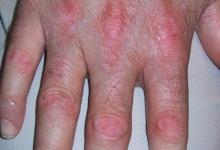
That includes digital ulcers, uh palmar papules, Gottron's lesions, heliotrope rashes, and periungual erythema.
11:44
Um, musculoskeletal symptoms and CK elevations were higher and more prevalent in the anti-synthetase patients compared to the um MDA5 patients.
11:57
But as expected, associated with dermatomyositis was more prevalent with the MDA5.
12:07
I now test for MDA5 in my patients and a lot of them have been positive and the outcomes are nasty.
12:13
Those patients need to be closely followed, aggressively treated.
12:17
Not the point of this particular report but certainly um mirrored by this report.
12:23
Uh, what about methotrexate in um in scleroderma?
12:30
You know, do you use it? Turns out a lot of you do.
12:34
Um, I have at times. This was a study of 92 patients with early systemic sclerosis.
12:40
They were all treated with methotrexate.
12:43
So it's a cohort study, no matched or comparative uh therapy against methotrexate.
12:52
79, 80% had diffuse uh systemic sclerosis.
12:56
At three months, 34% of the diffuse patients had a greater than 25% reduction in the modified Rodnan skin score.
13:03
That increased to 62% by 2 years, but there's a reporting bias — they stayed on the methotrexate.
13:11
Well, for good reason, right? Um, and you know, I think that it says that there might be a benefit there.
13:16
But if you look at the literature as I did after I published this on RheumNow on Twitter, there's modest evidence of benefit and modest benefit in systemic sclerosis with methotrexate, and mainly just skin.
13:33
No other outcomes have seemed to benefit from the use of methotrexate, but there is evidence from two randomized control trials and this observational study that skin may benefit.
13:45
I wouldn't give it for, you know, bad organ disease, renal disease, lung disease, you know, uh, patients with a poor prognosis and whatnot.
13:54
Obviously they need other therapies with or without methotrexate.
13:56
And that would be my take-home from this report.
14:00
Um, a study out of the Netherlands looked at the prevalence of symptomatic hand OA, showing that in the last decade the incidence of hand OA has increased — and that's from 2013 to 2023 — it increased by 65%.
14:18
Now is that better recognition or a real change in the incidence here?
14:26
Hm. It went from 5.7% to 9% um in their population-based study of um 1.8 million Dutch patients over 30.
14:42
So incidence rose — prevalence rose 65% — incidence rose 20% from 7.1 to 8.5 per 1,000.
14:51
You know um obviously we see a lot of hand OA.
14:57
Um, again, I — there's no way of knowing from this kind of population whether it's a true increase or an ascertainment bias.
15:08
Uh, you know I've talked in the past about the use of uh cheap and easy inflammatory markers.
15:16
You know, my favorite is the um neutrophil-to-lymphocyte ratio, NLR.
15:20
There's also the platelet-to-lymphocyte ratio.
15:23
You know, those are CBC numbers you can just do the math on and figure out if they're inflammatory or not.
15:29
I came across another one this week. This one's called the prognostic nutritional index.
15:36
The PNI was studied in 984 patients and showed that the PNI was inversely correlated with RA disease activity, especially if the PNI is less than 45, meaning low PNI, high disease activity.
15:48
The PNI is a calculation of the serum albumin uh and the absolute lymphocyte count, and you can look at the citation to do the calculation.
16:00
It's not a five-finger, ten-finger calculation.
16:02
And you need a calculator and a formula to do it.
16:05
But you know, it has been studied in other inflammatory illnesses and shown to have a modest correlation — an AUC of like 66.
16:17
It might be better if it was 0.8 or higher, but again it's free, it's cheap, it's easy.
16:21
You could program that into your EMR along with the NLR, and before you order a sed rate, CRP, and full panel of whatever you like to order — we tend to order too many lab tests — um you could have a good indication.
16:38
Uh, another pet interest of mine is demyelinating disease with TNF inhibitors.
16:46
Um, and that stems from long ago — 20-plus years ago — I used to write ACR hotlines.
16:54
And one of the first ones I wrote — I think Rob Spiera and I wrote it — was on demyelinating events with TNF inhibitors, with an early uh safety report coming from the FDA.
17:06
This would have been around 2002 or so. Um, and the report back then was that it looks like TNF inhibitors may induce demyelinating disease.
17:17
By that I mean multiple sclerosis and optic neuritis — de novo new events with the use of a TNF inhibitor.
17:23
And it looked like a) it was more frequent with etanercept than the antibody-based um TNF inhibitors, and b) it seemed like it was more frequent in my report in seronegative RA patients.
17:35
Anyway, that wasn't really addressed in this particular study of 214,000 um RA patients.
17:49
About 40,000 were on TNF inhibitors, and overall from 218,000 overall they had 562 demyelinating events over about a 15-year period, with a cumulative incidence of 32% over 10 years.
18:06
You know, it's not very good. Um, the incidence with um — if you compare that with TNF inhibitors — the 32% cumulative difference — and compared it to those who were treated with just conventional DMARDs — was 5%.
18:20
It shows a significant difference, hazard ratio 1.47, and that is significant, but still these events are rare.
18:31
I mean, since I did that report in 2002, how many demyelinating disease events have I seen in my thousands of RA patients over the years?
18:39
Very few — maybe like two. How many was this issue — an issue when the patient had pre-existing optic neuritis or multiple sclerosis, and I — should I give a TNF inhibitor or not?
18:55
I always did. I never was burnt by that.
18:57
The other thing was Sergio Schwartzman and I did a uh FDA review looking at demyelinating events for all biologics — IL-6, IL-1, T-cell targeted, TNFs, uh B-cell targeted.
19:10
It happens in very low frequencies with all the biologics.
19:15
And that's the take-home. These are rare events.
19:18
I think when you get this rare event on a biologic, especially a TNF inhibitor, you may be obligated to change — really more for medical-legal reasons — because we don't know the outcome of those people.
19:31
But also, usually you're going to have many other options.
19:36
Um, have I kept some patients on those drugs?
19:37
Um, I have, but that's usually because they didn't have any other options.
19:45
Um, next — can you um reduce um DMARDs um in RA?
19:53
This is a Korean study. Um, I didn't like this study because I'm always on a rant saying don't withdraw therapy, don't wean therapy, whatever.
20:01
Well, you want to go with this one, go with this one.
20:07
Close to 90% of patients with RA were well controlled uh on targeted therapies and were able to reduce their therapies by 50% without worsening disease activity.
20:18
Now, reducing is one thing and maybe you can get away with that, but stopping is always going to be met with a flare in more than 30–40% of patients, which I think is not worth it.
20:31
But if you want to reduce, here's a study from South Korea.
20:33
It was a full report actually from MedPage Today that I republished that says that you can do it.
20:42
Another interesting report on disease activity comes from CORRONA Evitas.
20:47
Um, this is um the old CORRONA database run by Joel Kremer, and Joel Kremer is the lead author on this.
20:53
And they make the point um — Kremer, Weinblatt, a few other authors — um in their study of 6,800 RA patients that are um in low disease activity.
21:07
They have a CDAI score of less than 10. And when they looked at these patients and they compared those who have very low disease
21:17
activity — remission would be less than 2.8, very low disease activity is 2.8 to 6, that was 19, almost 20% of their patients —
21:25
um versus those that were in higher low activity, 6 to 10, that's 31% of their patients.
21:31
That 6 to 10 group had twice the likelihood of progressing to moderate disease activity in the next one or two years.
21:40
The point being that the lower you go, the better the patient's going to be.
21:45
The lower you go, the less likely they are going to dynamically, sporadically change into another category — high or very high disease activity um or moderate disease activity.
21:55
You know, this is uh something that I've noticed in the past.
22:00
Um, I did a study when I was a fellow with Chak Fink uh on pauciarticular JIA patients.
22:06
I think I had like 260 pauciarticular JIA — and pauciarticular oligoarthritis and JIA is 1, 2, 3, or 4 joints and you're pauciarticular in the first 6 months.
22:19
And I looked at what was going to be the outcome in the course beyond 6 months.
22:24
If you had one joint or two joints in the first 6 months, you know what, you were very likely to stay pauciarticular.
22:32
But you know what, a small number of the two joints did progress to polyarticular JIA, right?
22:40
But if you had three or four joints in the first six months, almost all — well certainly the four, the majority, 60% — progressed to polyarticular JIA.
22:51
Again, disease activity is a dynamic thing.
22:54
At every visit the patient should be in remission.
22:58
I don't like low disease activity. I like remission.
23:01
And I don't like using excuses why I can only get to low disease activity.
23:05
So I'm always pushing on what my options are, and people like that.
23:10
Um, so what do you do with early disease, brand new disease?
23:17
What's your first drug? Yeah, everybody goes on methotrexate.
23:19
I got a lecture I'm doing right now. I hope you can hear it sometime soon.
23:23
It says, "Use your best drug first." It's a line I stole from Fred Wolfe.
23:27
Um, and the gist of my study is JAK inhibitors are better than methotrexate.
23:34
JAK inhibitors should be your best first drug, especially with it's $25 a month as generic tofacitinib from Cost Plus pharmacy in the United States.
23:46
That's not a very popular um opinion, by the way.
23:50
It goes against ACR and EULAR guidelines.
23:52
So here's a study — a meta-analysis of 29 RCTs in early RA um patients that are getting their first drug.
24:01
This is 13,387 patients. They either get a biologic or targeted synthetic therapy first, or they get methotrexate first.
24:10
And some of these people got the biologic with methotrexate, and they compared to just methotrexate alone.
24:16
Initial biologic or targeted synthetic therapy plus or minus methotrexate was significantly better at achieving a DAS-28 remission of less than 2.6 uh at 6 months.
24:29
Uh, and again the numbers there — it was 62% higher than methotrexate alone.
24:36
If you use methotrexate alone in all early DMARD-naive patients, 33 to 40% of patients are going to respond.
24:44
The number is higher if you use the more aggressive therapy.
24:49
Should you do that? Can you get away with that?
24:54
Um, I'm scratching your lizard brain and making you think about that.
24:58
The benefits were greater with higher baseline activity and in patients who were seropositive. Interesting.
25:04
Um, two more reports. Uh, someone asked me about a month ago — and I've been mulling about it now — low-dose naltrexone.
25:15
And this was a rheumatologist um, community practice, who had started to use it in fibromyalgia patients, chronic pain patients — said, you know what, it's cheap, it's easy, it seems to work in some people.
25:29
So, um, I found a report this week. Um, it was not quite a meta-analysis, a narrative review of 105 studies, 15 randomized control trials.
25:39
And the answer of whether you should use low-dose naltrexone in pain or in rheumatologic conditions is no.
25:49
Let me just say it again, no. And this particular study said although there are weakly positive study results from uncontrolled trials and single case reports, it's never replicated in a placebo-controlled trial.
26:04
The evidence out there is highly biased — a high publication bias.
26:08
These are small studies, single reports, and the outcomes are very subjective — how are you doing?
26:12
There are not many ACR20 or DAS-28 scores in these kinds of studies.
26:20
There might be a bias in that it might work centrally.
26:24
Again uh naltrexone is approved for alcohol withdrawal and avoiding opiates at higher doses.
26:30
This low-dose naltrexone — its mechanism, how it works — 4.5 milligrams a day.
26:36
It's cheap. Uh, it seems to be really safe.
26:41
Mechanisms are I think speculative. Um, I've not used it and I'm probably not going to use it, but I put the evidence up there for you to play with and tell me your experience.
26:52
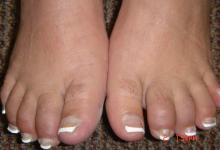
Lastly, there was an Annals of Internal Medicine report on 96 — 90 patients with hallux rigidus — MTP joint — that was active pain on walking um limiting function.
27:14
Um, and this was a study done in Finland.
27:18
It was funded by a research uh foundation.
27:18
So there's no reporting bias uh or funding bias here.
27:24
Um, they did not include RA patients, diabetics, or patients with a severe angled hallux valgus deformity.
27:33
So these are patients we would call hallux rigidus.
27:37
They have pain. Uh, and the intervention was either watching them or doing a first MTP arthrodesis — thankfully done by the orthopedics.
27:46
At 12 months, significant improvement in the arthrodesis group.
27:52
Um, their VAS pain at the end of 12 months was 1.3 for the arthrodesis group versus 5.7 — this is on a 0 to 10 scale — in the wait-and-watch group.
28:03
Why would you not do it? I think you should do it, is what I must say.
28:11
Um, in all my patients I've never done a good job uh counseling them on what the aftermath of foot surgery is.
28:21
The aftermath of foot surgery is rough. Uh, it hurts more than other parts of the body in my opinion.
28:27
The recovery is harder. The need for physical therapy uh is, to my mind, absolute.
28:33
So you need to prepare people. This is not easy surgery.
28:37
But if they want to feel much better and have less foot pain on walking um in a year, fusion of that big toe might be the right thing to do.
28:47
Um, two reminders. One, uh registration for RheumNow Live is open.
28:51
We'll look to see you there. And two, uh you can ask a question, present a case to me — make it short — on Ask Cush Anything.
28:59
Click on the box on the website and record your case and we'll discuss it here.
29:05
And lastly, uh, RheumIQ. A bunch of you are doing RheumIQ quite successfully.
29:09
It's a great way to learn the week's news in addition to listening to the podcast.
29:13
Uh, log in, opt in. Um, last week — um, I'm always going to talk about — most of you did very well.
29:21
The average score on last week's eight-question quiz was 70%.
29:24
That's pretty good. Um, however only 45% of you got this question right, which is: in a psoriasis cohort, which biologic class was shown to best prevent progression to psoriatic arthritis?
29:40
And the choices were TNF inhibitor, IL-17 inhibitor, IL-23 inhibitor, or IL-12/23 inhibitor.
29:45
The right answer was the IL-23 inhibitors, followed by IL-17, then IL-12/23, then TNF.
29:54
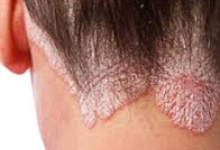
But the point of the paper was that biologic therapy in psoriasis seems to prevent progression to psoriatic arthritis.
30:02
I think we said that here 10 times. Um, and these are all observational studies, so it's not proof, but it seems highly suggested.
30:10
That's it for this week on the podcast. We'll talk next week. Take care of yourself.








If you are a health practitioner, you may Login/Register to comment.
Due to the nature of these comment forums, only health practitioners are allowed to comment at this time.